

Why Does Well Water Smell Like Rotten Eggs in Florida, and What Was Staining a Bunnell Family’s Laundry Orange?
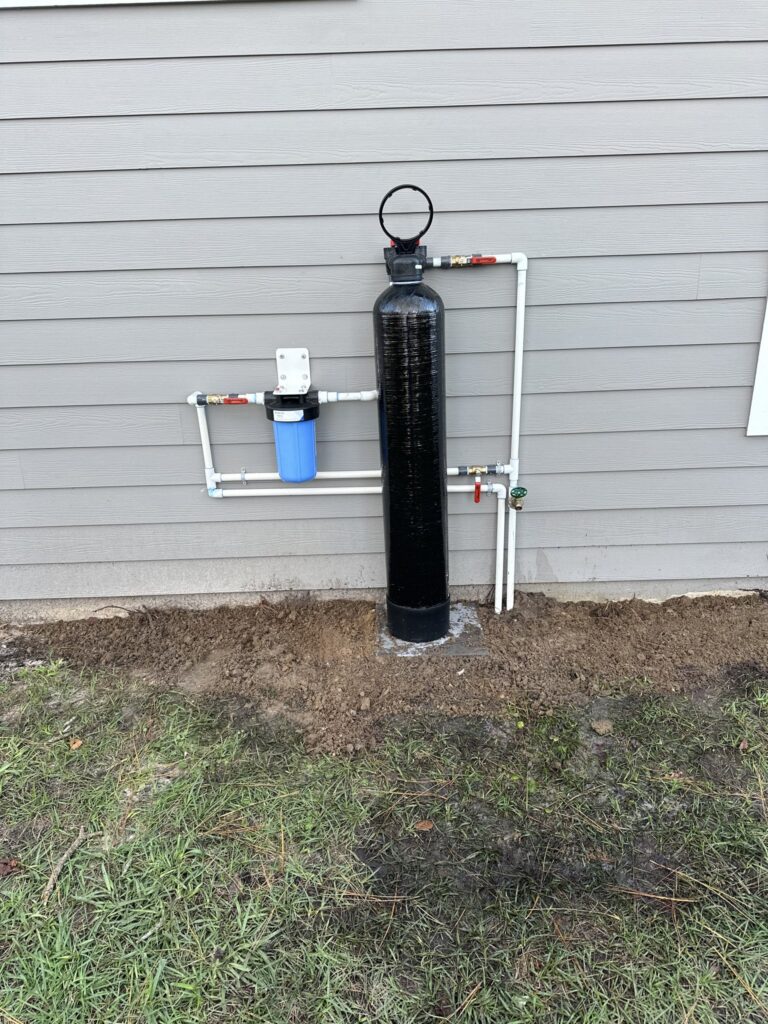
- The rotten-egg smell is hydrogen sulfide gas, dissolved in the well water and released when it is heated or aerated. The orange stains are iron. Flagler County wells commonly have both.
- Test strips will not tell you enough. A lab test for hydrogen sulfide, iron, manganese, hardness, pH, and bacteria is what a treatment system gets sized from.
- This well got aeration, an oxidizing filter, and a softener, in that order. The order is the whole design.
- If the smell is only at the hot tap, the water heater anode may be the culprit, and that is a cheaper fix. This one was the well.
The situations described here are composites drawn from the types of jobs and decisions we encounter regularly. Names and specific figures are illustrative.
The house sits on five acres west of Bunnell, on a well like every house out there, and the family had lived with two things since they moved in: a sulfur smell when the shower ran, and white laundry that came out of the washer with an orange cast that got worse every month. The husband had been told by a big-box associate that a softener would fix it. It would not, and I said so on the phone, because the question of why well water smell like rotten eggs in Florida has an answer that a softener does not touch. I told them I would come out with sample bottles, not a system.
This post is that well, from the sample bottles to the first clean load of laundry, with what each number on the lab report meant and why the order of the tanks matters more than the brand.
The smell, and the two places it can come from
Hydrogen sulfide is a gas produced by sulfur bacteria that live in groundwater and in the rock it sits in. Florida’s aquifers carry it in many areas, and wells in the western part of Flagler County are among them. It dissolves in the water, and it comes out of solution when the water is heated, aerated, or agitated, which is why the smell is strongest in a hot shower. UF/IFAS Extension’s home water quality series[1] has a fact sheet on hydrogen sulfide that I send to every well customer, because it explains the first diagnostic question: is the smell at every tap, or only at the hot ones?
If the smell is only at the hot taps, the cause may be the water heater itself: sulfur bacteria can colonize the tank and react with the magnesium anode rod to produce the gas there, in which case the well water is fine and the fix is a different anode and a tank sanitization. That is a hundred-dollar answer to a thousand-dollar question, and I check it first. Theirs smelled at the cold kitchen tap too, faintly, and strongly at the hot. That is the well.
The orange, and why it is in the washer and not the sink
Iron in well water is usually dissolved, clear when it comes out of the tap, and it oxidizes to rust when it meets air. In a sink it rinses away. In a washing machine it sits in fabric while the water drains and oxidizes in the towel. That is the orange cast, and it is the same reason well houses get rust stains in toilet bowls and around tub drains where water sits. Iron also feeds a kind of bacteria that leaves a slimy film in the toilet tank, which I looked for and found. The orange laundry and the sulfur smell are separate problems that happen to come from the same rock.
The lab test, and why not a strip
Test strips measure hardness and a few other things well enough for city water. On a well they leave out the things that decide the system: hydrogen sulfide, which has to be tested at the well head or fixed in a bottle because it gasses off; iron, in its dissolved and its particulate forms, which need different treatment; manganese, which stains black; pH, which decides whether an oxidizing filter will work; and bacteria, which is a health question and not a taste one. The Florida Department of Health[2]‘s guidance on private well testing, administered locally through the Flagler County Health Department, recommends bacteria testing yearly on every private well, and the Florida DEP’s private well guidance[3] is the reference for what else to test and when. I filled the bottles at the well head before any plumbing, iced them, and sent them to a certified lab.
The report came back in a week. Hydrogen sulfide in the range that smells but is not dangerous. Iron at a level that stains everything. Manganese low. Hardness around fourteen grains, higher than city water. pH slightly acidic, which matters for the filter choice. Bacteria absent. That set of numbers is the most common well profile I see in the county, and every number changed the design.
Why a softener alone would have failed
A softener is an ion-exchange tank: resin beads swap sodium for calcium and magnesium. They will also grab a little dissolved iron, which is why the big-box advice is not entirely wrong. But iron at this level fouls the resin within months, coats the beads with rust, and the softener stops softening and starts passing orange water. And a softener does nothing for hydrogen sulfide at all; the gas goes straight through. The Water Quality Association[4]‘s consumer guidance is clear that iron and sulfur have to be treated before a softener, not by one, which is the rule the big-box aisle does not print on the box. I have pulled two iron-fouled softeners out of houses in Flagler Estates for exactly this reason, and the story of the third system that finally worked on one of them is the post on a well water treatment system in Florida that worked after two failed.
The treatment train, in order
First, aeration. Water from the well pump goes into a tank where air is injected, or in this design, a chamber where the water is sprayed through air. Hydrogen sulfide gasses off and vents outside, and dissolved iron oxidizes into particles. This step turns two dissolved problems into one filterable one.

Second, an oxidizing filter. A tank of catalytic media, in this case a manganese-dioxide-based media that suits the slightly acidic pH, that traps the oxidized iron particles and finishes any remaining sulfide. It backwashes itself on a timer at night, flushing the trapped rust to a drain. This is the tank that takes the orange out.
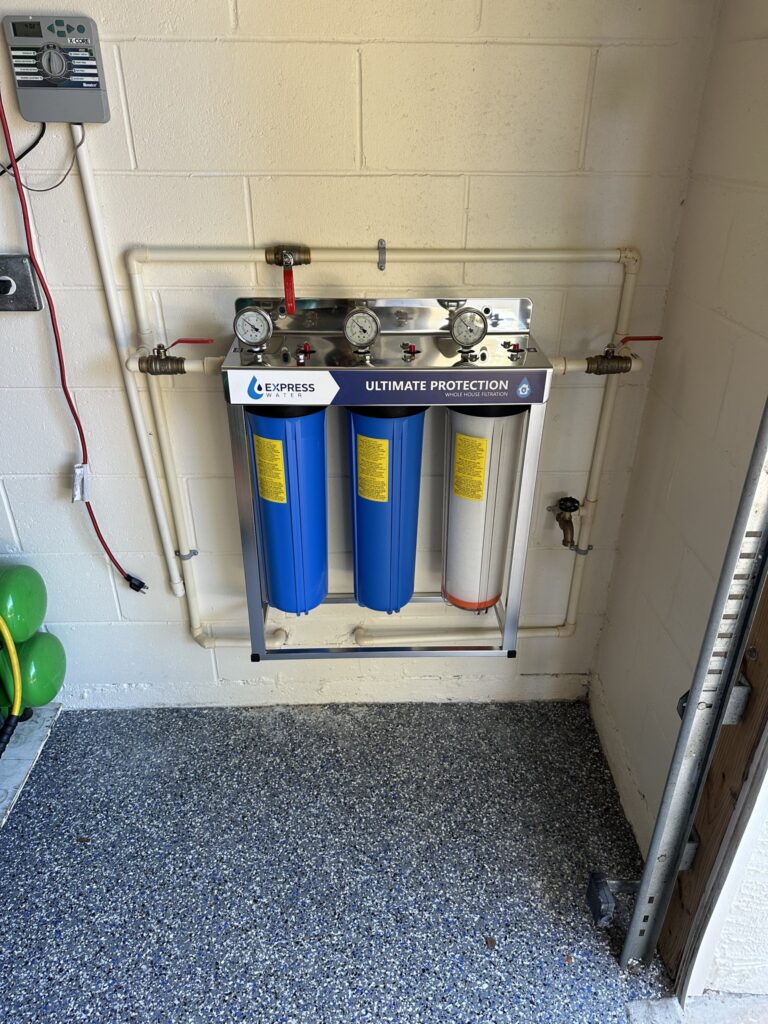
Third, the softener. With the iron and sulfur gone, the resin sees only hardness, which is what it is built for, and it lasts. Fourteen grains needs a properly sized unit, which I size by grains and by the number of people in the house. All three tanks are on a bypass so the house can run on raw well water if any tank is down, and the irrigation tees off before all of them, because you do not soften a lawn. Every component carries an NSF/ANSI[5] certification for its function: 44 for the softener, 42 and 53 for the filtration stages, which is the mark to look for on anything that touches drinking water.
The install was a day and a half in the garage, with a new drain for the backwash and a dedicated outlet for the aeration pump. The train sits on a board along one wall and takes about as much room as a second water heater.
The first clean load
She texted a photo three days later: white towels, white. The smell was gone the first evening. The toilet tank slime took a month of the new water to clear on its own. Six months later the softener’s salt use was where I had predicted and the filter’s backwash water ran clear at the drain, which is the check I make on any oxidizing filter. What that first year looks like across all the systems I install, filter by filter, is the post on how often to change a whole house water filter based on a year of pre-filters. And the city-water version of the hardness half of this story, which is what the same family’s relatives in Palm Coast have, is the post on is Palm Coast water hard.
What people on wells ask
Why does my well water smell like rotten eggs? Hydrogen sulfide from sulfur bacteria in the aquifer, released when the water is heated or aerated. If only the hot tap smells, check the water heater anode first.
Is it dangerous? At the levels typical in Flagler wells, no; it is a nuisance. Bacteria in the well is the health question, and that is a separate lab test done yearly.
What is staining my laundry orange? Dissolved iron oxidizing in the fabric. Toilet bowls and tub drains stain the same way.
Will a water softener fix it? No. Iron fouls the resin and sulfide passes through. Aeration and an oxidizing filter go first; the softener goes last.
How do I test my well water? A certified lab, with samples taken at the well head. Strips are not enough for a well.
How the well household compares to the two city-water households that chose different systems is the whole house water filtration system guide that starts with a glass of Palm Coast tap water, and the difference between a softener and a salt-free conditioner, which comes up on wells too, is the post on water softener versus salt-free conditioner in a Palm Coast home.
What the garage smells like now
Nothing, which is the point. Three tanks on a board, a vent line for the sulfide, and a bypass nobody has needed. The big-box softener they almost bought would have been orange inside by now. The lab report is taped to the wall next to the train so the next plumber knows what the well is.
If your well water smell like rotten eggs in Florida and the laundry is turning orange, the answer starts with sample bottles, not a tank. Our whole house water filtration service in Palm Coast and Flagler County pulls the samples under the $96 service call, applies it to the system, and sizes the train from the lab report instead of the aisle.