

How Often Should You Change a Whole House Water Filter in Palm Coast, Based on What a Year of Pre-Filters Looked Like?
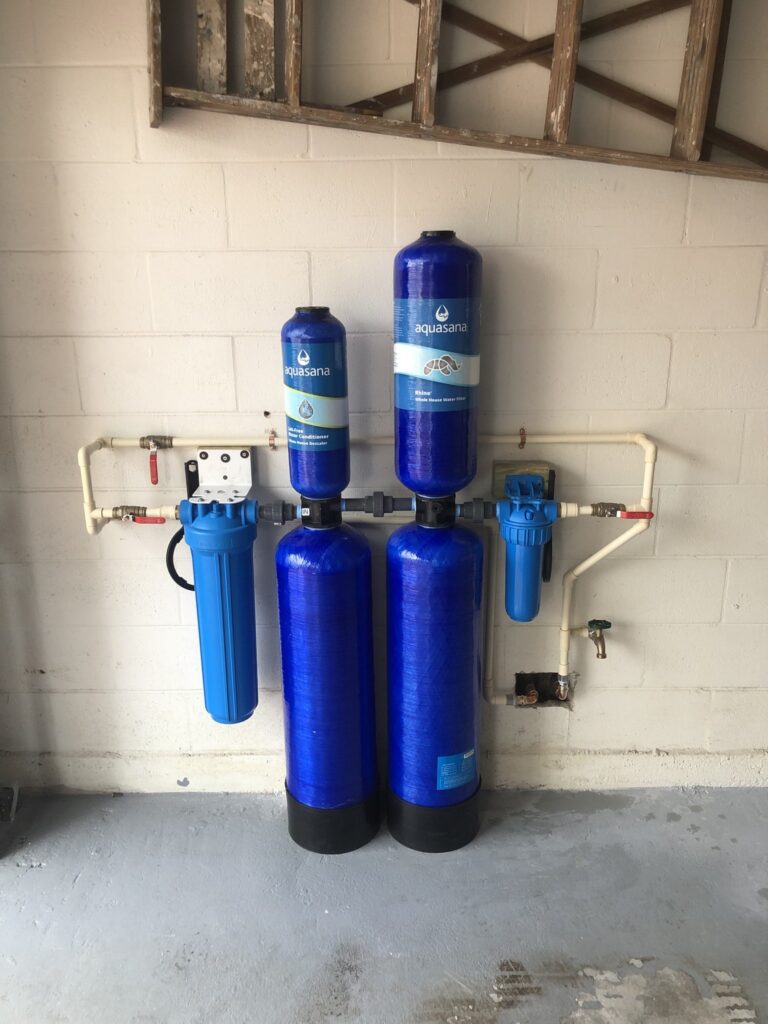
- Sediment pre-filter: every two to three months on Palm Coast city water, faster on a well or after a main break. The cartridge tells you; it goes from white to tan to brown.
- Carbon tank: years, on the gallon rating. It gives no visible sign; the calendar and a return of the chlorine smell are the indicators.
- Softener: salt monthly, resin for a decade. Reverse osmosis: pre and post filters yearly, membrane every three to five.
- The row on the garage floor showed summer cartridges browner than winter ones. Irrigation season stirs the mains.
The situations described here are composites drawn from the types of jobs and decisions we encounter regularly. Names and specific figures are illustrative.
He is an engineer, retired, and when I installed his system I told him the pre-filter changes every two to three months and he should check it monthly. He did better than that: he changed it when it looked done and kept every cartridge in a bag with the date on it. A year later he laid twelve of them on the garage floor in order and asked me to read them, because he wanted to know when to change a whole house water filter based on his house and not a box. This post is that row, and the schedule I built from it for every stage in the garage.
The row: twelve cartridges, dated
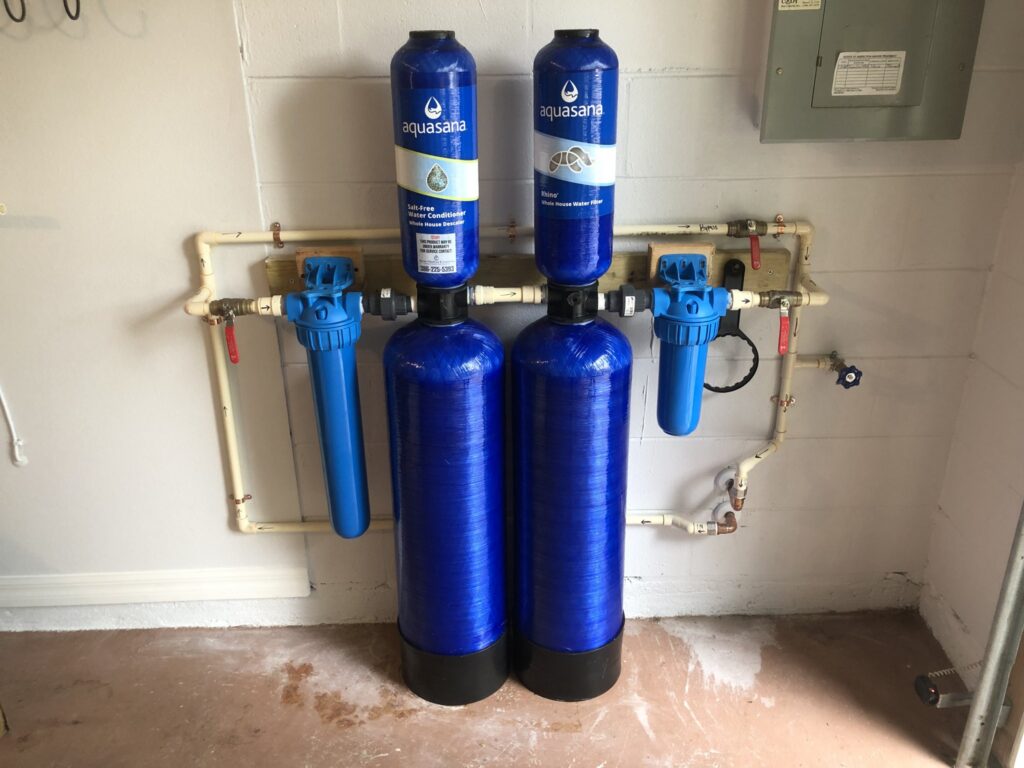
Twenty-inch sediment cartridges, pleated, five-micron, in a clear housing ahead of a carbon tank and a softener. Laid in order from January, the colors told a story. January through March: tan, changed at about ten weeks each. April through September: brown, some nearly chocolate, changed at six to eight weeks. October through December: back to tan, ten weeks. Two outliers, one in June and one in August, changed at four weeks and nearly black.
The seasonal pattern is irrigation. Palm Coast’s mains carry sediment and scale flakes all year, and in the growing season, when every lawn in the section runs its sprinklers before dawn, the demand surge stirs the mains and moves more of it into houses. The two black outliers matched, to the week, two water main repairs the City of Palm Coast Utility Department[1] had posted for his section; a main break or a flush sends a slug of sediment down the line and the first house with a pre-filter catches it. The cartridge is doing exactly what it is there for. Without it, that sediment goes into the carbon bed and the softener resin.
The pre-filter schedule, from the evidence
Change it when it is brown, not when the calendar says. On this water that is every ten weeks in winter and every six to eight in summer, with a look every month through the clear housing. After any city notice of a main repair or hydrant flushing in your section, look the next day. A pressure drop at the shower is the late sign; the color is the early one. The cartridge is inexpensive, the change is five minutes with the bypass, and it is the one maintenance item on the wall that a homeowner should own. A pre-filter that is never changed is the most common service call I get on whole-house systems, and the fix is the cartridge and a reminder on the phone, which I set up for every customer at install.

The carbon tank: years, on faith
The carbon tank behind the pre-filter has no window and no indicator. The Aquasana Rhino, which is the tank in his garage and the one I install most, is rated on the product spec sheets[2] for about a million gallons, and its NSF/ANSI[3] 42 and 53 listings are for that rated life. For a family of four using around three hundred gallons a day that is roughly nine years; for two people, longer. The tank gives no visible sign of exhaustion. The signs are the calendar against the gallon rating, and the return of the chlorine smell at the shower, which is the first thing to come back when catalytic carbon is spent. I write the install date and the projected rebed date on the tank in marker, and I note it in the customer’s file. His is a year in. The month-one review of the same tank is the post on an Aquasana Rhino review from the plumber who installed one.
The softener: salt monthly, resin for a decade
Salt: check the brine tank monthly and keep it at least a third full. His metered unit on eleven-grain water with the irrigation bypassed used about a bag and a half a month across the year, which matched the estimate in the post on what a water softener costs in Florida. Resin: with a pre-filter and a carbon tank ahead of it protecting it from sediment and chloramine, ten to fifteen years. Once a year, I check the brine tank for a salt bridge, a crust that forms over the salt and stops it dissolving, and run a manual regeneration to confirm the valve cycles. On a well, the resin is checked for iron color, which is the check in the post on the well water treatment system that worked after two failed; on city water it is not an issue.
The reverse osmosis unit under the sink
He also has an under-sink RO for drinking water, which is the most common add-on to a whole-house system in Palm Coast because it takes out the sodium the softener adds and the dissolved solids the carbon tank does not. Its pre-filter and post-filter cartridges change yearly. The membrane, which does the actual work, lasts three to five years on softened, carbon-filtered water; feeding it hard, chloraminated water shortens that. A TDS meter, which costs a few dollars, tells you when the membrane is fading: when the reading at the RO tap creeps toward a quarter of the reading at the regular tap, the membrane is due. NSF/ANSI 58 is the RO standard and it is on the unit. The storage tank under the sink gets sanitized at the yearly filter change.
The schedule, written for the garage wall
Monthly: look at the pre-filter through the housing; check the brine tank salt. Every six to ten weeks: change the pre-filter, sooner in summer or after a city main notice. Yearly: RO pre and post filters, RO tank sanitize, brine tank salt-bridge check, manual softener regeneration, a hardness strip at the kitchen tap and a TDS reading at the RO tap. Every three to five years: RO membrane. Around year nine or ten: carbon tank rebed, sooner if the chlorine smell returns. Resin: when the softener stops holding hardness between regenerations, which on this setup is a decade out. That is the whole list, and most of it is five minutes.
The Water Quality Association[4]‘s consumer guidance publishes general maintenance intervals for each of these components, and the intervals above are those numbers adjusted for what the City of Palm Coast Annual Water Quality Report[5] says about this water and what his twelve cartridges said about this house.
What people ask holding a brown cartridge
How often should I change my whole house water filter? The sediment pre-filter every two to three months on Palm Coast water, by color. The carbon tank on its gallon rating, years out.
How do I know the pre-filter needs changing? It goes tan, then brown. Brown is due. A pressure drop at the shower means it is overdue.
Why is my filter dirty faster in summer? Irrigation season stirs the mains. A city main repair does the same in any month.
How long does the carbon tank last? About a million gallons, roughly a decade for a family. The chlorine smell coming back is the sign.
Do I need to do anything to the softener? Salt monthly, a salt-bridge check and a manual regeneration yearly. The resin lasts a decade with a pre-filter and carbon ahead of it.
How the systems in three different households ended up on three different schedules is the whole house water filtration system guide that starts with a glass of Palm Coast tap water, and the reason the water needs a pre-filter at all, from the test strip up, is the post on whether Palm Coast water is hard. The well version, where the pre-filter catches sand and goes brown in weeks, is the post on why well water smells like rotten eggs in Florida.
What is on the garage wall now
A laminated card with the schedule above, twelve dated cartridges in a bag he refuses to throw out, and a system that has not needed me for anything but the yearly visit. He changes the pre-filter when it is brown. That is the whole method, and it took a year of evidence to prove it is enough.
If you are not sure when to change a whole house water filter, look at the cartridge; it will tell you before any calendar does. Our whole house water filtration service in Palm Coast sets the reminders at install, does the yearly check under the $96 service call applied to any parts, and does the pre-filter change visit for the price of the cartridge plus a short call.
Sources
- City of Palm Coast Utility Department: chloramine notice and water source
- Aquasana: Rhino product specifications and NSF listings
- NSF/ANSI 42, 44, 53 and 58 drinking water treatment standards
- Water Quality Association: consumer guidance
- City of Palm Coast Annual Water Quality Report (Consumer Confidence Report)