

What to Expect After a Repipe: What Did a Palm Coast Home Look Like One Hurricane Season Later?
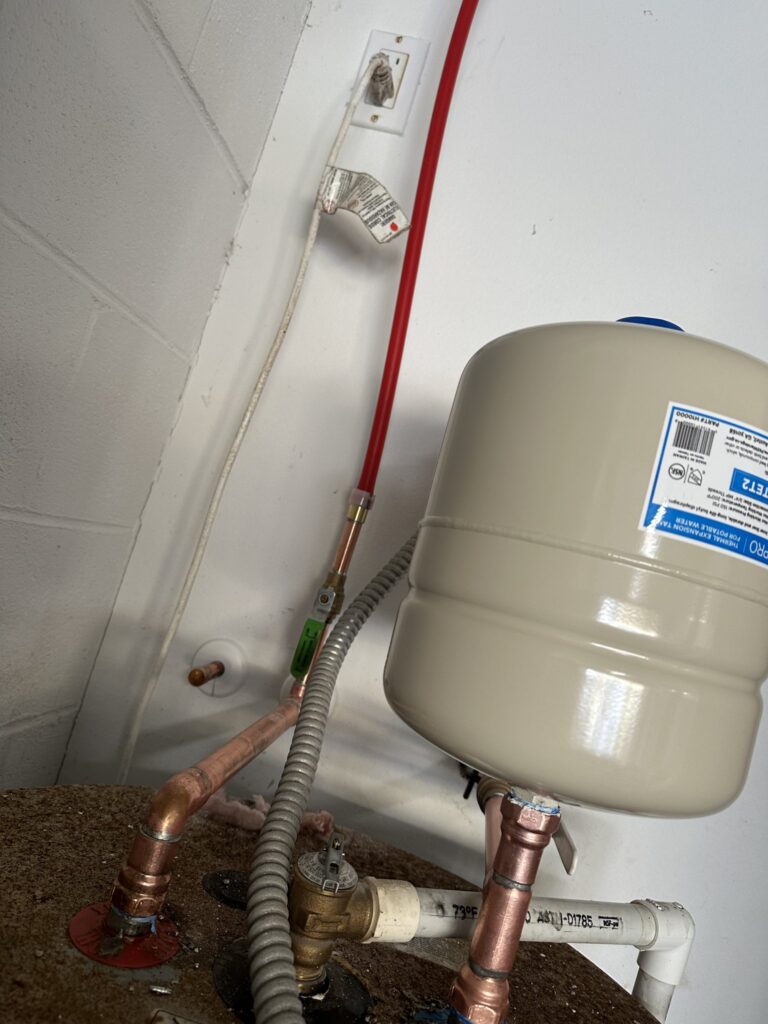
- A year after a repipe, the things to check are pressure at a hose bib, the manifold labels, the expansion tank on the heater, and the patches. Ten minutes. The pipe itself needs nothing.
- The house is run differently now: one main, one manifold, and a hurricane shutdown that takes two minutes instead of a search.
- Pressure came in at sixty, where the PRV was set. Without a PRV, this is the house that would have been back at eighty-five.
- The expansion tank is the part people forget after a repipe. A closed system with a PRV needs one, and the heater’s relief valve will tell you if it is missing.
The situations described here are composites drawn from the types of jobs and decisions we encounter regularly. Names and specific figures are illustrative.
I go back to repipes the spring after, when the homeowner will have me, because a year with a hurricane season in it is the first real test of a new system and because most people have a short list of questions by then. This house, a 1990 three-bath in Palm Coast’s R-section, had been repiped in PEX-A the previous May, and the homeowner had exactly the questions I get most about what to expect after a repipe: is the pressure right, what are all these labels, what is the small tank on the water heater, and what does he do if a storm comes. Ten minutes answered all of them. This post is the visit, and what changed in how the house is run.
The pressure check
A gauge on the front hose bib, which is the first thing I do on any return visit. Sixty pounds, which is where I had set the pressure-reducing valve at the main during the repipe. The house had been reading eighty-five before, above the eighty the Florida Building Code, Plumbing[1] edition sets as the residential maximum, and high pressure is one of the reasons the original copper had pitted. A PRV holds the number, but it is a mechanical valve with a spring and a diaphragm, and they drift or fail over years, so the gauge reading is the check. Sixty means it is doing its job. Creeping back toward eighty would mean the PRV needs adjusting or replacing, and that is a service call, not a repipe problem. I tell every customer to buy a gauge, they cost a few dollars, and read it once a year at the same bib.
The manifold labels
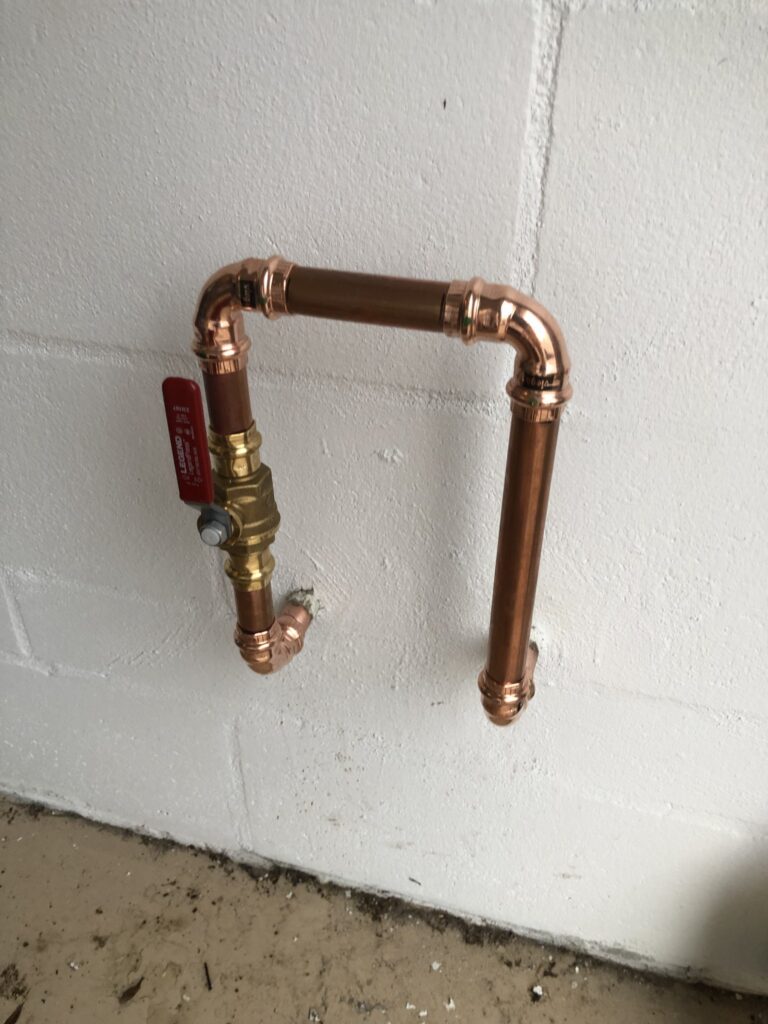
The manifold on the garage wall has thirty valves, and each one has a label: master bath shower hot, kitchen sink cold, hose bib front, and so on. A year on, the labels were still legible, which is the point of using a label maker and not a marker, and the homeowner had never touched them, which is also normal. I walked him through the one thing the labels are for: if a fixture ever needs work, its valve at the manifold shuts off that fixture alone, and the rest of the house keeps running. A dripping shower valve in the master bath is one valve closed at the manifold and a repair done with the kitchen and the other bathrooms live. On the old trunk-and-branch copper, that same repair meant the main off and the whole house dry. He closed and opened a few valves to feel that they move, which I have every customer do yearly so nothing seizes. The Plastics Pipe Institute[2]‘s data on PEX-A and the manifold design guidance are why the system is laid out this way; the labels are the part that makes it usable by the person who lives there.
The expansion tank, which is the question everyone asks
The small tank on the cold line above the water heater is a thermal expansion tank, and it is the part people notice a year later and wonder about. When a PRV is installed at the main, the house becomes a closed system: water that expands as the heater warms it cannot push back out through the meter anymore, and pressure in the house spikes every heating cycle. IAPMO[3]‘s guidance on thermal expansion, which the Florida code adopts, requires an expansion tank on a closed system for exactly this. The tank has a bladder with an air charge that absorbs the expansion. Without it, the water heater’s temperature and pressure relief valve weeps a little on every cycle, which is the sign I look for on houses where someone installed a PRV and forgot the tank. His relief line was dry. I checked the tank’s air charge with a tire gauge, which should match the house pressure, sixty, and it did. That check is yearly; the bladder eventually fails, and a tank that is waterlogged sounds solid when tapped instead of hollow at the top.

The patches, a year on
Fourteen drywall rectangles, patched and painted the week after the repipe. A year later, with a raking light from a flashlight along each wall, none of them showed. That is the test of a drywall patch, and the reason I do them to paint-ready with tape and three coats rather than a single skim. He had forgotten where most of them were, which is the right outcome. The one in the garage ceiling where the runs enter the attic is the one place I leave an access panel instead of a patch, so the top of the manifold runs can be seen without cutting; it was still there and still closed.
The hurricane shutdown, which is what actually changed
The NOAA National Hurricane Center[4]‘s season runs June through November, and this house had been through one with the new system. Before the repipe, the homeowner’s storm preparation for the plumbing had been to look for the main shut-off, not find it under the hedge, and leave the water on. Now it is two minutes and it is on a card taped inside the garage door: water heater breaker off; main ball valve at the front stub closed, lever across the pipe; and, if he wants to be thorough, the manifold’s two hose bib valves closed so a broken bib in the wind cannot flood the yard when the water comes back on. Flagler County Emergency Management[5]‘s evacuation zones cover his section in a major storm, and the card is what the neighbor with the key follows if he is gone. When the storm passes: main open slowly, bleed air at the highest fixture, then the breaker. He did it in October for a storm that turned north, and it took him less time than finding the card.
What needs nothing
The pipe. PEX-A in the attic, strapped and insulated, does not corrode, scale, or pit, and it has no joints anywhere but the manifold and the fixtures. The runs I could see from the access panel looked exactly as they had the day of the inspection. The old copper under the slab is drained and capped and is doing what abandoned pipe does, which is nothing. The stops at every fixture are quarter-turn ball valves that I had him work through once. That is the whole list of what a repipe needs after a year, and it is why the visit is ten minutes.
What people ask a year later
What should I check after a repipe? Pressure at a hose bib once a year, the manifold valves for movement, the expansion tank’s air charge, and the heater’s relief line for drips. Ten minutes.
What is the small tank on my water heater? A thermal expansion tank, required on a closed system with a PRV. It absorbs the pressure spike when the heater runs.
Why is my water pressure lower after a repipe? Because the PRV set it to sixty. That is where it should be; eighty-plus is what pitted the old copper.
How do I shut the water off for a hurricane? Heater breaker off, main closed, hose bib valves at the manifold closed. Two minutes, on a card by the door.
Does PEX need maintenance? No. The valves and the PRV are the moving parts, and the yearly check covers them.
How this house got here, from the third leak to the decision, is the post on the signs you need to repipe your house, and what the copper it replaced looked like inside is the post on pinhole leaks in copper pipes in Florida. The questions that make sure the repipe you get is one that looks like this a year later are the post on the questions to ask a repipe plumber before you sign. And the four days themselves, in a 1984 house, are the whole house repipe in Florida told day by day in a 1980s Palm Coast slab home.
What the garage wall says
Sixty on the gauge, thirty labels, a hollow-sounding expansion tank, a card by the door, and a homeowner who now knows where every valve in his house is and has never needed one. That is what a repipe looks like a year later. The pipe is the part nobody thinks about, which is exactly what it was for.
If you are wondering what to expect after a repipe, the honest answer is a ten-minute check once a year and a two-minute card for storms. Our whole house repipe service in Palm Coast does the year-one visit under the $96 service call, applies it to any adjustment the PRV or expansion tank needs, and writes the hurricane card for the garage door.