

What Do You Do When the Toilet Keeps Running After You Already Replaced the Flapper?
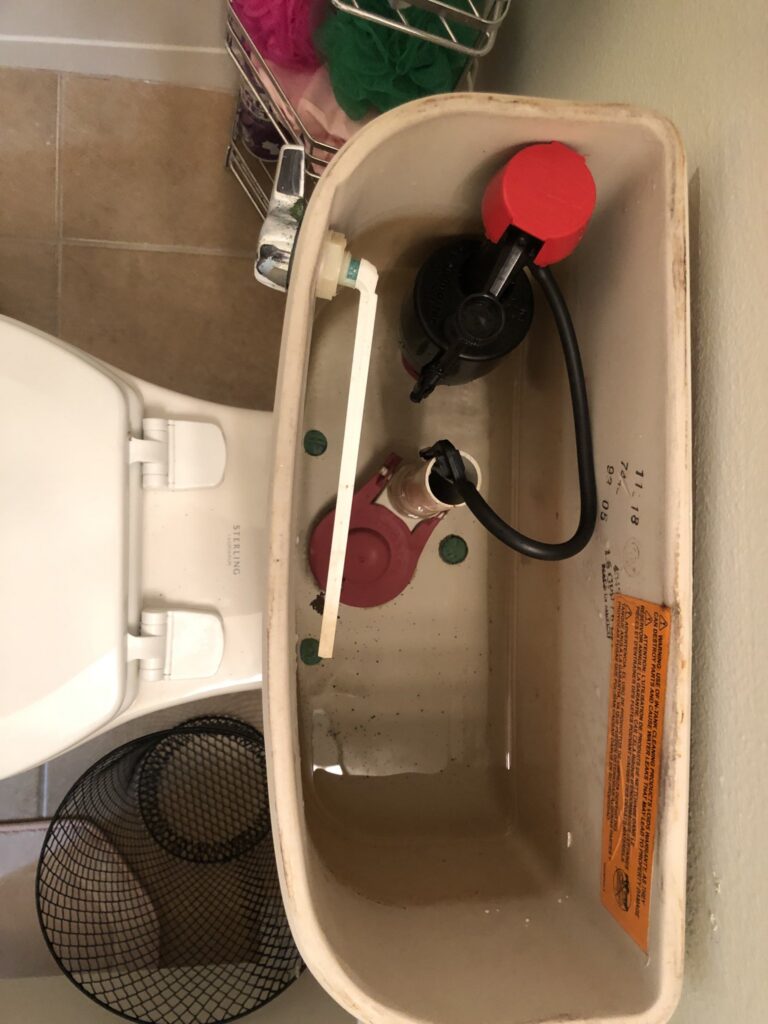
- A toilet that still runs after a new flapper has one of three problems: the fill valve, the flapper is the wrong one, or the overflow tube is cracked.
- On Palm Coast water, fill valves crust with mineral and stop shutting off. That is the one I find most.
- A universal flapper is not universal. Match it to the flush valve seat or it will never seal.
- Twenty minutes and two parts. You can do most of it yourself, and I will tell you where the line is.
The situations described here are composites drawn from the types of jobs and decisions we encounter regularly. Names and specific figures are illustrative.
He had the two empty flapper packages on the tank lid when I arrived, like evidence. Both from the hardware store, both installed carefully, both followed by the same sound at two in the morning: the tank refilling for eight seconds, then quiet, then refilling again twenty minutes later. He wanted to know why a toilet keeps running after the part everyone says to replace has been replaced twice, and whether he had done something wrong. He had not. He had fixed a part that was not the problem, which is what the internet told him to do.
This post is the twenty minutes at that tank, laid out so you can do the same diagnosis at yours, and an honest note about where the do-it-yourself line sits.
What a running toilet actually is
A toilet tank has two jobs: hold water until you flush, and refill afterward. The flapper is the rubber seal at the bottom that holds the water. The fill valve is the tower on the left that lets water in until a float tells it to stop. The overflow tube is the open pipe in the middle that drains excess water into the bowl if the fill valve overshoots. A toilet runs when water is leaving the tank without a flush, which means either the flapper is not sealing and water is trickling into the bowl, or the fill valve is not shutting off and water is pouring over the overflow tube. Both make the fill valve run. Only one is a flapper problem.
The tell is which one you hear. A flapper leak is silent until the tank drops enough to trigger a short refill: the phantom flush. A fill valve that will not shut off is a constant hiss or trickle you can hear from the hall. His was the phantom flush, which is why he went after the flapper. Reasonable. Wrong.
Test one: the dye tab, done properly
Food coloring in the tank, wait ten minutes, no flushing, look in the bowl. He had done this and seen color, which confirmed water was passing the flapper, which is why he bought a flapper. What he had not done was the second half: after the new flapper, do it again. He had assumed a new part fixed the leak. It had not, because the flapper he bought did not match the seat it was sitting on.

This toilet was a 2010-era model with a three-inch flush valve. Both flappers he had bought were two-inch, the size on the front of the package labeled universal. A two-inch flapper on a three-inch seat sits in the opening and seals for a day or two while it is soft, then lets go. Fluidmaster[1]‘s own fitting guides make the point clearly: measure the flush valve opening, or match the flapper to the toilet model, and treat the word universal as a starting point. The right flapper for his tank was a three-inch, and I carry both on the truck because this exact mismatch is the single most common reason I am called to a toilet a homeowner has already worked on.
Test two: the fill valve, which was also failing
With the right flapper in and the dye test clean, I expected to be done. The tank refilled and kept running. A steady trickle over the overflow tube, which meant the fill valve was not shutting off at the set water level. I pulled the cap off the valve and the reason was in my hand: a white crust of mineral around the seal and the float arm pivot, enough that the valve could not close fully. Palm Coast city water comes in around eleven grains of hardness, which the City of Palm Coast Annual Water Quality Report[2] publishes and which the USGS classification[3] calls hard. Every fill valve here is slowly plating itself with calcium. A ten-year-old valve on this water is at the end of its life whether or not it has failed yet.
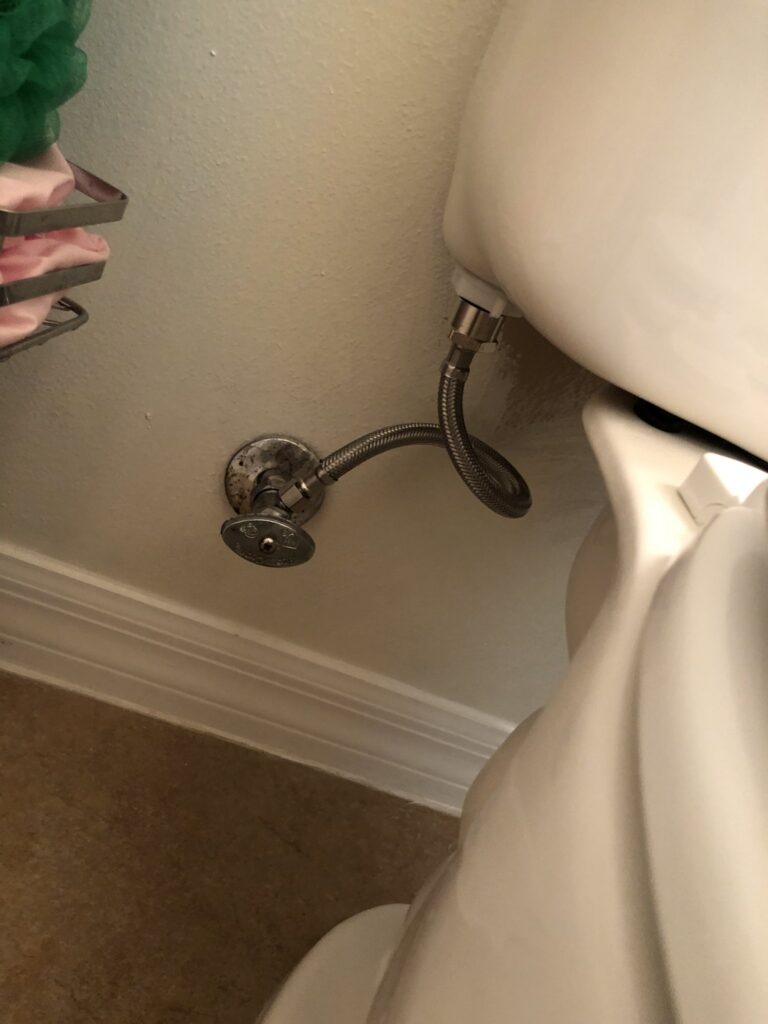
I replaced the fill valve. Fluidmaster 400 series, which is what I stock because the parts are everywhere and the design has not changed in a way that matters. Set the water level an inch below the top of the overflow tube, connected the refill tube so it sits above the water line and does not siphon, flushed twice. Quiet. Ten minutes later, still quiet. Two parts, twenty minutes, one $96 service call applied to a bill that was mostly the service call.
The third possibility, which he did not have
If a toilet still runs after a matched flapper and a new fill valve, the overflow tube is cracked. It is the plastic standpipe the flapper hinges on, and on older tanks it can split at the base where it threads into the flush valve. Water leaks through the crack into the bowl below the flapper’s seal, so no flapper will ever stop it. The fix is a new flush valve assembly, which means pulling the tank off the bowl. That is the point where I tell most homeowners to stop. It is not hard, but tank bolts on a fifteen-year-old toilet snap, and a cracked tank on a Sunday is a worse problem than a running toilet.
What a running toilet costs you between now and the fix
EPA WaterSense[4] estimates a running toilet at up to two hundred gallons a day, and a bad fill valve can do more. His had been running for three weeks. That is on the order of four to six thousand gallons, which on a Palm Coast bill with sewer charged on consumption is not a rounding error. It is also the second most common reason I get the call I wrote about in the post on why a water bill is suddenly high with no visible leak, and the first thing I check on that call for exactly this reason.
The other cost is the one nobody sees. A fill valve that runs constantly keeps the supply line under the tank pressurized and moving twenty-four hours a day, and the braided line to the toilet is a wear part. When it lets go it does not trickle; the story in the post on the snowbird whose supply line burst while she was gone six months started with a toilet nobody was listening to.
Where the do-it-yourself line is
Flapper: yours. Match the size, turn the water off at the stop, drain the tank, swap it, dye test after. Fill valve: yours, if the shut-off valve under the toilet actually shuts off. Turn it clockwise; if water keeps flowing or the handle spins, stop, because you are now working on a valve, not a toilet, and that is the post on the stuck gate valves a four-point inspection flags. Flush valve or a cracked tank: call. Anything involving lifting the tank on a toilet older than you are: call. The same reset-first, then-call logic applies to the kitchen, which is the post on the garbage disposal that hums but does not spin. The service call is $96, it applies to the repair, and the repair on a toilet is usually less than the parts you would buy trying three more things.
The running toilet in Seminole Woods that opened the week in the guide to common household plumbing problems in Palm Coast was a crusted fill valve too. It usually is.
What people ask at the tank
Why does my toilet keep running after I replaced the flapper? The flapper does not match the flush valve, the fill valve is not shutting off, or the overflow tube is cracked. In that order of likelihood here.
How do I know if it is the fill valve or the flapper? Silent with an occasional short refill is the flapper. A constant hiss or trickle is the fill valve. Dye in the tank confirms the flapper.
How do I adjust the water level? On a Fluidmaster-style valve, the screw or clip on the float arm. Set the level about an inch below the overflow tube top.
What does a running toilet cost? Up to two hundred gallons a day. On a Palm Coast bill with sewer, that adds up in a month.
How much does a plumber charge to fix a running toilet? For a fill valve and flapper, the service call plus parts and a short labor charge. It is one of the least expensive calls I make.
What the tank sounds like now
Nothing, which is what he wanted to hear at two in the morning. The two-inch flappers went in the recycling, the three-inch is on the seat it was made for, and the fill valve will crust up again in eight or ten years, at which point he knows what to do and knows when to stop. That is a good outcome for twenty minutes.
If your toilet keeps running after the part you were told to replace, measure the flush valve opening and listen for the hiss before you buy a third flapper. Our plumbing repair and service in Palm Coast carries both sizes and the fill valve on the truck, and the $96 service call applies to the fix.