

Is a Garbage Disposal Humming But Not Spinning Worth Fixing, or Is It Time for a New Unit?
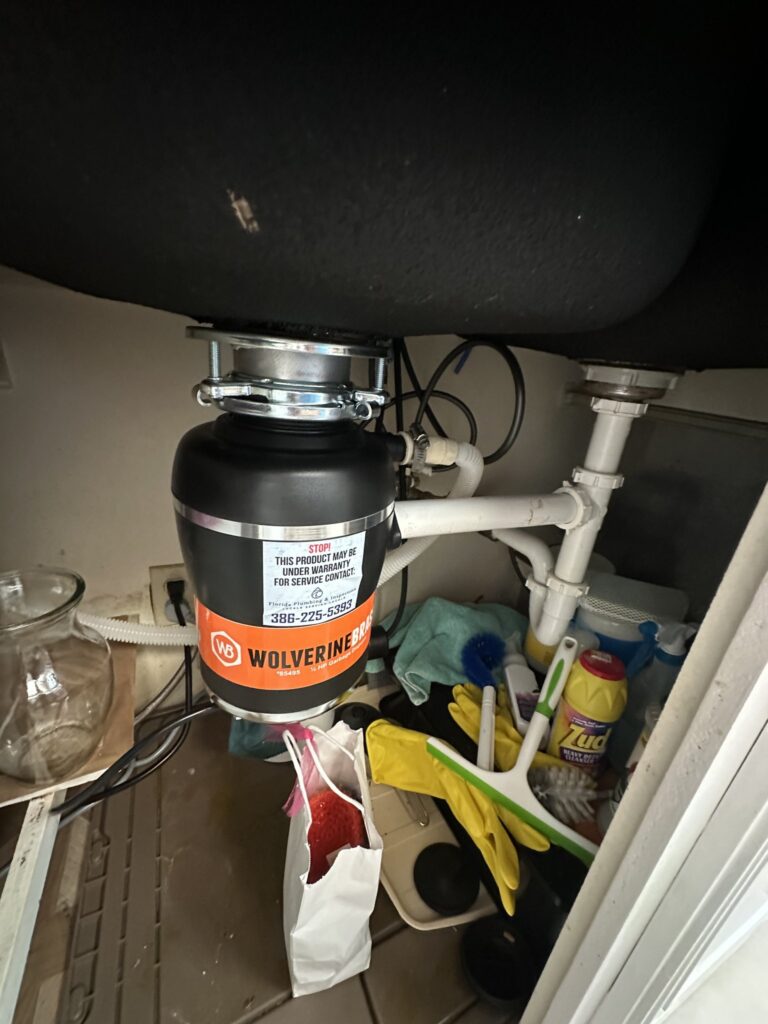
- A hum with no spin means the motor has power and the flywheel is stuck. That is a jam, not a dead motor, and it is usually a five-minute fix.
- Reset button on the bottom, hex wrench in the hole underneath, turn until it frees. Then the reset again. I will walk you through it.
- The unit that is worth replacing is the one that leaks from the bottom seam, trips repeatedly with nothing in it, or is past twelve years.
- This one was jammed on a peach pit and cracked at the housing. The unjam bought a week. The replacement bought a decade.
The situations described here are composites drawn from the types of jobs and decisions we encounter regularly. Names and specific figures are illustrative.
The call came Sunday evening, after the kind of family dinner where everything goes down the sink. She had flipped the switch, heard a low hum, and then nothing; the second try got the hum and a click as the unit tripped off. She had already pressed the red button on the bottom, which is more than most people know to do, and it had hummed and tripped again. She wanted to know whether a garbage disposal humming but not spinning was a repair or a replacement, and whether she should have tried anything else before calling. The honest answer to the second question was yes, and I told her so on the phone.
This post is that call, from the reset button to the peach pit to the crack I found once the unit was out, and the rule I use for when a disposal is done.
What the hum means
A garbage disposal is a motor under the sink turning a flywheel with two loose impellers on it, inside a grinding ring. When it hums but does not spin, the motor is getting power and trying to turn, but the flywheel is locked against something in the chamber. The motor draws high current pushing against the jam, heats up, and the thermal overload trips it off. That is the click and the silence. The reset button on the bottom of the unit closes the overload again so it can try once more. Pressing reset without clearing the jam just repeats the hum and the trip, which is where she was.
The good news in a hum is that the motor works. A disposal that does nothing at all, no hum, no click, is a different diagnosis: a tripped reset, a tripped breaker, a bad switch, or a motor that is actually dead. A hum is almost always a jam.
The unjam, step by step
Power off. Not the wall switch, which someone can flip while your hand is in the sink; the breaker, or unplug the unit under the sink if it has a cord. Then flashlight into the chamber from above. Sometimes the object is visible: a bottle cap, a ring, a piece of a wine glass. If it is, tongs or pliers, never fingers. Hers showed nothing from above, which usually means the object is wedged under an impeller.

Every disposal has a hex socket in the center of the bottom, and InSinkErator[1] ships a small hex wrench with each unit for exactly this; the same wrench, a quarter-inch Allen, is in any toolbox. Insert it into the socket and work it back and forth. You are turning the flywheel from below, and when it frees, you will feel the wrench swing through a full turn. Then remove whatever was in there, press the reset, run cold water, and test. Her flywheel freed on the third rock of the wrench, and the object that came out was a peach pit, which in my experience is the single most effective disposal jam in the produce aisle. Pits, fibrous stalks, and the occasional spoon are what I pull out of Palm Coast disposals most.
The whole thing took four minutes. She could have done it Sunday night, and I said so, and I showed her the wrench and the socket so she can next time. That is not me talking myself out of work. A disposal call that is only a jam is a $96 service call for four minutes, which is not a great deal for her, and I would rather she keep the wrench under the sink.
Why the four-minute fix was not the end of it
With the jam cleared I ran it and it spun fine. But when I looked underneath with the flashlight, there was a faint ring of moisture at the seam between the upper housing and the motor body, and a hairline in the housing above it. That is the crack. A jam puts enormous torque on the housing when the motor stalls against it, and on a unit that is twelve years old, the plastic is brittle. Once the housing cracks or the internal seal goes, the disposal leaks from the bottom, slowly at first, into the cabinet base. There is no repair for that. The seal and housing are not serviceable parts on residential units, and the U.S. Consumer Product Safety Commission[2]‘s guidance on disposals is blunt about not operating one that leaks or has a damaged housing, because water and a motor under a sink is not a combination to nurse along.
I told her the unjam would probably hold for a week, maybe a month, and then she would find a wet cabinet floor. She asked if she should replace it now or wait. I said now, because the cabinet floor is particleboard and a wet one is a new cabinet, and because the price of the disposal does not go down while she waits.
The rule for repair versus replace
I use three signs. A leak from the bottom seam or the housing, which is not repairable. Repeated trips with the chamber empty, which is a motor on its way out. And age past about twelve years, at which point the bearings, seals, and grinding components are all near end of life together and a new unit costs less than a second service call. Anything else, a jam, a stuck reset, a clogged discharge, a leaking sink flange or dishwasher connection, is a repair, and most are quick ones.
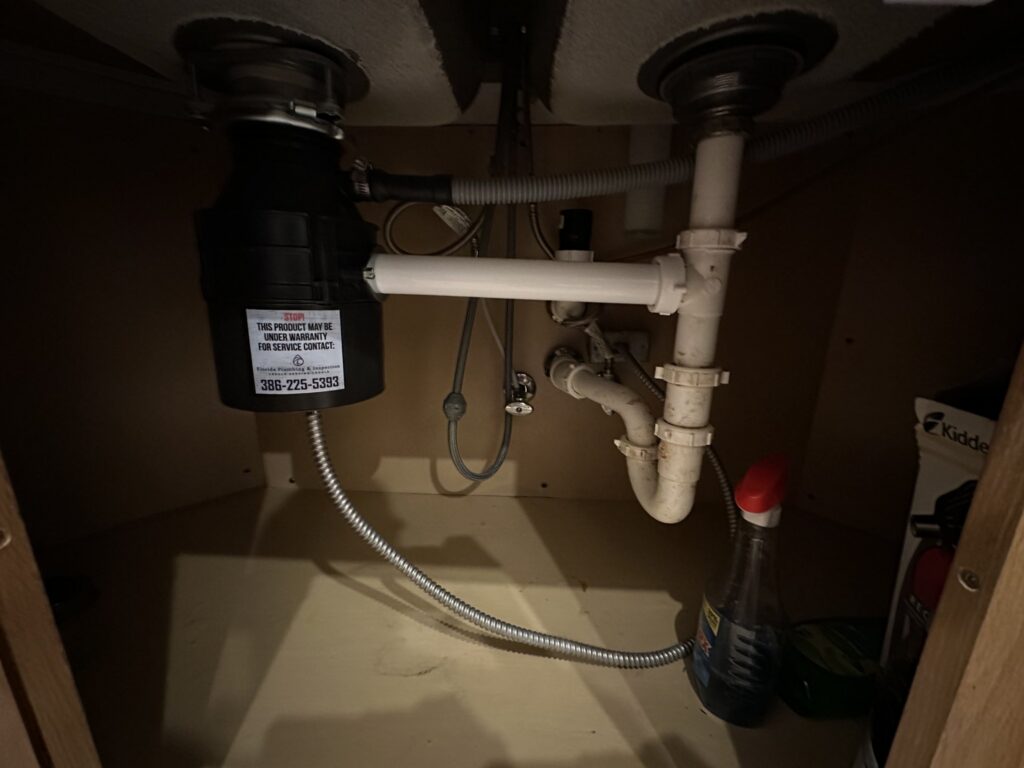
Hers had two of the three. She went with a half-horsepower InSinkErator replacement, which is what I recommend for most Palm Coast kitchens, installed the next morning. Half-horsepower handles normal household scraps; three-quarter is for people who cook a lot and grind a lot, and one horsepower is for people who should probably be composting. The swap took under an hour with the sink flange reused, and I checked the dishwasher drain connection and the P-trap while I was in there, because a disposal replacement is the cheapest time to catch a slow leak at either.
What to keep out of it, since I was asked
She asked what caused it, and the answer is the pit, but the longer answer is that a disposal is a convenience for small scraps, not a trash can. Fibrous vegetables like celery and corn husks wrap the impellers. Pits, bones, and shells jam them. Grease coats the chamber and the line behind it. Rice and pasta swell in the trap. The units that reach fifteen years in my customers’ kitchens are in the houses where a strainer catches the scraps and the disposal handles what gets past it. The same short list is what keeps kitchen drains clear, which is a different post, but the disposal is where the drain line starts.
And always cold water, running before, during, and after. Hot water melts grease so it can travel down the line and set further along. Cold keeps it solid so the disposal chops it and the water carries it out.
What people ask under the sink
Why does my garbage disposal hum but not spin? It is jammed. The motor has power and the flywheel is locked. Power off, hex wrench in the bottom socket, rock it free, remove the object, reset.
Where is the reset button? On the bottom of the unit, usually red, usually near the hex socket. Press it after clearing a jam or if the unit is dead silent.
How do I unjam it? Breaker off, hex wrench in the socket underneath, back and forth until the flywheel turns, then tongs for the object. Never a hand in the chamber.
How long do garbage disposals last? Ten to twelve years is typical here. Hard water scales the chamber and the grinding ring; a strainer and cold water stretch it.
Is it worth repairing? A jam, a flange leak, or a stuck reset, yes. A leak from the body, repeated trips with the chamber empty, or a unit past twelve years, no.
The reset-first approach is the same one I use on a toilet in the post on why a toilet keeps running after a new flapper: try the thing that costs nothing, then call when it points past that. The disposal from this week’s calls is in the guide to common household plumbing problems in Palm Coast, and the invoice for it is one of the five laid out in the post on what five Palm Coast service calls actually came to. What tends to fail next under the same sink, the faucet cartridge, is the post on whether to replace the cartridge or the whole faucet, and the shut-off stops I turned to do this job are the ones a four-point inspection looks at, in the post on what insurers look for in shut-off valves.
What she has under the sink now
A new half-horsepower unit, the hex wrench taped to the cabinet wall next to it, and a mesh strainer in the drain. The peach pit is in the trash, where the next one will go. She texted a month later to say she had unjammed it herself after a corn cob, which is exactly the outcome I wanted from the Sunday call.
If yours is a garbage disposal humming but not spinning, try the breaker, the wrench, and the reset before you call anyone. If it is leaking from the body or older than twelve, our plumbing repair and service in Palm Coast can replace it the next morning, and the $96 service call applies to the install.