

How Much Does a Plumber Cost in Florida, and What Did Five Palm Coast Service Calls Actually Come To?
- Hourly rates are the wrong question. What matters is the service call, what it covers, whether it is applied to the work, and what the parts cost.
- Five real tickets from one week, in the range of $150 to $450 each, with the $96 service call inside every one of them, not on top.
- The expensive part of a small repair is almost never the part. It is the trip, the diagnosis, and the second trip if the first one guessed wrong.
- Ask any plumber three questions before they come: what is the service call, does it apply to the repair, and will you quote before you start.
The situations described here are composites drawn from the types of jobs and decisions we encounter regularly. Names and specific figures are illustrative.
A property manager I work with asked me to explain my pricing to a new owner who had come from out of state and wanted to know how much does a plumber cost in Florida compared to where she was from. Instead of a rate sheet I laid five invoices from the previous week on the tailgate of the truck, in order, and walked her through each one. A toilet fill valve, an outdoor hose bib, a garbage disposal, a kitchen P-trap, and a water heater element. Five small jobs, five houses, five numbers, and the same $96 line at the top of each. She said it was the first time pricing had made sense to her, so I am writing it down.
This post is the tailgate. Each ticket, what it covered, where the money went, and the three questions that would have told her all of this over the phone.
The $96 line, and why it is inside the price and not on top
Every visit I make starts with a $96 service call. It covers the trip, the time to look at the problem, and the diagnosis, and if you go ahead with the repair, the $96 is applied to it. That last part is the one that matters and the one that varies most between companies. Some charge a trip fee on top of the repair. Some charge a diagnostic fee and then a separate labor rate. Some quote a flat repair price that has the trip buried inside it and do not tell you. Mine is simple: you owe $96 if I come out and you decline the work, and you owe the repair price if you approve it, with the $96 already inside that number. On every ticket below, the first line is the $96, and the total is the total.
I do not price by the hour, and I would be careful of anyone who quotes you an hourly rate for a repair. An hourly rate tells you nothing about the total, because you do not know how many hours, and it rewards slow work. I quote a flat price by text before I leave the shop, based on what you describe and what I usually find, and the price on the invoice is the price you approved. If I open it up and find something different, I stop and text a new number before doing anything.
Ticket one: the toilet fill valve, Seminole Woods
Running toilet, homeowner had already tried a flapper. Service call $96, applied. Fill valve, flapper matched to the three-inch flush valve, new braided supply line, all parts about $40 at my cost and marked to retail. Labor twenty-five minutes. Total in the range the service page lists for a fill valve and supply line, which is $150 to $200. Where the money went: about half was the trip and the diagnosis, a quarter was parts, a quarter was the labor to do it right and test it. The story behind it is in the post on why a toilet keeps running after a new flapper.
Ticket two: the hose bib, snapped off by a pressure washer
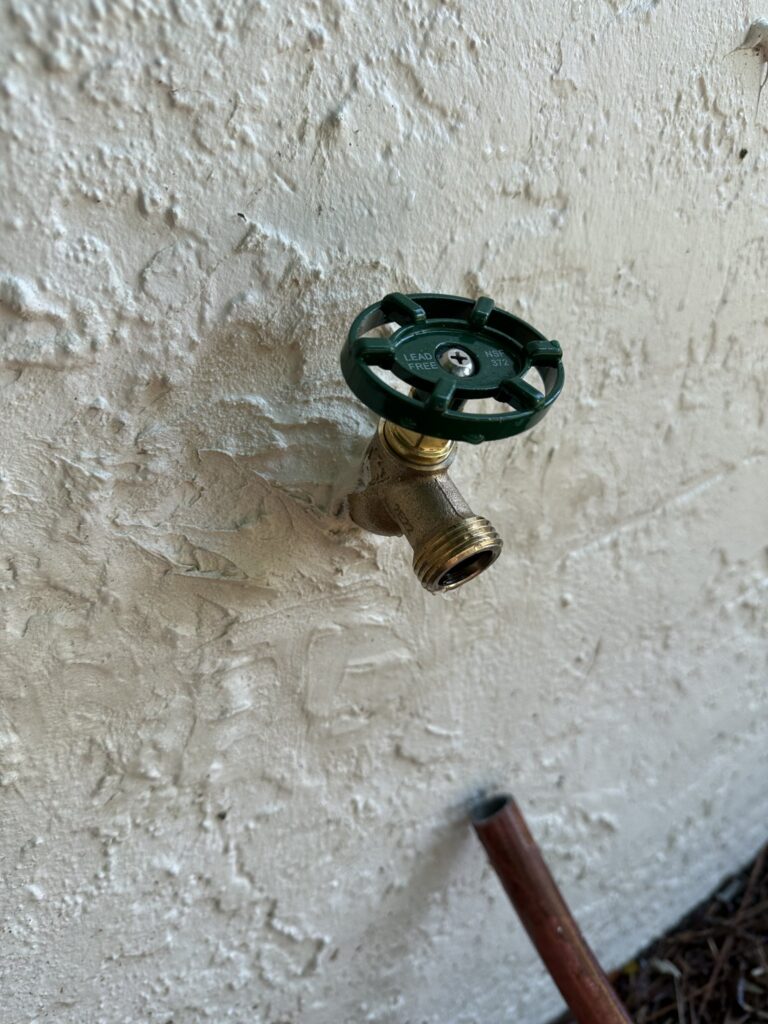
Homeowner rented a pressure washer, hooked it to the front hose bib, and the twenty-year-old brass sillcock, corroded thin by salt air, snapped at the wall. Water everywhere until he found the meter. Service call $96, applied. New frost-free sillcock, quarter-turn, stainless screws, a bead of exterior sealant at the stucco. Labor forty minutes, including cutting the old stub back to clean copper. Total in the $150 to $250 range. This ticket was higher than the fill valve because the labor was more and the part was more, and because there was a small stucco patch. It was not higher because of the emergency. I do not charge emergency rates for a broken hose bib during business hours, and I mention that because plenty do.

Ticket three: the disposal, jammed on a peach pit and cracked
Hum, no spin, cracked housing once I got it out. Service call $96, applied. Half-horsepower InSinkErator[1] unit, which is most of this ticket’s cost, plus the mounting hardware, a new discharge tube and dishwasher connector, and labor of about an hour including cleaning the flange and checking the trap. Total in the $275 to $450 range with the unit. The part is the price here, and it is why I tell people the exact model I will install before I come, so they can look it up and see that the unit is the unit and not a markup. The story is in the post on the garbage disposal that hummed but would not spin.
Ticket four: the kitchen P-trap, leaking at the slip joint
Slow drip into the cabinet below the sink, found by the wet bottom of a box of dishwasher pods. Service call $96, applied. The trap was a twenty-year-old chrome-plated brass one, thinned through at the bend by the same hard water that scores faucet bodies. New PVC trap and tailpiece, new slip washers, ten dollars in parts. Labor twenty minutes. Total was close to the service call plus a small labor line, which is to say the cheapest ticket of the week. I bring this one up because people are surprised that a leak can be the least expensive call. A leak at a drain fitting under a sink almost always is. A leak in a wall is not.
Ticket five: the water heater element, no hot water since Tuesday
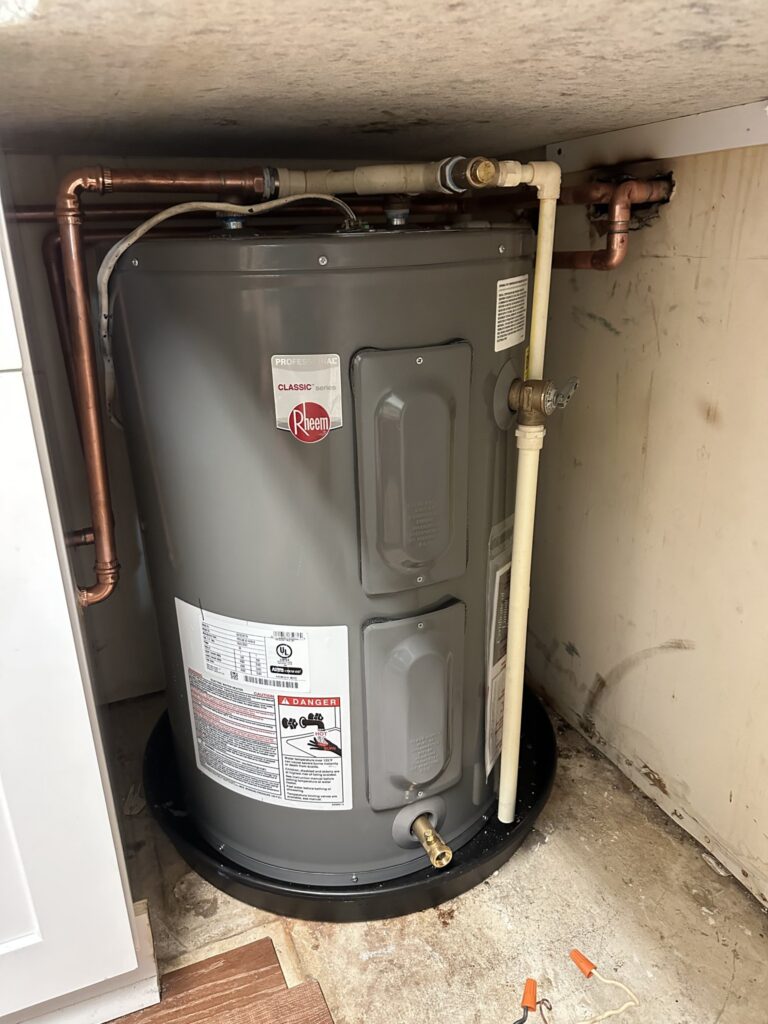
Electric tank, eight years old, half a tank of lukewarm water. Service call $96, applied. Tested both elements with a meter, found the lower one open, replaced it and both thermostats while the tank was drained, since the thermostats are cheap and the drain is the expensive part. Parts around $50. Labor an hour including drain, refill, and purge. Total in the low $200s. The alternative was a new tank, which is a different number entirely, and I quoted both so the homeowner could decide. On an eight-year-old tank with no leak, the element is the right call. On a twelve-year-old one, it is a coin flip, and I say so.
Where the money goes, across all five
Add the five together and roughly forty percent of the total is trip and diagnosis, thirty-five percent is parts, and twenty-five percent is the labor to install and test. That surprises people who expect labor to dominate. On small repairs, the cost is getting a licensed plumber to your door with the right parts on the truck, and the rest is small. The way to lower it is not to find a cheaper hourly rate. It is to batch: if the fill valve, the hose bib, and the P-trap had been in one house, they would have been one service call and one trip, and the total would have been meaningfully less than three separate visits.
The other thing to notice is what is not on any ticket. No fuel surcharge, no disposal fee, no shop supplies line, no diagnostic fee separate from the service call. Those lines are how a $150 repair becomes a $240 invoice, and a quote that leaves them out and adds them later is the thing to watch for.
The three questions, and one more
What is your service call, and what does it cover? Is it applied to the repair if I go ahead? Will you quote the price before you start? Any plumber who answers those three clearly is someone you can work with, whatever the numbers. The fourth question is whether they are licensed, and in Florida you do not have to take their word for it: Florida Statute 489[2] requires a state license for plumbing contractors, and the DBPR license lookup[3] shows you whether the name on the truck matches an active license. Check it once. And if the job is large enough that a lien could matter, Chapter 713[4] of the Florida Statutes is the lien law, and the short version is to pay the licensed contractor directly and get a release.
The Florida Building Code, Plumbing[5] edition sets what the work has to meet, and a licensed plumber is the one who is accountable to it. That accountability is part of what the $96 buys.
What people ask about the bill
How much does a plumber cost in Florida? For small repairs, most tickets land between $150 and $450 including the service call. Water heaters, repipes, and slab work are separate conversations.
What is a service call fee? The charge for the trip and the diagnosis. Mine is $96 and it applies to the work. Ask whether theirs does.
Why don’t you charge by the hour? Because it does not tell you the total and it rewards slow work. Flat price, quoted before I come.
Do you charge extra for emergencies? Not during business hours. After hours, I say the number on the phone before I leave.
How do I check if a plumber is licensed? The DBPR license lookup, by name or license number. Takes a minute.
The stuck gate valve that week is on the tailgate too, in the post on what insurers look for in shut-off valves during a four-point inspection, and the walkthrough I now do with every seasonal customer, which costs a service call and has saved several of them a claim, is in the post on where the main water shut-off valve is and the snowbird who wished she knew. All five calls, in the order they came in, are in the guide to common household plumbing problems in Palm Coast.
What the new owner did with the tailgate
She took a photo of the five invoices and sent it to her property manager with a note that this was the pricing she wanted on the rest of the units. That is the outcome I want from writing prices down: not the lowest number, but a number that makes sense before I arrive and matches after I leave.
If you are asking how much does a plumber cost in Florida because you have a quote in hand and cannot tell what is in it, ask the three questions. Our plumbing repair and service in Palm Coast answers them the same way on every call: $96, applied to the work, quoted by text before I come.