

Why Is My Water Bill Suddenly High With No Visible Leak, and Where Did 9,000 Gallons Go in a Palm Coast Slab Home?
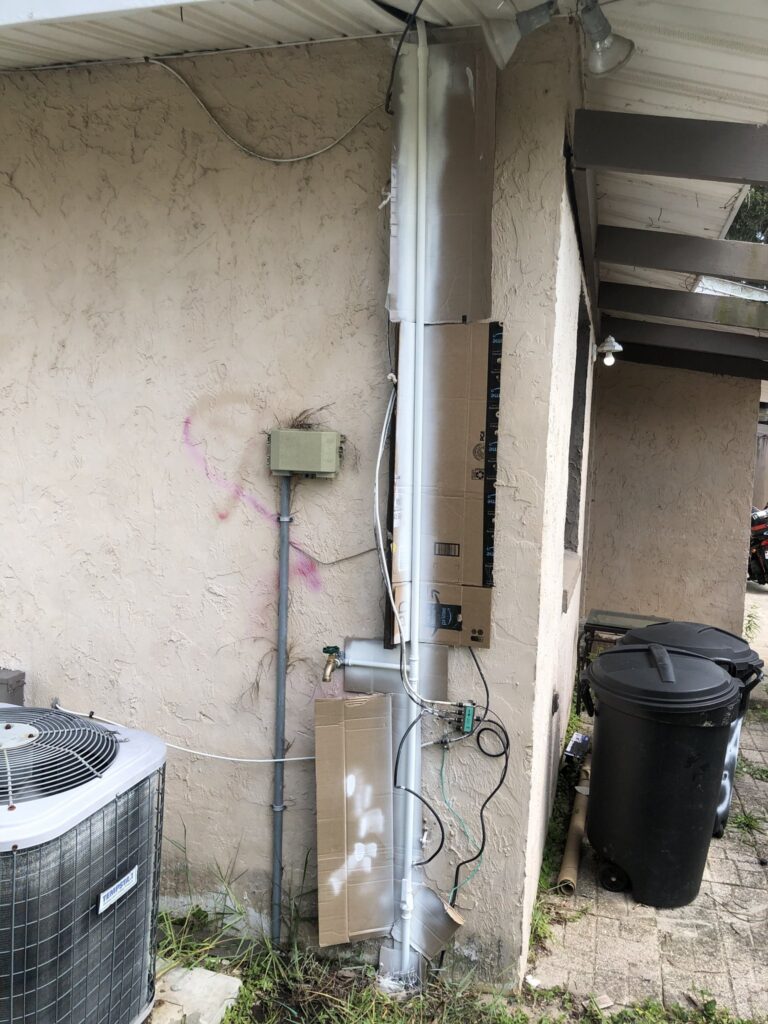
- A bill that triples with no puddle means the water is going somewhere you cannot see: a toilet, an irrigation zone, or under the slab.
- The meter at the curb tells you in five minutes whether the house is leaking right now. Everything else is finding which fixture.
- In Palm Coast, the usual order is toilets first, irrigation second, slab third. This one was the third.
- The utility will sometimes adjust a bill for a documented leak that was repaired. Ask before you pay it.
The situations described here are composites drawn from the types of jobs and decisions we encounter regularly. Names and specific figures are illustrative.
The bill was on the kitchen counter when I walked in, and the homeowner had circled the number: 13,000 gallons, on a house that had used 4,000 a month for three years. Nothing was wet. No drip under a sink, no stain on a ceiling, no soft spot in the yard. He had called the city first, and they had read the meter again and confirmed it, which is when he searched for why a water bill suddenly high with no visible leak happens and found more theories than answers. I told him I would find it in the order I always do, and that the order matters because the cheap answers come first.
This post is that visit, from the curb to the hall bathroom, and what 9,000 extra gallons a month looks like when it finally shows itself.
Step one: the meter at the curb
Every Palm Coast home on city water has a meter in a box near the street, usually a rectangular lid in the grass by the driveway. Under the lid, the register has a small triangle or star that spins when any water at all is moving through it. I turned off every fixture in the house, confirmed the irrigation controller was off, and lifted the lid. The triangle was turning, slowly and steadily. That is the whole first test: if the indicator moves with everything off, the house is leaking right now, and the question is only where. If it does not move, the extra water came from something that runs intermittently, and the search is different.

I also read the numbers, walked back inside for fifteen minutes, and read them again. About eleven gallons in fifteen minutes. That is roughly a gallon every eighty seconds, all day, every day, which works out close to a thousand gallons a day and matches the bill almost exactly. EPA WaterSense’s Fix a Leak Week[1] material says about one home in ten has a leak wasting ninety gallons a day or more; this house was wasting ten times that.
Step two: the toilets, because it is usually the toilets
Most of the high-bill calls I take end at a toilet, so that is where I go next. A flapper that does not seal lets tank water trickle into the bowl, the fill valve tops the tank back up, and the cycle runs silently around the clock. A dye tablet or a few drops of food coloring in the tank, wait ten minutes without flushing, and color in the bowl means the flapper is passing. I tabbed all three toilets. All three bowls stayed clear. I also listened at each tank for the hiss of a fill valve that never shuts off, which is the other silent version and the one I describe in the post on why a toilet keeps running after a new flapper. Nothing.
Three clean toilets is unusual on this call. Two-thirds of the time I am writing an invoice for a fill valve by now.
Step three: irrigation, which is the Palm Coast wildcard
Irrigation is the second place I look here because of how the systems are built. Most Palm Coast lots have a sprinkler system fed off the house supply through a backflow preventer near the meter, and a zone valve that sticks open, or a lateral line cracked by a root or a shovel, runs water into the sand where nobody sees it. I shut the irrigation isolation valve at the backflow and went back to the meter. Still turning, same rate. That cleared the irrigation and told me the leak was on the house side of that valve.
Then I shut the main valve at the house itself, the one on the supply where it comes up out of the ground at the front wall or in the garage. Meter stopped. So the leak was between the house valve and a fixture: in the walls, in the attic, or under the slab. On a 1990s single-story with copper under the slab, I already had a guess.
Step four: the warm spot
I asked him to walk the tile floors barefoot, room by room. He thought I was joking until he got to the hall bathroom and stopped. One patch of tile in front of the vanity was noticeably warm. I put a thermometer on it: eight degrees warmer than the tile three feet away. The hot line to that bathroom ran under that spot, and it had a pinhole in it. Hot water was leaking into the sand under the slab, warming the concrete, and draining away into soil that never looks wet because Palm Coast sand drains straight down. I confirmed it by shutting the cold inlet to the water heater; the meter stopped. Hot side, under the slab, hall bath.
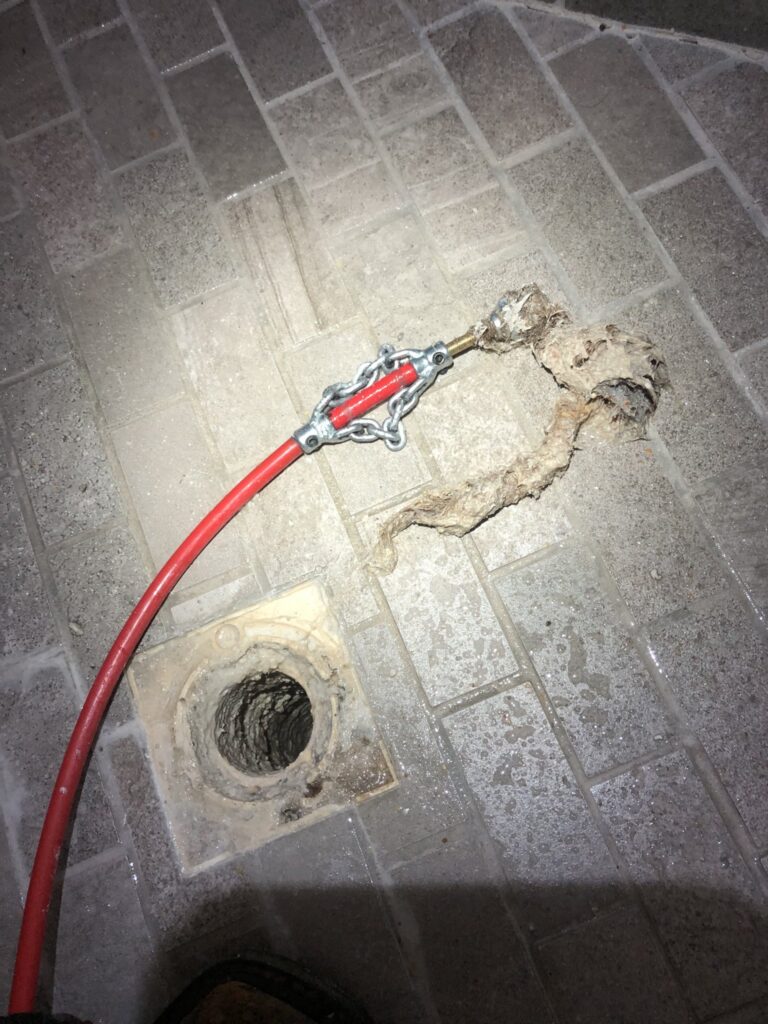
Everything from here is the slab-leak decision, which I wrote up separately in the post on the signs of a slab leak in a Florida home and the warm tile in January. The short version for this house was a reroute of the hot line through the attic rather than breaking the floor, and it was done in a day.
What the utility did about the bill
This is the question I get asked most, and the answer is better than people expect. The City of Palm Coast Utility Department[2] will consider a one-time adjustment on a bill inflated by a documented leak, typically for the portion above normal usage and usually only once in a set period, when the customer provides proof of the repair. I write the invoice to say what leaked, where, and when it was fixed, because that invoice is the proof. He submitted it with the bill, and the adjustment came through on the sewer portion, which is the larger part of a Palm Coast water bill because sewer is billed on water consumed. It did not make the bill go away. It took the sting out.
What the utility will not do is adjust for a leak that has not been fixed, or for irrigation overuse, or for a running toilet the homeowner did not notice for three months. Fix first, then ask.
The order, written down
Meter test with everything off. If it moves, toilets with dye tabs, then irrigation isolation, then the house main. If the meter stops at the house main, the leak is inside; shut the water heater inlet to split hot from cold. Warm floors, sounds in walls, and the water heater’s relief line are where I go from there. If the meter does not move at all, look at what runs intermittently: the irrigation schedule, a softener regenerating, a pool autofill, a hose left on. The person with the meter reading and the patience to do this in order usually finds it in under an hour, and the $96 service call is applied to whatever the fix turns out to be.
I have written the same sequence, with the invoices attached, for the pillar post on the common household plumbing problems a Palm Coast plumber sees in one week, where the running toilet from Seminole Woods is the more typical version of this call.
What people ask when the bill comes
Why is my water bill so high with no leak? Because the leak is somewhere you do not see: a flapper, a fill valve, an irrigation lateral, or under the slab. Dry floors mean nothing in sand.
How do I check if my house has a hidden leak? Everything off, then watch the meter’s leak indicator for two minutes. Movement means a live leak.
Can a toilet cause a high water bill? It is the most common cause I find. A silent flapper leak can pass two hundred gallons a day.
Will the utility adjust my bill for a leak? In Palm Coast, often, once, with proof of repair. Ask.
How do I check my toilet for leaks? Dye in the tank, wait ten minutes, look in the bowl. And listen for the fill valve.
What 9,000 gallons looked like
It looked like nothing, which is the point. A thousand gallons a day disappeared into the sand under a hall bathroom for a month and the only evidence above ground was a number on a bill and a tile that felt like it had been in the sun. The house is dry, the line is rerouted overhead, and the meter’s triangle sits still with the fixtures off, which is how I leave every one of these.
If your water bill suddenly high with no visible leak has you reading the meter at the curb, run the sequence above in order, and call when it points inside the house. Our plumbing repair and service in Palm Coast covers the diagnosis under the $96 service call, and that $96 goes toward the fix.