

What Are the Signs of a Slab Leak in a Florida Home, and Why Was the First Clue a Warm Bathroom Floor in January?
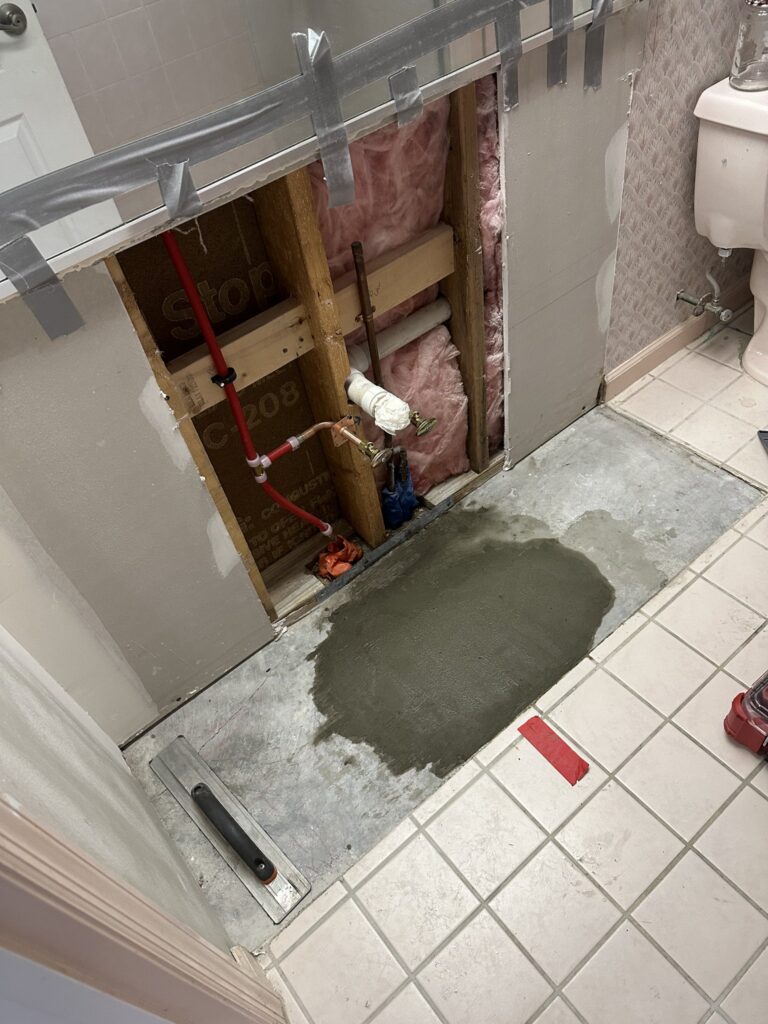
- A warm patch of floor, a meter that moves with everything off, and a water heater that runs more than it used to are the three signs I see most on slab leaks here.
- Electronic leak detection puts the leak within a foot or two on most Palm Coast slabs. It is not magic, and I say so before I start.
- Break the slab or reroute the line overhead: on a single hot line to one bathroom, the reroute wins almost every time.
- Insurance may cover the damage and the access, but usually not the pipe. Know that before you call the adjuster.
The situations described here are composites drawn from the types of jobs and decisions we encounter regularly. Names and specific figures are illustrative.
She noticed it in January because January is the only month a Palm Coast tile floor is cold. Standing at the hall bathroom vanity one morning, one tile under her left foot was warm. Not hot, just warmer than the rest, the way a floor feels over a heating duct in a house up north, except this house had no ducts in the floor. She had read about the signs of a slab leak in a Florida home and did not want to believe she was looking at one, so she called and asked me to tell her it was something else. I could not. But I could tell her it was the good kind.
This post is that job from the warm tile to the last drywall patch, with the decision in the middle that every slab leak comes down to, and what the insurer did and did not pay for.
The three signs, and which ones she had
Slab leaks in Florida almost never announce themselves with water on the floor. The slab is on sand, the sand drains, and the water goes down before it goes up. What shows instead is indirect. A warm spot on the floor, which means a hot line. A meter that moves with every fixture off, which means a live leak somewhere. A water heater that runs longer, or a hot tap that takes longer to get hot, because the heater is feeding a leak all day. Less often: a hairline crack in tile grout that was not there before, a musty smell in a closet, a baseboard that swells, or the sound of running water in a quiet house when nothing is on.
She had the warm tile and, once we checked, the meter. The water heater had been cycling more, which she had chalked up to winter. The hot tap in that bathroom took a full minute to warm, which had been true for a month. Three of the four classic signs, and the fourth, the sound, was there too once we stood in the hall at night with the house silent.
What is actually under a Palm Coast slab
Most of the city’s houses from the 1970s through the early 2000s were built with copper supply lines run in the sand under the concrete, sleeved where they come up through the slab to each fixture. It was standard practice under the Florida Building Code, Residential[1] edition and its predecessors, and it works for decades in most soil. What eats it here is pitting corrosion from the inside, which the Copper Development Association[2] attributes to water chemistry and, in some cases, to the way the pipe was handled during construction. Copper also fails from the outside when it rubs against the concrete at a slab penetration or sits in contact with fill that holds moisture and salt. Either way the failure is a pinhole, and a pinhole on a hot line under a bathroom is what she was standing on.
Her house is in the L-section, built in 1994, on a slab in an area the FEMA flood maps[3] put in a moderate-risk zone. That matters less for the leak than for the insurance conversation later, but I note it because the water table under the L-section is not deep, and a leak into wet sand spreads less and shows more than a leak into dry sand. Her warm patch was about two feet across. On a drier lot it might have been four.
Finding it without guessing
I do not break a floor on a hunch. The location process starts at the water heater: shut the cold inlet, and if the meter stops, the leak is on the hot side. It stopped. Then I pressurized the hot side alone and used acoustic detection, a ground microphone that listens for the hiss of water escaping a pipe under pressure, working the hall and both adjoining rooms. Slab leak detection in Palm Coast is helped by the sand, which carries sound reasonably well, and hindered by tile, which reflects it. I marked the loudest point, then confirmed it with an infrared camera that showed the warm plume on the floor. The two methods agreed on a spot eighteen inches in front of the vanity, which was about where her foot had been.

I tell every customer that detection puts the leak within a foot or two on a good day and within three on a bad one. On this floor it was within one, but I quote the honest range because a jackhammer on the wrong tile is a bad way to learn it.
The decision: break the floor, or go around it
Every slab leak comes down to this. Breaking the slab means cutting the tile, jackhammering a hole, digging to the pipe, cutting out the pinholed section, splicing in new copper or PEX, backfilling, pouring concrete, and then the part nobody budgets for, which is finding tile that matches a 1994 floor. It is a direct repair and it leaves the rest of the aging line in the sand, where the next pinhole is waiting. The Florida Building Code, Plumbing[4] edition allows either approach, and I have done both dozens of times.
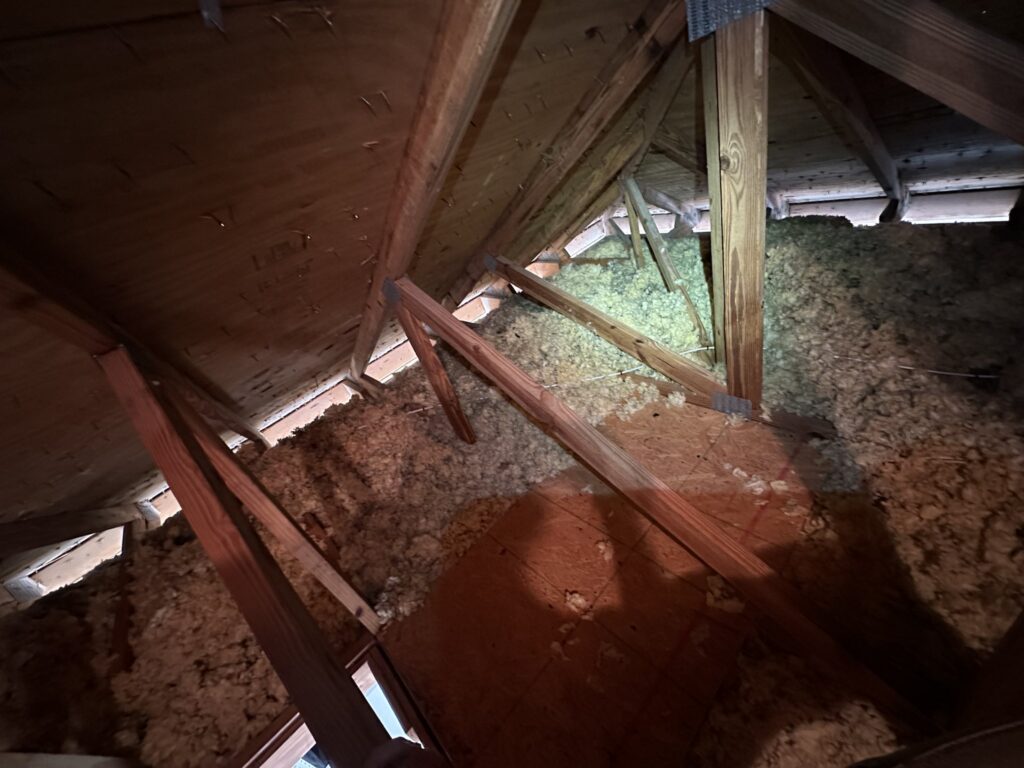
Rerouting means abandoning the leaking run under the slab and running a new line overhead, up a wall from the water heater, across the attic, and down to the fixture. No floor is touched. The trade is a couple of drywall openings and a day of attic work. On this house the leaking run was a single hot line serving one bathroom, about thirty feet, with an accessible attic and a water heater in the garage on the same side. That is the textbook reroute. I told her a slab break would fix this pinhole and leave her with a twenty-nine-year-old line under the floor; the reroute would retire that line entirely. She chose the reroute, and I would have too.
The work took one day. PEX from the heater up into the attic, across to the hall bath, down inside the wall behind the vanity, tied to the existing stub-outs. Two drywall cuts, both patched and painted the following week. The abandoned line under the slab was capped at both ends, which is all that is required. The warm tile was cool the next morning.
What the insurer covered
She had a standard Florida homeowners policy, and the conversation with the adjuster went the way most do. Under Florida Statute 627.7011[5] and the way most policies are written, the pipe itself is not covered; it failed from wear, and wear is excluded. What is often covered is the resulting damage and the cost to access the leak, meaning tearing out and replacing floor, drywall, or cabinets to reach it. Because we rerouted and touched no floor, the access cost was two drywall patches, which was below her deductible. She got nothing from the policy and paid for the reroute herself, which was less than the slab break would have cost before tile.
Two things to know that changed recently. The SB 2-A[6] reforms in 2022 and the follow-on bill in 2023 shortened the window to report a claim and tightened what insurers will pay on water losses. If you think you have a slab leak, document it the day you notice it, photograph the meter, and call your carrier before the repair is done, not after, even if you expect the answer to be no. And know that a documented history of a slab leak can come up on a four-point inspection when you renew or sell, which I get into in the post on what insurers look for in shut-off valves during a four-point inspection.
What people ask standing on the warm spot
How do you know if you have a slab leak? Warm floor, moving meter with everything off, a water heater that runs more, a long wait for hot water, or the sound of water in a silent house.
Is a slab leak covered by homeowners insurance in Florida? Usually the damage and the access, not the pipe. Report it early.
Should I reroute or break the slab? Reroute when the leaking run serves one or two fixtures and the attic is reachable. Break when it is a cold main under the middle of the house with no path overhead.
How much does slab leak repair cost? Detection is a fixed fee that applies to the work. A reroute of one line is a day; a slab break is two or three plus flooring. I quote both in writing before anything is cut.
What causes slab leaks in Florida? Pitting corrosion inside copper, abrasion where pipe meets concrete, and, less often, a nail or a settled slab.
How a high bill with dry floors turns into this call is in the post on where 9,000 gallons went in a Palm Coast slab home, and the fill valve that mimics a slab leak on the meter is in the post on why a toilet keeps running after a new flapper. Both start at the same meter box. The week of $96 calls that this one interrupted is in the guide to common household plumbing problems in Palm Coast.
What the floor feels like now
Cold, in January, all the way across. She sent a photo of a thermometer on the tile a week after the reroute, which I did not ask for and appreciated. The old line is still under there, dry and capped, and the new one runs through the attic where the next plumber can reach it with a ladder instead of a jackhammer. That is the good kind of slab leak: the kind you can go around.
If you have found one of the signs of a slab leak in a Florida home in your own house, shut the water heater inlet and watch the meter before you call anyone. Our plumbing repair and service in Palm Coast does the detection under the $96 service call, applies it to the repair, and quotes the reroute and the break side by side so you choose with numbers.
Sources
- Florida Building Code, Residential (8th Edition, 2023), Florida Building Commission
- Copper Development Association: corrosion of copper tube
- FEMA Flood Map Service Center
- Florida Building Code, Plumbing (8th Edition, 2023), Florida Building Commission
- Florida Statute 627.7011: Homeowners policies; water damage claims
- Florida Senate Bill 2-A (2022) and SB 7052 (2023): property insurance reforms