

Where Is the Main Water Shut-Off Valve in My House in Florida, and Why Did a Palm Coast Snowbird Wish She Knew Before Leaving for Six Months?
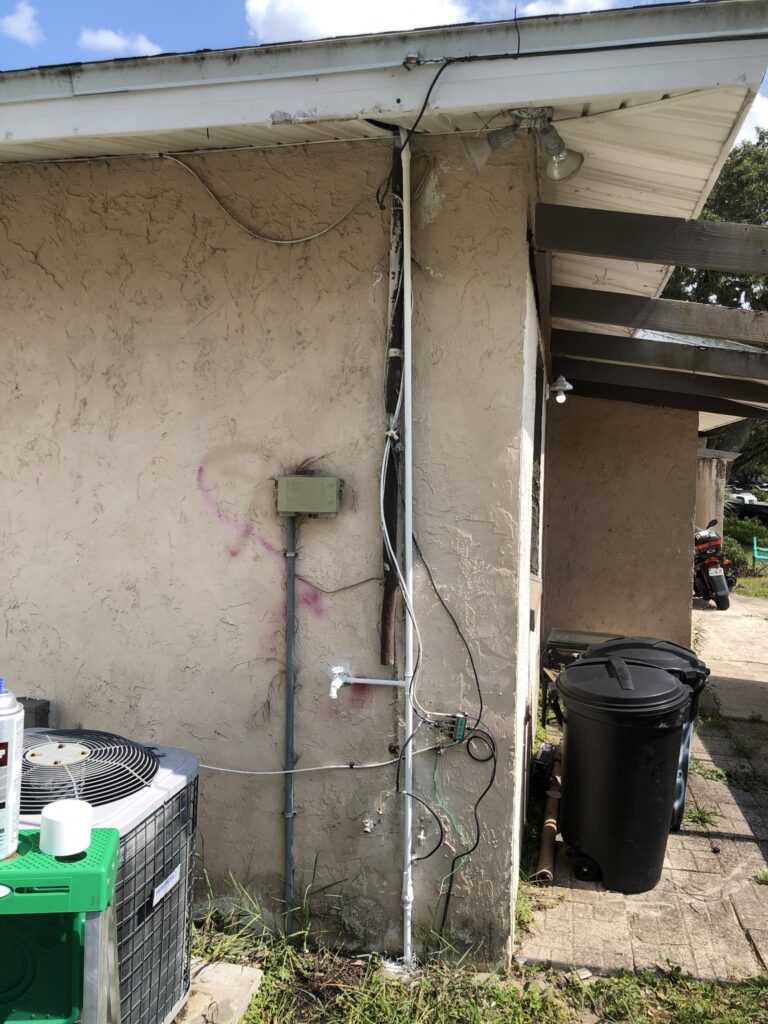
- In most Palm Coast houses the main shut-off is at the front hose bib where the supply comes out of the ground, in the garage near the water heater, or at the meter box by the street.
- A braided supply line on a toilet is a wear part. It fails without warning and it does not trickle.
- The walkthrough: meter box, house valve, water heater, irrigation, and the order to shut them for a hurricane. Twenty minutes, done once, texted as a checklist.
- Leaving for the season with the main open is the single most expensive habit I see in Palm Coast.
The situations described here are composites drawn from the types of jobs and decisions we encounter regularly. Names and specific figures are illustrative.
She left for the summer in May the way she had for eleven years: thermostat up, blinds closed, a key with the neighbor. In July the braided supply line under the guest bathroom toilet let go at the crimp. The neighbor noticed water at the garage door on the second day, let himself in, and called me from the kitchen standing in an inch of water, asking where the main water shut-off valve was because he had looked everywhere he could think of and it was not under the sink. It was on the front wall of the house, behind a hedge, eighteen inches from where he had parked. He had walked past it twice.
This post is that house, what two days of water did, and the twenty-minute walkthrough I now do with every seasonal customer before they leave, in the order I do it.
Where the main shut-off usually is in a Palm Coast house
There are three places, and the era of the house tells you which. In most of the 1970s through 1990s single-story homes, the water service comes up out of the ground at the front wall, usually near the garage side, with a hose bib and a valve right there at the stub. That was hers, behind a viburnum that had grown over it. In houses from the 2000s on, the builder often brought the service into the garage and put the valve on the wall near the water heater, sometimes inside a plastic access box. And in every house, there is a valve at the meter box in the grass near the street, which belongs to the city and takes a curb key or a long-handled wrench to turn; it is the fallback when the house valve cannot be found or will not move, and the City of Palm Coast Utility Department[1] would rather you use it in an emergency than let a house flood.

The Florida Building Code, Plumbing[2] edition requires a full-way shut-off valve on the service to every building, so one exists. The problem is never that it does not exist. It is that nobody in the house has seen it, or it is a thirty-year-old gate valve that will not turn, which is the post on what insurers look for in shut-off valves during a four-point inspection.
What let go, and why it was always going to
The line that failed was a braided stainless toilet supply, the flexible kind with a plastic nut at each end, installed when the toilet was replaced about twelve years earlier. They are a wear part. The rubber liner inside the braid ages, the plastic nut fatigues, and the crimp where the braid meets the fitting is the weak point; when one fails, it fails fully, at house pressure, and a half-inch line at sixty pounds runs several gallons a minute until something stops it. Over two days that is thousands of gallons, and the story of where that water went in a slab house with dry-looking floors is in the post on where 9,000 gallons went in a Palm Coast slab home. This time it did not hide. It came under the garage door.
I replace braided lines on every fixture I touch if they are more than ten years old, and I tell seasonal customers to have every one in the house replaced before they leave if they cannot remember when they were installed. It is a few dollars a line and it is the cheapest insurance in plumbing.
What two days of water did
Tile floors throughout, which saved her; on carpet it would have been a tear-out. Baseboards swelled in two rooms. The bottom of every lower cabinet in the guest bath and the adjacent hall closet wicked and delaminated. Drywall in the garage was wet to eight inches. A remediation company ran fans for a week. She had a claim, and under Florida Statute 627.7011[3] and her policy’s water-damage provisions it was covered as a sudden loss, which a burst line is. What made the adjuster’s job harder was the two days: a loss that ran unattended for forty-eight hours raises the question of whether the homeowner took reasonable steps to prevent it, and a house left for the season with the main open and no one checking is exactly that question. She had documentation of the neighbor’s weekly checks, which helped. Not everyone does.
If the main had been closed in May, the line would have failed in July into a depressurized system, and the neighbor would have found a damp spot the size of a dinner plate.
The walkthrough, in order
I started doing this the week after her call, and I do it with every seasonal customer now. It takes twenty minutes and I text the checklist with photos afterward so it lives on their phone.
The meter box. Where it is, how to lift the lid, which valve is the city’s, and how to read the leak indicator. I show them the indicator with the house quiet so they know what still looks like.
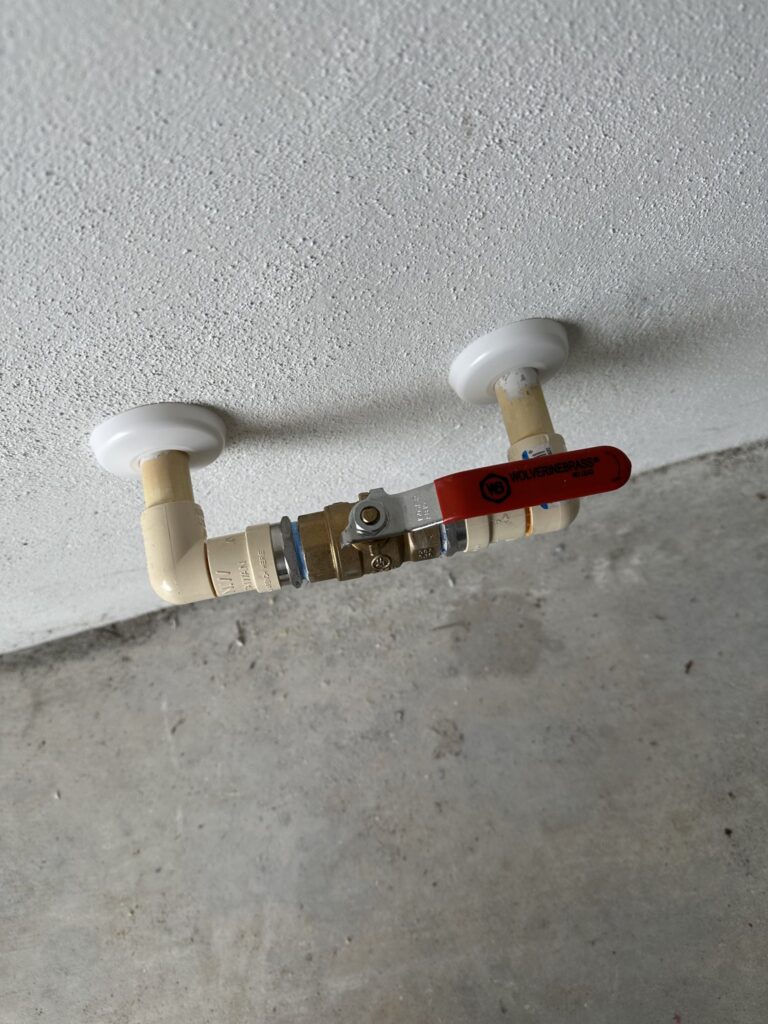
The house valve. Where it is, which way is closed, and whether it turns. If it is a gate valve that fights, I replace it with a ball valve on the spot, because a shut-off that does not shut off is not one. Then a photo with the hedge trimmed back.
The water heater. Where the cold inlet valve is and where the breaker is. For a seasonal absence, the tank gets shut off at the breaker and the inlet closed, which also means it is not feeding a leak all summer. The tank’s own drain and relief valve get a look while I am there.
Irrigation. Where the backflow preventer and its isolation valve are, and how the controller is set. Irrigation stays on in a Florida summer, which is why it gets its own valve and why the house main can be closed without killing the lawn: the irrigation tee is usually upstream of the house valve, and I confirm that on each house because sometimes it is not.
The hurricane sequence. The NOAA National Hurricane Center[4]‘s season runs June through November, which overlaps the entire time most snowbirds are gone, and Flagler County Emergency Management[5]‘s evacuation zones cover most of the eastern half of the city. If a storm comes, someone with a key needs to do three things in order: water heater breaker off, house main closed, and a note on the panel. I write it on a card and tape it inside the garage door.
What I tell them to do the day they leave
Close the house main. Shut the water heater breaker. Leave the irrigation on its own valve and schedule. Ask the neighbor to lift the meter lid once a month and look at the indicator, and to walk the house once a month and open every cabinet under a sink. Put my number on the card by the panel. And replace every braided line older than ten years before any of that, because the walkthrough tells you how to stop the water, and the lines are what start it.
That is the whole list. It is the same reset-first, check-what-costs-nothing logic I use on every small repair, including the toilet that started this one, in the post on why a toilet keeps running after a new flapper, and it costs one service call to set up, which is the one line item on the post on what five Palm Coast service calls actually came to that I would call an investment rather than a repair.
What people ask standing at the front wall
Where is my main water shut-off? Front wall near the garage on older Palm Coast houses, in the garage near the water heater on newer ones, and always at the meter box by the street.
Should I turn off the water when I leave for the season? Yes. Main closed, water heater breaker off, irrigation on its own valve.
How do I shut off the water to my house in an emergency? House valve first. If you cannot find it or it will not turn, the meter box valve with a curb key or a wrench, turned a quarter to cross the pipe.
What do I shut off before a hurricane? Water heater breaker, then the house main. Leave a note.
How long do braided supply lines last? Plan on ten years. Replace them on a schedule, not on a failure.
How the other signs of a hidden leak show up while you are away, and why a warm floor in January was the first one for another customer, is in the post on the signs of a slab leak in a Florida home. The week of calls that this one is the cautionary tale for is in the guide to common household plumbing problems in Palm Coast.
What the front wall looks like now
The viburnum is trimmed back, the valve is a ball valve with a lever, there is a laminated card on the inside of the garage door, and the neighbor has a photo of all of it on his phone. She closed the main herself before she left the following May and texted me a picture of the lever to prove it. Every toilet in the house has a new supply line. The guest bath has new baseboards. That is the good version of this story; it just took the bad version to get there.
If you are leaving for the season and cannot say where your main water shut-off valve is without looking, that is the visit to book before you go. Our plumbing repair and service in Palm Coast does the walkthrough under the $96 service call, replaces what will not turn, and texts you the checklist.