

PEX vs Copper for a Repipe in Florida: What Made a Palm Coast Homeowner Pick PEX-A After Insisting on Copper?
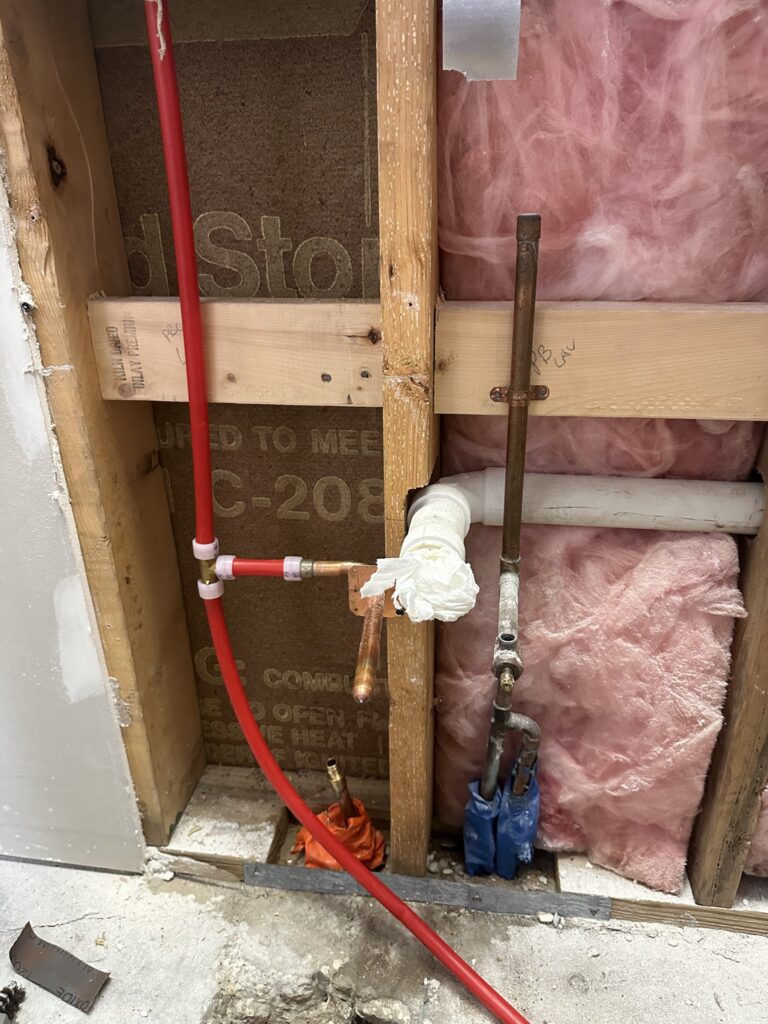
- He wanted copper for a good reason: it is what he understood. He chose PEX-A for four better ones: the water that pitted his old copper, the cost of copper in 2026, the attic, and the manifold.
- PEX-A does not pit, does not corrode in salt air, expands instead of bursting, and runs home to a manifold so every fixture has its own line and its own valve.
- Copper still wins in a few places: exposed runs where UV or rodents are a risk, the last foot at the water heater, and houses where the homeowner’s preference outweighs the price.
- Either material is only as good as the install and the inspection behind it.
The situations described here are composites drawn from the types of jobs and decisions we encounter regularly. Names and specific figures are illustrative.
He had been a mechanical engineer for thirty years and he opened the quote meeting by saying he wanted copper, Type L, and he did not want to hear about plastic. That is a reasonable position from someone who spent a career specifying materials, and I have had the PEX vs copper for a repipe in Florida conversation enough times to know that the way to have it with an engineer is with data. So I brought the cut-out section of his own copper, the Plastics Pipe Institute[1]‘s technical bulletins on PEX-A, a copper price sheet dated that week, and a thermometer reading from his attic. Ninety minutes later he chose PEX-A. This post is that ninety minutes.
Why he wanted copper, and why that is not wrong
Copper has been the residential supply material in this country for seventy years. It is rigid, it is metal, it does not off-gas, it can be soldered by anyone with a torch, and it has a track record measured in generations. An engineer who specified copper for decades has every reason to trust it. The Florida Building Code, Plumbing[2] edition approves it without restriction. Nothing I said in that meeting was that copper is bad. It was that copper had already failed in his house, and the reasons it failed were still in the water.
Argument one: the piece of his own pipe
I put the six-inch cut-out on the table, split lengthwise. The inside was pitted the way the post on pinhole leaks in copper pipes in Florida describes: a dozen craters, one through. The Copper Development Association[3]‘s guidance on pitting corrosion is candid that certain water chemistries produce this, and Palm Coast’s is one of them. New Type L copper would have thicker walls than the Type M that had failed and would last longer, but the same water at the same pressure would start the same pits on the first day. He asked how much longer Type L would go. My honest estimate was decades, not generations, and with a pressure-reducing valve, which was going in regardless. PEX-A is cross-linked polyethylene, and it does not pit, scale, or corrode in this water at all. The Plastics Pipe Institute’s data on PEX-A covers its resistance to chlorine and chloramine at residential concentrations and temperatures, which was the specific question he asked, and the answer for PEX-A manufactured to current standards is a rated service life beyond what either of us will see.
Argument two: the price of copper this year
Copper is a commodity and its price in 2026 is what it is. A three-bath repipe in Type L copper on his house was on the quote at a number in the range the service page lists for copper, which was several thousand dollars above the PEX-A number for the same house, same routing, same fixtures, same permit. Most of the difference is material; some is labor, because copper is soldered at every joint and PEX-A is expanded onto a fitting in seconds. He had expected a premium for copper. He had not expected it to be that large, and he asked whether the premium bought anything on this water. It bought the material he was used to. It did not buy a longer life.
Argument three: the attic in June
A Palm Coast repipe on a slab house runs through the attic, and I had measured his attic at one in the afternoon a week earlier: one hundred thirty-one degrees. The Florida Building Code, Plumbing edition requires insulation on hot lines in unconditioned space and I insulate both, but the material under the insulation still lives at that temperature all summer. Copper conducts heat; a copper hot line through a hot attic loses temperature to the attic in winter and gains it in summer, and copper cold lines in a summer attic deliver warm water at the tap until the line purges. PEX-A insulates better than copper by itself, and it handles the thermal cycling without work-hardening, which copper does at fittings over thousands of cycles. It also expands rather than bursts if a line freezes, which is rare here and not zero on the coldest January night in an attic. The EPA lead-free rule[4], which is the NSF/ANSI 372 standard for wetted brass, applies to the fittings on either material, and every PEX-A fitting I use carries it.
Argument four: the manifold
This is the one that turned the engineer. A copper repipe is a trunk-and-branch system: a main line with tees to branches to fixtures, soldered, with a valve at the main and stops at the fixtures. A PEX-A repipe can be trunk-and-branch too, but the better design is a manifold: a distribution block in the garage with a labeled valve for every fixture in the house, and a continuous run of PEX-A from that valve to the fixture with no joints in the walls or attic. Every fixture has its own line and its own shut-off in one place. Pressure is balanced because no fixture is downstream of another. A leak, if there ever is one, is at a fitting at one end or the other, never inside a wall. He looked at the manifold layout drawing for a long minute and said that was a better system than the one he would have drawn. It is. The Plastics Pipe Institute and the manufacturers publish the manifold design guidance, and it is how I run every PEX-A repipe.

Where I still use copper
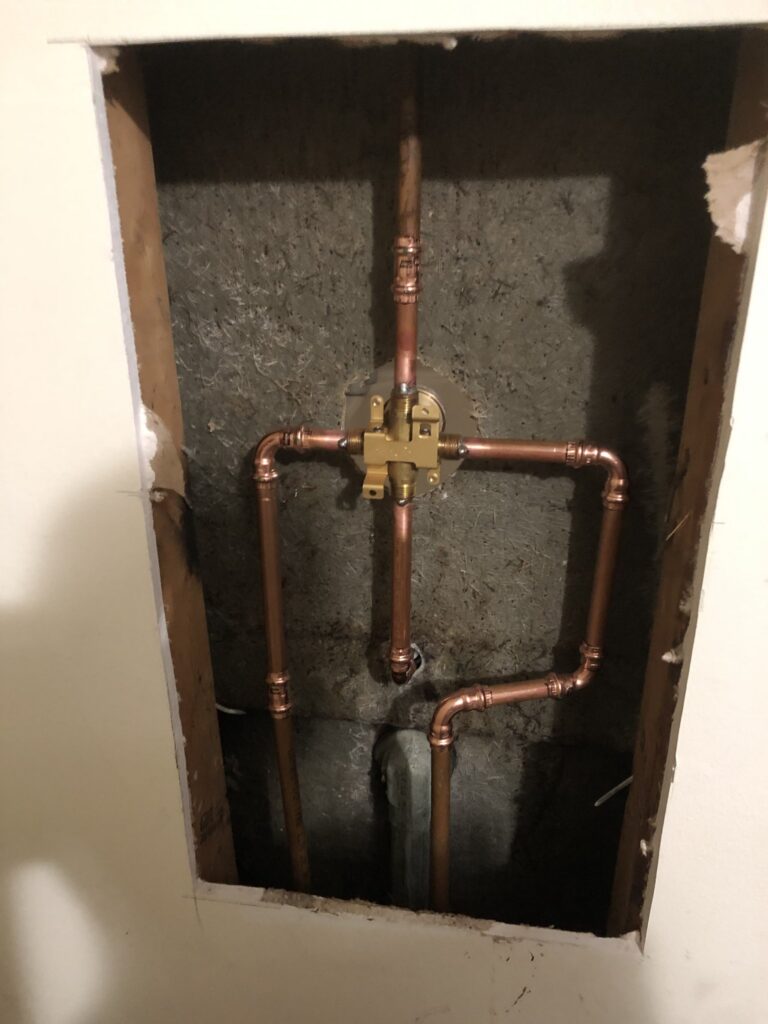
He asked, fairly, whether I was just selling the cheaper thing. So I told him where I still specify copper. The last foot at the water heater, where the code and good practice keep a rigid metal connection at the tank. Any run exposed to sunlight, because UV degrades PEX and copper does not care; a line to an outdoor shower or an exposed hose bib riser is copper. Any run where rodents are a known problem, because a rat will chew PEX and will not chew copper, and I have seen it in a few Palm Coast attics. Repairs on a house that is staying copper, where matching the material is the right call. And any homeowner who, having heard all of this, still prefers copper; the premium is theirs to pay and I will install Type L and a pressure-reducing valve and it will last a long time. He did not, in the end, prefer it.
What he chose, and what it cost
PEX-A, manifold in the garage, attic route, four days, in the PEX range the service page lists for a three-bath house, with a pressure-reducing valve at the new main and copper for the last foot at the heater. The itemized quote, next to two other bids, is the post on how much a repipe costs in Florida for a three-bath Palm Coast home. What the four days looked like from the attic is the post on a repipe through the attic in a slab house. And the insurance side, which was not his reason but is many people’s, is the post on polybutylene pipes and insurance in Florida; a copper house does not have that problem, but a repiped house of either material gets the same clean four-point.
What people ask in the quote meeting
Is PEX or copper better for a repipe in Florida? On Palm Coast water, PEX-A: it does not pit, it costs less, it handles the attic, and it runs to a manifold. Copper where UV, rodents, or preference say so.
How long does PEX last? Manufacturers rate PEX-A for fifty years and the tested service life is longer. It does not corrode.
Is PEX safe for drinking water? Yes. It is certified to the drinking water standards, and the fittings meet the lead-free rule.
Why is copper so much more? Commodity price plus soldered labor at every joint. Several thousand dollars on a three-bath house this year.
What is a manifold? A block in the garage with a valve and a dedicated line for every fixture. It is the best reason to choose PEX-A.
How the material decision plays out over a four-day install in a 1984 house, day by day, is the whole house repipe in Florida told day by day in a 1980s Palm Coast slab home.
What the engineer says now
That the manifold is the part he shows people. His house has a labeled block in the garage, no joints in the walls, sixty pounds at every tap, and a piece of pitted copper he asked to keep. He still thinks copper is a fine material. He is right. It was the wrong one for his water.
If you are weighing PEX vs copper for a repipe in Florida and you lean copper, bring the lean to the meeting and I will bring the piece of your pipe. Our whole house repipe service in Palm Coast quotes both materials side by side under the $96 service call, applies it to the work, and installs whichever one you choose with the inspection behind it.