

What Happens With Polybutylene Pipes and Insurance in Florida, and How Did a Palm Coast Home Get Covered After a Repipe?
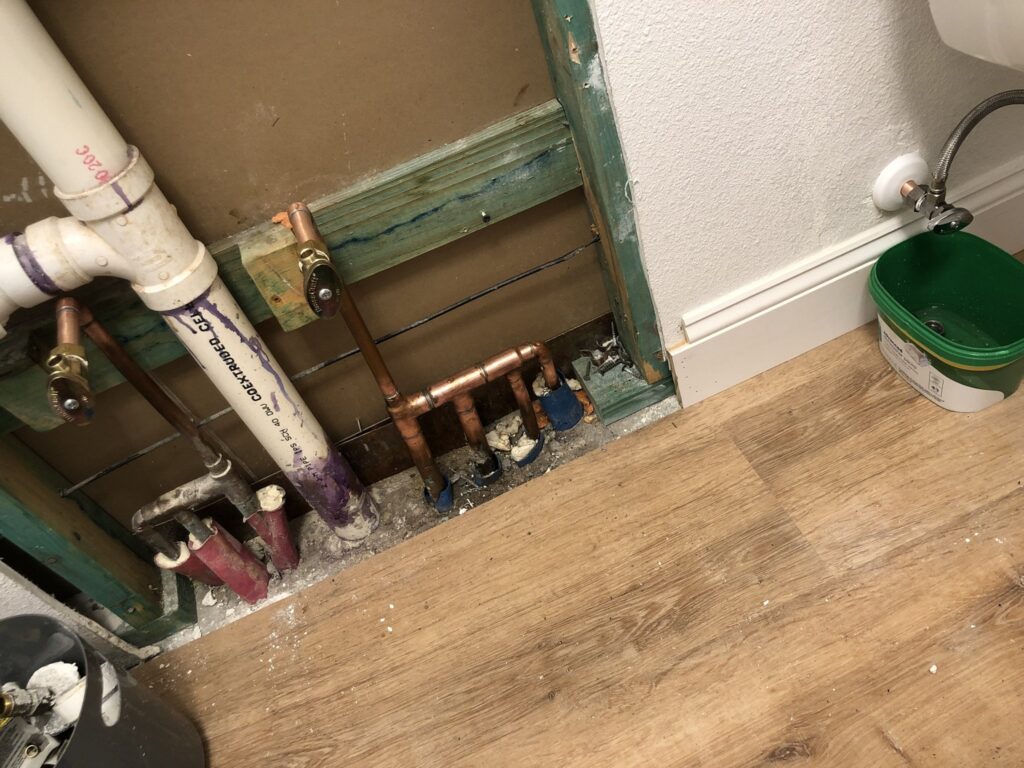
- Polybutylene is the gray plastic supply pipe in houses from the late 1970s to the mid-1990s. It fails from the inside without warning, and Florida insurers treat it as a decline on a four-point.
- The buyer’s application was declined nine days before closing. The seller and buyer split a repipe, and the policy was bound on the plumber’s letter and the permit.
- Spotting it: gray pipe, half-inch, usually with plastic or copper crimp fittings, at the water heater, under sinks, and at the main. A stamp reading PB2110 settles it.
- The paperwork the underwriter wanted: the permit, the passed inspection, an invoice stating the whole house was repiped in PEX, and photos of the manifold and a few fixture connections.
The situations described here are composites drawn from the types of jobs and decisions we encounter regularly. Names and specific figures are illustrative.
The call came from the buyer’s agent. Her buyer’s homeowners application on a 1989 house in Palm Coast’s W-section had come back declined, and the reason on the letter was one line: polybutylene supply piping identified on four-point inspection. Closing was in nine days and the lender would not fund without a bound policy. She wanted to know what the deal was with polybutylene pipes and insurance in Florida, whether it could be fixed in time, and who was going to pay for it. Yes, and that is a negotiation, and this post is how it went.
What polybutylene is, and why it is a problem
Polybutylene, PB, is a gray plastic supply pipe installed in millions of American homes from about 1978 to 1995, because it was cheap and easy to run. It turned out to degrade from the inside in contact with chlorinated water: the pipe wall and especially the acetal plastic fittings become brittle and flake, and they fail suddenly, without a warning drip, often at a fitting behind a wall. The Cox v. Shell[1] class action settled in the 1990s over exactly this, paid for repipes for years, and closed; a house with PB today has no claim left, only the pipe. Florida’s water is chlorinated or chloraminated everywhere, and the state’s insurers have watched PB houses produce water losses for thirty years. Their underwriting bulletins reflect that: most carriers will not write a new policy on a house with PB supply piping, and many will not renew one once a four-point identifies it. That is what the buyer’s decline letter said, in one line.
How to spot it
Gray plastic pipe, usually half-inch, sometimes three-quarter at the main, with a dull finish. It is most visible at the water heater connections, under kitchen and bathroom sinks where the stub-outs come through the wall, at the washer box, and where the main enters the house. Fittings are either gray or white plastic with copper crimp rings, or, on later installs, copper or brass insert fittings with crimp rings. The stamp on the pipe reads PB2110, and that settles it. Do not confuse it with gray PVC drain pipe, which is larger and rigid, or with PEX, which is flexible and white, red, or blue; PB is flexible and gray. I check the era first, because a Palm Coast house built between 1980 and 1995 has a meaningful chance of PB, then the water heater, then under the kitchen sink. Three minutes.

The four-point inspector had done the same. The Citizens Property Insurance[2] four-point form, which most Florida carriers use or copy, asks specifically for the supply material and has a checkbox for polybutylene, and the Florida Office of Insurance Regulation[3]‘s guidance for homeowners explains that the four-point drives the underwriting decision. The inspector had photographed gray pipe at the water heater and checked the box. He was right.
Nine days: the negotiation
The seller did not know the house had PB; it had never leaked. The buyer wanted the house. The lender wanted a policy. I quoted a whole-house PEX-A repipe with a manifold, four days, permitted, in the three-bed two-bath PEX range on the service page, and gave the number to both agents the same afternoon. The seller and buyer split it, which is the most common outcome I see; sometimes the seller pays it all as a credit, sometimes the buyer takes it on with a price reduction. The Flagler County Property Appraiser[4]‘s record showed the house’s year built, which is what the underwriter had used to flag it for a four-point in the first place, and the appraiser’s record is also what an agent can check before listing a house of that era to avoid this exact week. The repipe started the next morning.
The repipe, and keeping the timeline
Four days, through the attic, no floors cut, water on every night, the sequence in the post on a repipe through the attic in a slab house over four days. The City of Palm Coast Building Division[5] permit was pulled the day the contract was signed with the rough-in inspection requested for day four. The polybutylene came out of the walls where the drops were fished and was capped under the slab where it could not be reached. Every fixture got a new stop, the water heater got new connections, the main got a ball valve and a pressure-reducing valve, and the manifold went on the garage wall. The inspector signed the rough-in on day four and the final the following Monday, which was two days before closing.
The paperwork that bound the policy
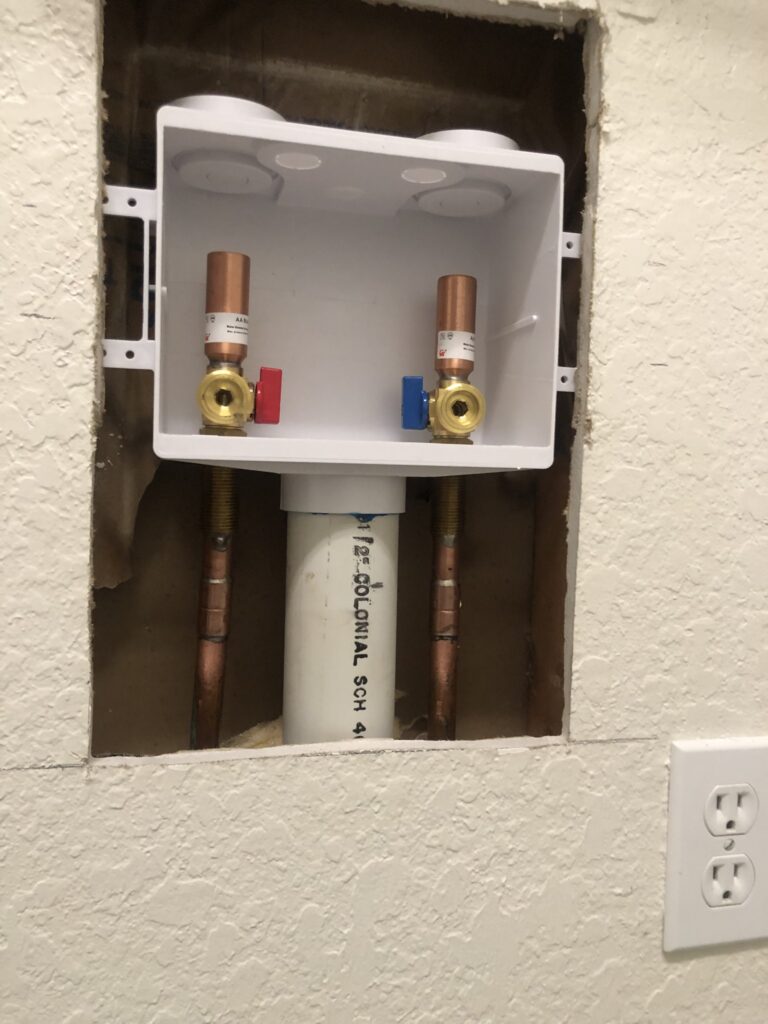
An underwriter who declined on PB wants to see that the PB is gone, not that a plumber says so. What I sent, through the buyer’s agent to the carrier: the permit number and the inspection record from the city, showing a whole-house repipe passed rough-in and final; an invoice on letterhead stating that all polybutylene supply piping in the residence was replaced with PEX-A, with the fixture count and the date; and a set of photos, the manifold, the new main and PRV, the water heater connections, and three fixture stub-outs with new stops, each labeled. The carrier bound the policy the next day on that package, without a second four-point, which is common when the documentation is complete. Some carriers do send a re-inspection; the package makes that a formality. The SB 2-A[6] reforms in 2022 and the follow-on in 2023 made carriers stricter on four-points generally, and the way through is documentation, not argument.
The invoice language matters, and so does the permit behind it; a repipe done without one, which is the couple’s story in the post on the questions to ask a repipe plumber before you sign, cannot produce this package at all. An invoice that says plumbing repairs does nothing. One that says whole-house repipe, all polybutylene replaced, PEX-A, permit number, passed final, closes the finding.
What people ask holding the decline letter
Why won’t insurance cover polybutylene? Because it fails suddenly from the inside and has produced thirty years of water losses. Most Florida carriers decline it on a four-point.
How do I know if my house has it? Gray flexible pipe at the water heater or under sinks, in a house built 1978 to 1995, stamped PB2110.
Can I get insurance with polybutylene? Rarely, and at a premium, from a limited market. A repipe is the durable answer and the one most lenders end up requiring.
What does the insurer need after a repipe? The permit and inspection record, an invoice stating all PB was replaced, and photos. Sometimes a re-inspection.
Who pays at a sale? Negotiated. Split, seller credit, or buyer with a price reduction are all common.
The three signs that a house is heading toward this letter before it arrives are the post on the signs you need to repipe your house, and the material that replaced the PB, and why not copper, is the post on PEX versus copper for a repipe in Florida. What the same repipe cost on paper, next to two bids that would not have satisfied an underwriter, is the post on how much a repipe costs in Florida. And what the house is like a year on, including the hurricane shutdown with a manifold, is the post on what to expect after a repipe one hurricane season later. The 1984 house whose repipe also started with an insurance letter is the whole house repipe in Florida told day by day.
What closed, and when
On the original date. The buyer has a bound policy, a manifold in the garage, and a house with no gray pipe in it. The seller paid half of something they had not known about and sold a house that would otherwise have sat. The agent now checks the year built and looks under the kitchen sink before listing anything from the 1980s, which is the cheapest inspection in real estate.
If a four-point has flagged polybutylene pipes and insurance in Florida on a house you are buying, selling, or renewing, the timeline is four days plus paperwork, and it is a timeline I have kept inside a closing more than once. Our whole house repipe service in Palm Coast confirms the material under the $96 service call, applies it to the repipe, and sends the underwriter the package that binds the policy.
Sources
- Cox v. Shell Oil polybutylene class action settlement record
- Citizens Property Insurance Corporation: four-point inspection form
- Florida Office of Insurance Regulation: consumer resources
- Flagler County Property Appraiser
- City of Palm Coast Building Division: permits and inspections
- Florida Senate Bill 2-A (2022) and SB 7052 (2023): property insurance reforms