

How Much Does a Repipe Cost in Florida, and What Did the Line-Item Quote Look Like for a 3-Bath Palm Coast Home?
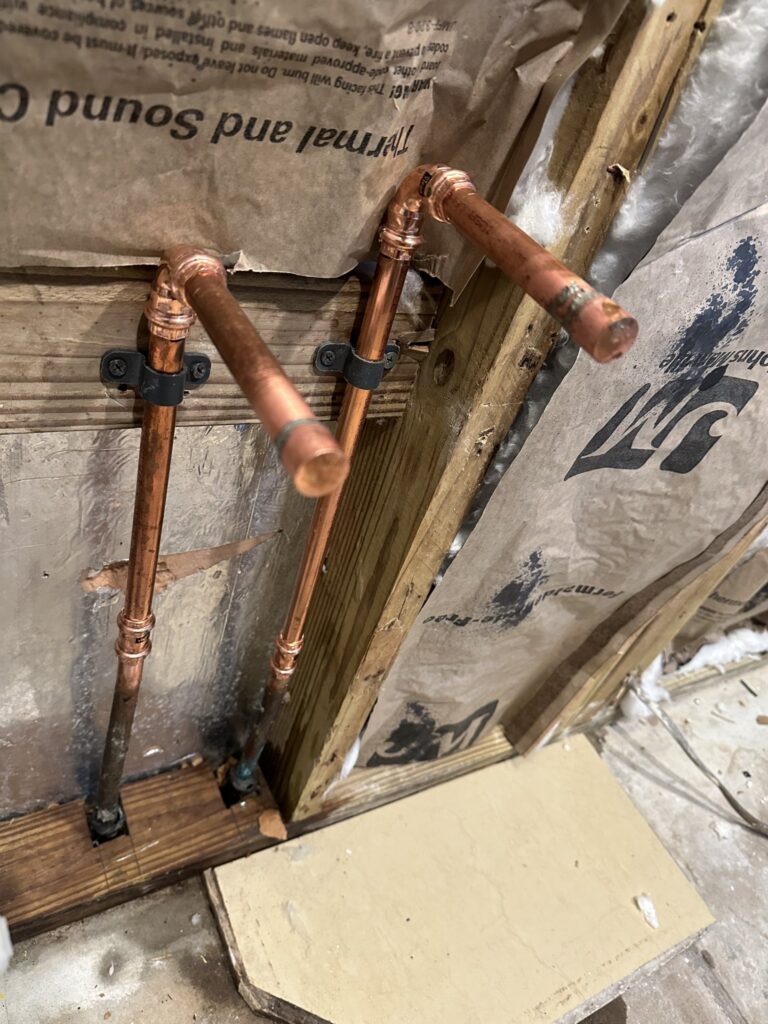
- A repipe is priced by fixture count and routing, not square footage. A three-bath Palm Coast slab house in PEX-A lands in the range the service page lists; copper is several thousand more.
- The lines: fixtures, attic route and drops, wall openings, manifold and new main, stops and hose bibs, water heater connections, permit and two inspections, pressure test, drywall patch.
- The two lower bids left out the permit, the drywall, and the stops. One had no manifold. Both were cheaper because they were less.
- Ask every bid three things: is it permitted, who patches the walls, and does every fixture get a new stop.
The situations described here are composites drawn from the types of jobs and decisions we encounter regularly. Names and specific figures are illustrative.
The house was 2,100 square feet on a slab, three bedrooms, three bathrooms, a kitchen, a laundry, two hose bibs, and copper from 1991 that had pinholed twice. The homeowners had two other bids on the table when I sat down at the kitchen counter, and their question was the one every repipe customer asks: what does the repipe cost in Florida actually include, and why are three numbers for the same house so far apart? I read my quote aloud, line by line, and then we read the other two the same way. This post is all three.
How a repipe is priced, before the lines
Not by square footage. Two houses the same size with different fixture counts and different routing are different jobs. The number is driven by the count of fixtures, which is how many runs of pipe there are; by the route, which on a Palm Coast slab house means the attic and the number of wall drops; by the number of wall openings needed to make those drops, which is what drives the drywall; and by material, PEX-A or copper. The service page lists ranges by house type for exactly that reason. This house was seventeen fixtures, a single-story attic route, and about fourteen wall openings, in PEX-A. That put it in the three-bath PEX range on the page, toward the upper half because of the third bath and the extra hose bib.
Line one: fixtures and runs
Seventeen fixtures: three toilets, four sinks, three tub or shower valves, a kitchen sink, a dishwasher, a fridge line, a washer, a water heater, and two hose bibs. Each is a dedicated run of PEX-A from the manifold, hot and cold where both apply, which is about thirty runs of tubing. This line is the material and the labor to pull it, and it is the largest line on any repipe. Why PEX-A and a manifold rather than copper, and what the copper number would have been, is the post on PEX versus copper for a repipe in Florida.
Line two: the attic route and the drops
The runs go up from the manifold in the garage into the attic, across it on the trusses, insulated, and down inside the walls to each fixture. Each drop is a wall opening, usually a rectangle behind the fixture, sized to reach the stub-out. This line is the labor in the attic, which in a Florida summer is scheduled early and in shifts, and the count of drops. A two-story house or a house with a bathroom on a far exterior wall adds to it. The whole day-by-day of the attic is the post on a repipe through the attic in a slab house over four days.
Line three: wall openings and patching
About fourteen openings on this house, plus the manifold opening in the garage. My quote lists them, and it lists who patches them: on this quote, me, with the drywall patched, taped, and mudded to paint-ready, with the homeowner’s painter doing the paint. That is a line on the page in the drywall patching range. Some quotes leave it out and some homeowners prefer to hire their own drywall crew, which is fine as long as the quote says which. This was the first place the other two bids diverged.
Line four: the manifold, the new main, and the shut-offs
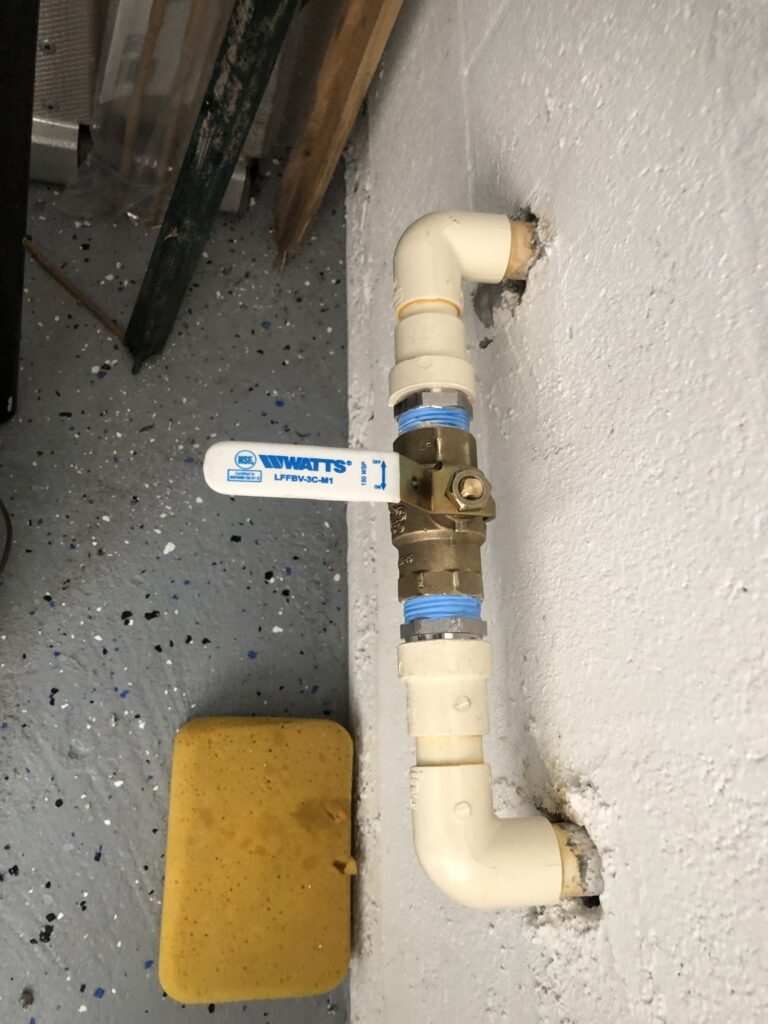
A new main shut-off ball valve where the service enters the house, replacing the 1991 gate valve, with a pressure-reducing valve set to sixty since the house was reading high. The manifold in the garage, with a labeled valve for every run. New quarter-turn stops at every fixture, new braided supply lines, and two new frost-free hose bibs, because a repipe that reuses thirty-year-old stops and bibs has left the two most common leak points in place. New flexible connections at the water heater with the last foot in copper. This line is the hardware that makes the house serviceable for the next thirty years and it is the second place the other bids diverged.

Line five: permit, inspections, and the pressure test
A City of Palm Coast Building Division[1] plumbing permit under my license, billed at cost in the range the service page shows. A rough-in inspection with every run exposed and the system under a pressure test, which the inspector reads on the gauge, and a final inspection after the fixtures are reconnected. The Florida Building Code, Plumbing[2] edition requires the permit for a repipe and the test before the walls close, and the permit record is what the homeowner’s insurer and the next buyer will ask for. Two visits by the inspector, a day of my schedule, a line on the quote.
Line six: what is not on it
Fixtures themselves; a repipe reconnects the toilets and faucets that are there. Paint. Tile, if a valve is behind tile and the tile has to be opened, which on this house it did not; I go in from the back of the wall wherever possible. Anything under the slab, which is abandoned in place and capped, not removed.
The two lower bids, read the same way
Bid one was about twenty percent under mine. Read line by line: no permit line, and when the homeowner had called to ask, the answer was that a permit was not needed for a repipe. That is false under the Florida code, and a repipe without a permit is a problem at sale and a problem with the insurer who asked for the repipe in the first place. No drywall line; the walls would be left open for the homeowner to patch. And the stops were reused, not replaced. Take those three out of my quote and the numbers were within a few hundred dollars.
Bid two was about thirty percent under. Trunk-and-branch PEX with no manifold, which is a legitimate design but a lesser one, and it means joints in the attic and walls. No pressure-reducing valve. Stops reused. Drywall not included. And the license number on the bid, when the homeowner looked it up on the DBPR license lookup[3], was a general contractor’s license, not a plumbing contractor’s, which under Florida law is not the license that pulls a plumbing permit; the bid was going to sub the work to someone unnamed. Chapter 713[4], the construction lien law, is why an unnamed sub on a large job is a risk: pay the wrong party and a lien can follow. The homeowners had not known to check any of that until the bids were side by side.
Neither bid was a scam. Both were less, priced as less, and described in a way that made them look like the same thing. The three questions that would have sorted them in five minutes are: is the work permitted and inspected, who patches the walls, and does every fixture get a new stop. The couple who did not ask those questions, and what I found in their attic six months later, is the post on the questions to ask a repipe plumber before you sign.
What people ask holding three bids
How much does a repipe cost in Florida? A three-bath slab house in PEX-A is in the range the service page lists; copper is several thousand more. Fixture count and routing move it, not square footage.
Why are bids so different? Usually the permit, the drywall, the stops, and the manifold. Read each bid for those four lines.
Do I need a permit for a repipe? Yes. It is a code requirement and an insurance and resale document.
Who fixes the walls? Whoever the quote says. Ask.
Is the cheapest bid a bad one? Not necessarily. It is usually a smaller job. Make sure you want the smaller job.
How the insurer’s letter often starts the whole process, and what the underwriter asked for after this repipe, is the post on polybutylene pipes and insurance in Florida. The four days the quote paid for, in a similar house, are the whole house repipe in Florida told day by day in a 1980s Palm Coast slab home.
What they chose, and why it was not the price
Mine, at the number on the page, with the permit, the manifold, the stops, the PRV, and the drywall. They said afterward that the deciding line was not the total but the license lookup, because it made them read the other two bids as descriptions of work rather than as prices, and once they did that the totals stopped being comparable. That is the whole lesson of reading a quote aloud.
If you are comparing repipe cost in Florida across bids and the numbers are far apart, the difference is almost always on the page, in what is missing. Our whole house repipe service in Palm Coast itemizes every line, includes the permit and the stops in every quote, and applies the $96 service call to the work.