

Do You Need a Permit to Move Plumbing in Florida, and What Happened to the Palm Coast Homeowner Who Skipped It?
- If a drain, vent, or supply line moves or is added, Florida requires a plumbing permit pulled by a licensed contractor. A like-for-like swap in the same spot does not.
- An unpermitted bathroom surfaces at sale, when the buyer’s lender or inspector compares the house to the county record. It does not go away; it gets more expensive.
- The after-the-fact permit meant opening walls, inspecting work done by someone else, and correcting two things. It cost more than the original permit would have by a wide margin.
- Done in order, a permit is a form, a fee at cost, and two inspections. It adds days, not weeks.
The situations described here are composites drawn from the types of jobs and decisions we encounter regularly. Names and specific figures are illustrative.
The call came from a real estate agent nine days before closing, and her seller’s first question was whether you really need a permit to move plumbing in Florida at all. The house in Palm Coast had a third bathroom, added in 2019 by converting part of a garage, and the buyer’s lender had ordered an appraisal that noted the bathroom count did not match the Flagler County Property Appraiser[1]‘s record. The buyer’s inspector had then found no permit on file with the city. The lender wanted it resolved before funding. The seller had hired a handyman for the work and had never been told a permit was needed. The answer was yes, and fixing it now would take more than it would have in 2019.
This post is the after-the-fact permit on that bathroom, what the inspector found in someone else’s work, and then the version done in order, so the difference is clear.
When a permit is required, and when it is not
The rule is about what moves. Replacing a faucet, a toilet, a vanity, or a water heater in the same location, connecting to the same lines, does not require a plumbing permit in Palm Coast. Relocating a drain, adding a fixture where there was none, moving a supply line inside a wall or under a slab, or adding a vent does. The Florida Building Code, Plumbing[2] edition defines the work, and the City of Palm Coast Building Division[3] administers the permit inside city limits; the Flagler County Building Department[4] handles unincorporated addresses, with a similar process and its own fee schedule. A new bathroom in a garage is every one of the permitted items at once: new drains, a new vent, new supplies, and a new fixture count.
Who pulls it matters too. Florida Statute 489[5] requires plumbing work of this kind to be done by a licensed plumbing contractor, and the permit is issued to that license. A handyman cannot pull a plumbing permit, which is usually why one was never pulled. The DBPR license lookup[6] is where a homeowner checks, in a minute, whether the person quoting the work can legally do it.
How it surfaced, and why it always does
Unpermitted work does not announce itself. It surfaces at sale, when three things get compared: the property appraiser’s record of bedrooms and bathrooms, the city’s permit history for the address, and what the inspector sees in the house. A bathroom that exists in the house but not in the other two records is a flag, and lenders treat it as a title and insurability question. Some buyers walk. Some renegotiate. This lender said resolve it. Nine days.
The after-the-fact permit
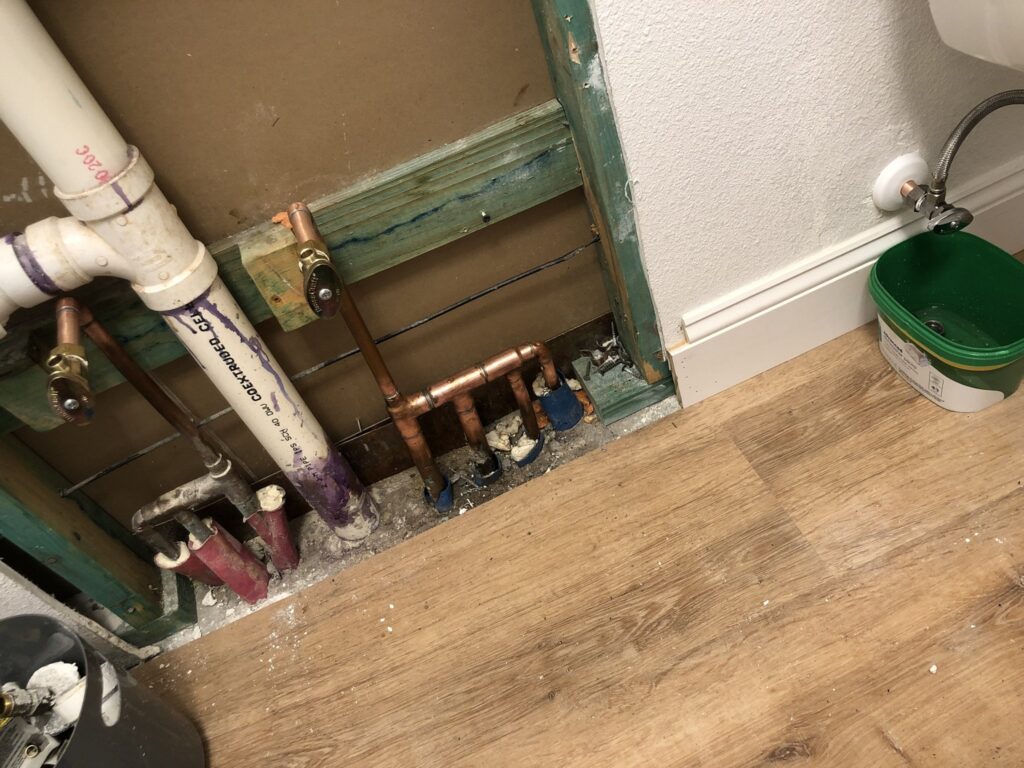
An after-the-fact permit is a permit applied for on work already done. The city issues it, charges a fee that is typically a multiple of the standard fee, and sends an inspector to see the work as if it were new. The problem is that the work is inside finished walls and under a finished floor. To inspect a drain and vent, the inspector has to see them, which means opening drywall where the vent runs and, sometimes, a section of floor at the trap. I opened three sections of wall and one of floor, photographed everything, and requested the inspection.

The inspector found two things. The shower drain was an inch and a half, tied into an existing lavatory drain, when a shower requires two inches on its own trap. And the vent for the new bathroom was an air admittance valve stuffed in the wall cavity with no access, where the code wants a vent to atmosphere or an accessible AAV. Neither was a surprise; they are the two most common corrections on unpermitted bathrooms, because they are the two things that are hardest to do right and easiest to hide. The drain fix meant cutting the slab in the garage bathroom and installing a proper two-inch trap and line to the main. The vent fix meant running a vent up through the wall and roof. Two days of work, a re-inspection, then the drywall and floor repaired.
What it cost, against what it would have
In 2019, the plumbing permit on a new bathroom would have been a fee billed at cost in the low hundreds and two inspection visits, with the drain and vent done right the first time as part of the rough-in because the inspector would have seen them open. In the nine days before closing, it was the after-the-fact fee at a multiple, opening and repairing walls and a floor, correcting a drain under a slab, running a vent through a roof, two inspection visits, and a rush. Several times the original permit cost, on a bathroom that had also been done badly. The seller paid it, because the alternative was no closing, and the bathroom is now on the record.
The lien question came up too, because the seller had paid the handyman in cash with no paperwork. Chapter 713[7] of the Florida Statutes is the construction lien law, and the practical advice is the same one I give on every job: pay a licensed contractor, get a release, keep the permit card. Paperwork is what makes a bathroom real at closing.
What a permit involves when it is done in order
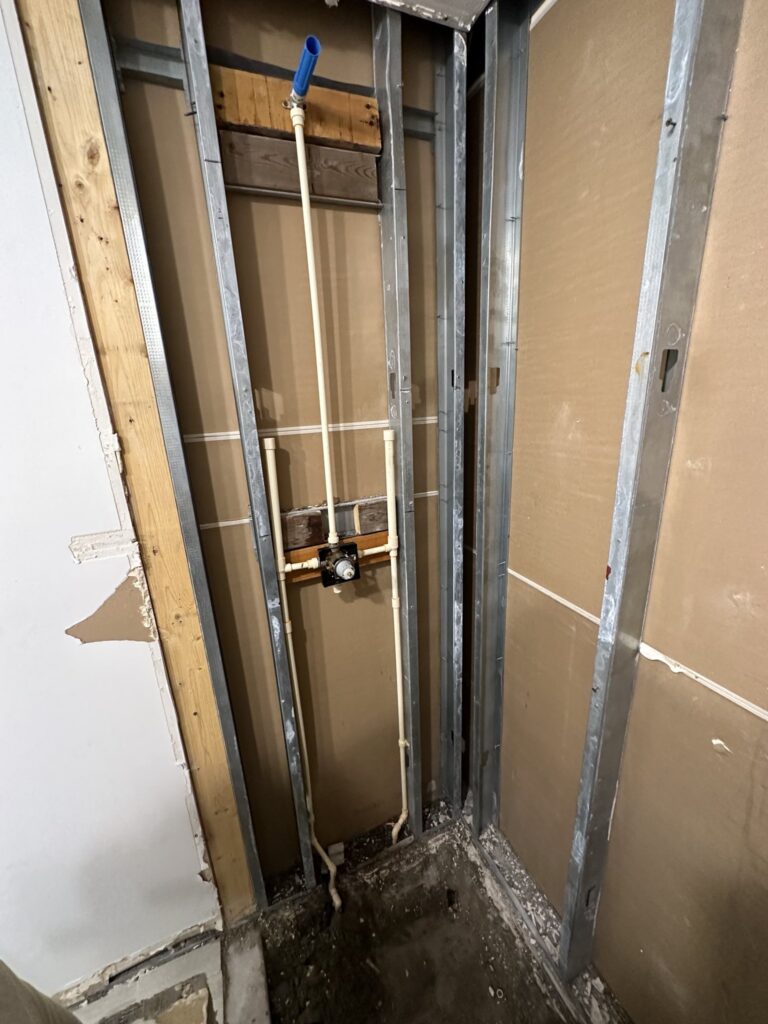
I pull the permit under my license, online, with a short description of the scope and a sketch if the city wants one. The fee is billed at cost. The city issues it in a few days for a bathroom remodel. I request the rough-in inspection for the day I expect to finish rough-in, which is the scheduling point that matters most and the one that slipped the project in the post on rough-in versus trim-out on a remodel that slipped three weeks. The inspector sees the drains, vents, and supplies open, signs the card, and the walls close. After trim-out, I request the final, the inspector tests the fixtures, and the permit closes. The bathroom is on the city record and the property appraiser updates the count. That is the whole process: a form, a fee, two visits, and a few days added to the schedule for the inspections. On a job that is already three weeks of tile and cabinets, the permit is not what makes it long.
What people ask when they find out
Do I need a permit to move plumbing in Florida? Yes, if a drain, vent, or supply moves or is added. Like-for-like swaps in the same place, no.
What happens if I skip it? It surfaces at sale, and the fix is an after-the-fact permit at a multiple of the fee, with walls opened and corrections made.
Can I pull it myself? A homeowner can sometimes pull an owner-builder permit on their own residence, but the plumbing still has to pass, and most people who pull their own end up hiring a licensed plumber to fix what the inspector finds.
How much does a plumbing permit cost in Palm Coast? Billed at cost, low hundreds for a bathroom. The inspections are time, not fee.
How long does it add? Days for the inspections, if they are requested when the permit is pulled.
The two corrections on this bathroom, the drain size and the vent, are the same two changes that make a conversion right in the post on what changes in the plumbing during a tub-to-shower conversion, and the vent question is the whole story in the post on kitchen island plumbing on a slab with no wall to vent through. The fixtures that go in after the final, and what they need on this water, are the post on the rain head spitting sideways at the one-year check. And a permit pulled in order, with both inspections on the schedule, is how the master bath in the bathroom remodel plumbing guide went from demo to trim-out.
What closed, and when
Eleven days late, with the permit closed, the corrections signed, and a bathroom that drains the way it should have since 2019. The buyer got a house with three bathrooms on the record. The seller got a lesson that cost several times what the permit would have. The handyman, as far as anyone knows, is still doing bathrooms.
If you are unsure whether your project needs a permit to move plumbing in Florida, the answer is yes if anything moves, and the cheapest time to find out is before the walls close. Our remodel plumbing service in Palm Coast pulls the permit under license RF11067918, bills it at cost, and books both inspections the day it is issued.
Sources
- Flagler County Property Appraiser
- Florida Building Code, Plumbing (8th Edition, 2023), Florida Building Commission
- City of Palm Coast Building Division: permits and inspections
- Flagler County Building Department
- Florida Statute 489: contractor licensing
- Florida DBPR: license verification
- Florida Statute Chapter 713: construction liens