

What Do Plumbing Rough-In vs Trim-Out Mean for a Palm Coast Remodel Timeline That Slipped Three Weeks?
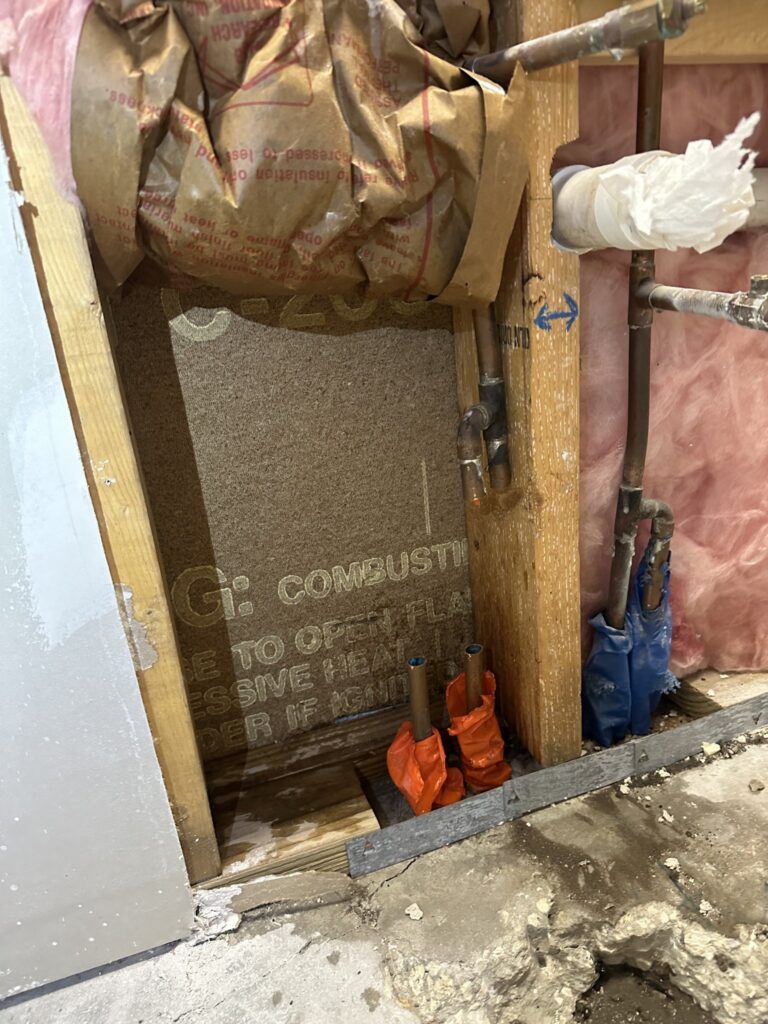
- Rough-in is everything inside the walls and slab: drains, vents, supply lines, valve bodies. Trim-out is everything you touch: faucets, toilets, shower heads. Tile and cabinets happen between them.
- The three weeks went to an inspection booked late, tile that could not start until it passed, and a faucet that was on backorder when trim-out came.
- Two of the three were avoidable, and both were decisions the homeowner could have made in week one.
- Order the fixtures before rough-in. Book the inspection when the permit is pulled. That is most of it.
The situations described here are composites drawn from the types of jobs and decisions we encounter regularly. Names and specific figures are illustrative.
The remodel was supposed to take six weeks and took nine. Kitchen and master bath, a general contractor running it, me as the plumbing sub. When the homeowner asked me, near the end, where the three weeks had gone, I pulled up the schedule and showed her, because the answer was not one thing and none of it was mysterious. Most of it lived in the gap between the two phases of plumbing work, and understanding plumbing rough-in vs trim-out is how a homeowner sees that gap before it opens.
This post is that schedule, week by week, with the two phases explained by where the time went, and the two decisions that would have gotten the three weeks back.
The two phases, in one paragraph each
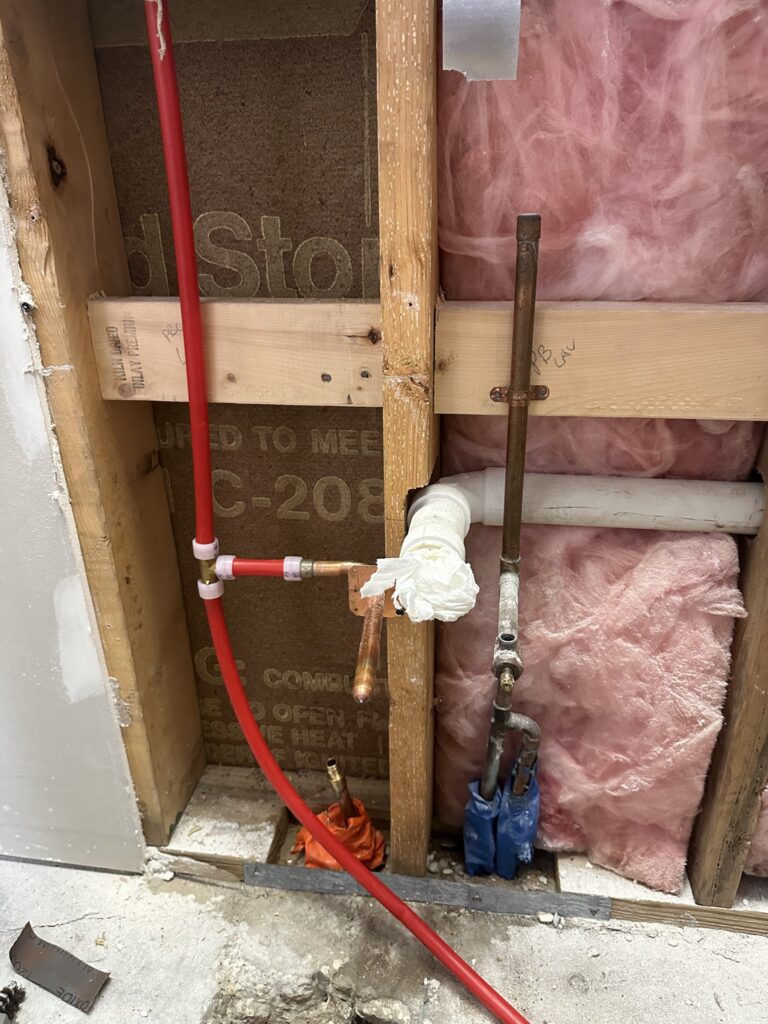
Rough-in is the plumbing you never see. With the walls open and the slab cut, I install the drain lines and traps, the vent piping up through the walls to the attic, the hot and cold supply lines, the valve bodies for the showers and tubs set at the right depth for the tile, the stub-outs where sinks and toilets will connect, and the boxes for the washer and ice maker. Then I cap everything, put it under pressure, and the city inspects it. Rough-in is most of the labor and nearly all of the code compliance. It happens once, early, and everything else waits for it to pass.
Trim-out is the plumbing you touch. After the tile is set, the cabinets are in, and the countertops are on, I come back and set the toilets, install the faucets and connect their supplies, mount the shower trim on the valve bodies, hang the shower heads, connect the disposal and dishwasher, and test every fixture. Then the final inspection. Trim-out is a day, sometimes two, and it happens last. Between the two phases, the tile, cabinet, countertop, and electrical trades do their work, and the schedule lives or dies on the handoffs.
Week one and two: demo and rough-in, on time
Demo went as planned. I roughed the kitchen in two days, including the trench for the new island sink, and the master bath in two more, including the drain-size and valve changes in the post on what changes in the plumbing during a tub-to-shower conversion and the bench and grab-bar blocking from the post on walk-in shower versus walk-in tub for seniors. The kitchen trench and the loop vent that Palm Coast inspectors want on an island are the post on kitchen island plumbing on a slab with no wall to vent through. By the end of week two, every pipe was in, capped, and holding pressure. That was the last thing that happened on schedule.
Week three: the eight-day inspection
Here is the first slip. The general contractor had pulled the building permit and I had pulled the plumbing permit under it, but the rough-in inspection had not been requested until the day rough-in finished. The City of Palm Coast Building Division[1] schedules inspections on request, and lead times move with how busy the city is; that spring it was running about a week. Eight days from request to inspector. During those eight days nothing could be covered: no drywall on the bathroom walls, no concrete over the trench, no tile. The tile contractor, who had been booked to start on a specific Monday, went to his next job. When the inspection passed on the following Wednesday, the tile contractor was mid-way through someone else’s shower and could not come back for another week.
That is one slip that became two. Eight days of waiting on the inspection, then a week of waiting on the tile contractor’s calendar because the inspection date had been unknown when he was booked. What would have fixed it: request the inspection the day the permit is issued, for the day rough-in is expected to finish. The city lets you schedule ahead. I do it on my own permits now; on this one, the GC’s process was to request at completion, and it cost the project two weeks. Flagler County’s Building Department[2], for jobs outside the city, runs a similar request system with its own lead times, and the same rule applies.
Week five and six: tile, cabinets, counters
Once the tile contractor was back, the bathroom floor and shower took a week and the kitchen backsplash two days. Cabinets went in behind him. Countertops were templated after the cabinets were set and took ten days to fabricate, which was on the original schedule. By the end of week six, the kitchen was ready for me and the bathroom was a day behind it.
Week seven: trim-out, and the faucet that was not there
Trim-out day in the kitchen. Sink set, disposal hung, dishwasher connected, and then the faucet box, which was empty because the faucet was on backorder. The homeowner had chosen a specific finish from a specific line, ordered it in week four, and been given a ship date that had since moved twice. I set everything else, capped the faucet supplies, and left. The faucet arrived nine days later. Nine days with a kitchen that had a sink and no faucet, and a final inspection that could not be requested until the faucet was in, because the inspector tests every fixture.
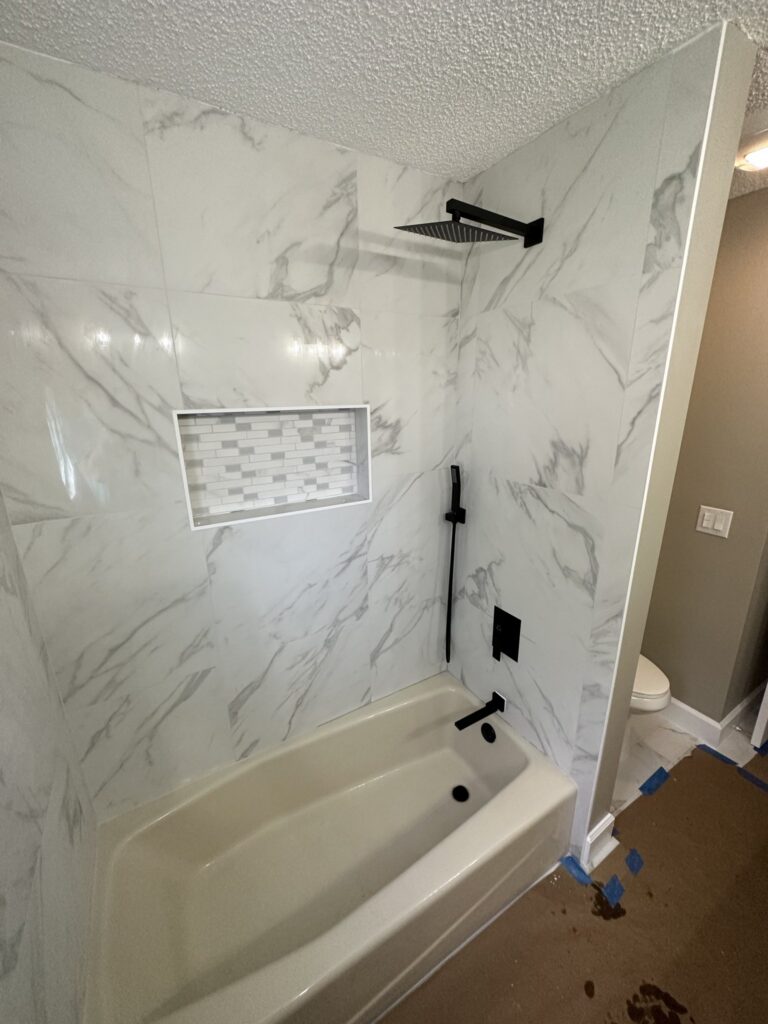
The bathroom trim-out was the same day the faucet finally came, so the two finals were combined, which saved a visit. What would have fixed it: order every fixture before rough-in, not after. The valve bodies I set at rough-in have to match the trim that goes on them at trim-out, so the shower and tub fixtures have to be chosen by rough-in anyway. Choosing the faucets and toilets at the same time, and having them on site in boxes before the walls close, is the single best thing a homeowner can do for the schedule. Matte black, brushed gold, and anything from a smaller line backorder most; chrome and brushed nickel from the major brands almost never do.
Week eight and nine: the final, and the punch list
The final inspection passed the day after the faucet went in. The GC’s punch list took the rest of the week. Nine weeks. The Florida Building Code, Plumbing[3] edition defines what the inspector checks at each phase, but it does not define when the inspector comes; that is the request, and the request is the schedule.
The two decisions, and who makes them
Book the rough-in inspection when the permit is pulled, for the expected completion date, and move it if rough-in runs long. That is the contractor’s job, and a homeowner can ask on day one whether it has been done. Order every fixture before rough-in, and have it on site. That is the homeowner’s job, and it is the one most often left until the walls are already closed. Those two decisions were the three weeks. Everything else on this project ran the way it was supposed to.
What each phase costs, line by line, is the post on the calculator that said $3,000 and the quote that said $7,000. The inspection that a rough-in cannot skip, and what happens at sale when someone did, is the post on the unpermitted bathroom caught at closing. And what the fixtures you order before rough-in will need a year later on this water is the post on the rain head already spitting sideways at the one-year check. The whole sequence on one bathroom is the bathroom remodel plumbing guide from demo to trim-out.
What people ask when the schedule slips
What is plumbing rough-in? Drains, vents, supplies, and valve bodies inside the walls and slab, installed with everything open, then inspected.
What is trim-out? Faucets, toilets, shower trim, disposal, dishwasher, set after tile and cabinets, then the final inspection.
How long between them? Two to four weeks on most remodels, for tile, cabinets, and counters. Longer if the inspection or a fixture is late.
What do I need to have chosen by rough-in? Every shower and tub valve, because the body goes in the wall. Ideally every fixture, so nothing is on backorder at trim-out.
How long does a rough-in inspection take to schedule in Palm Coast? Days to over a week depending on the season. Request it when the permit is pulled.
What the homeowner does differently now
She is planning a guest bath next year. The fixtures are already in her garage. The permit will be requested with an inspection date on it. Six weeks, she says, and this time I think she is right.
If you are planning a remodel and want to understand plumbing rough-in vs trim-out before the schedule is written, the walkthrough is where I lay it out. Our remodel plumbing service in Palm Coast starts with the $96 service call, applies it to the work, and books the inspection the day the permit is pulled.