

Hydro Jetting vs Snaking: Which One Actually Cleared a Palm Coast Kitchen Line the Third Time Around?
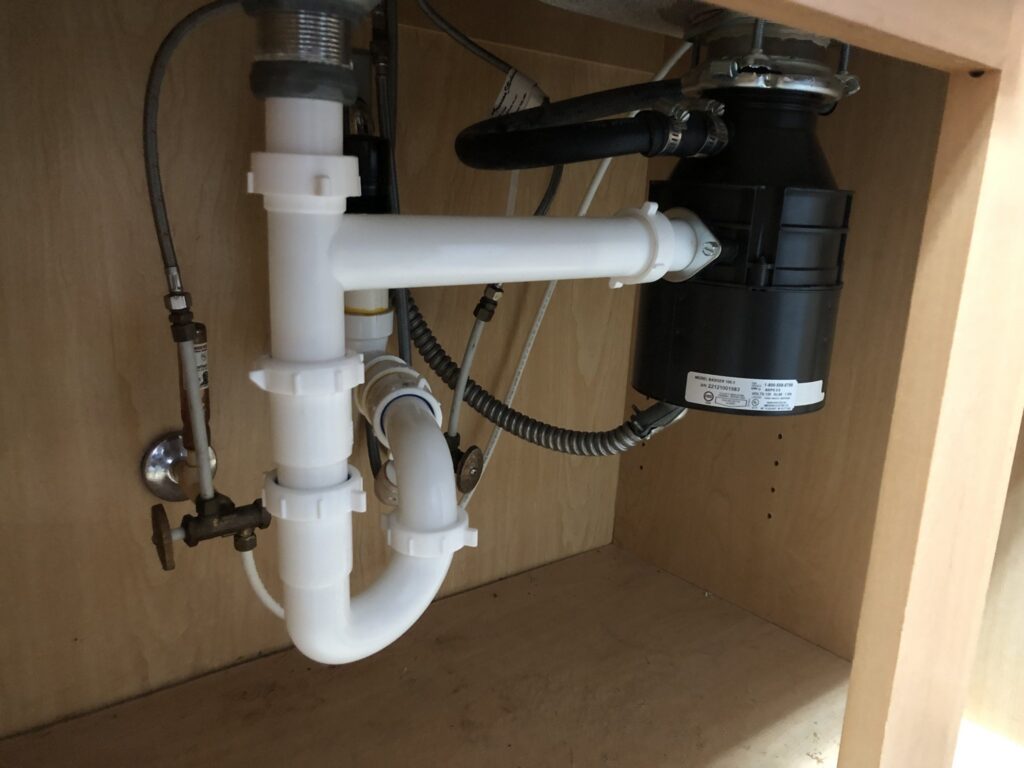
- A cable punches a hole through a soft blockage and the hole closes back up. A jetter strips the pipe wall. That is the whole difference, and it is why some lines get snaked every six months.
- The camera goes in first. A jetter in a pipe you have not seen is a bad bet on old cast iron.
- The third visit on this Cypress Knoll line was the last, because the tool finally matched the problem.
- A snake is still the right tool for a hard object, an unknown pipe, or a line that has never been scoped.
The situations described here are composites drawn from the types of jobs and decisions we encounter regularly. Names and specific figures are illustrative.
The homeowner in Cypress Knoll had a folder. Two invoices from two companies, eleven months apart, both for snaking the kitchen line, both with a note that the line was clear. It was slow again, and she wanted to know, before paying a third time, what the actual difference was in hydro jetting vs snaking and why nobody had explained it. I told her I would explain it after I put a camera in the pipe, because the answer was going to be on the screen.
This post is that visit. The camera before, the tool, the camera after, and the honest version of when a cable is still the right call, because it often is.
What the camera saw before anything touched the pipe
The kitchen line in her house is a two-inch PVC branch that runs about 25 feet under the slab to the main. At 8 feet the camera entered a tunnel. Not a blockage, a tunnel: the pipe walls were coated with a gray-brown sleeve of grease and soap scum an inch thick on every side, and down the center was a clean round channel about the diameter of a snake cable. That channel was the last plumber’s work. The one before it had made the same channel. Each time, the sleeve had closed back in over a few months, the channel narrowed, the sink slowed, and the cycle repeated.

That image is the whole argument. A drain cable is a rotating steel line with a cutting or boring head. It is very good at breaking through a solid obstruction: a wad of paper, a hard object, a root mass. Against a soft, sticky sleeve that coats the whole pipe, it drills a hole through the middle and leaves the sleeve on the walls. The line flows for a while because the hole is there. Then the sleeve keeps growing. In a kitchen line, on a house that cooks, that is a guaranteed callback.
What a jetter does differently
A hydro-jetter is a hose with a nozzle that fires water backward and forward at high pressure, in the range of 1,500 to 4,000 psi depending on the machine and the pipe. The rear jets pull the hose up the line and scour the walls; the forward jet breaks through what is ahead. It does not drill a channel. It strips the pipe back to its original inside diameter, and everything it strips flushes down to the main and out. On a grease sleeve, it is the only tool that removes the sleeve instead of tunneling through it.
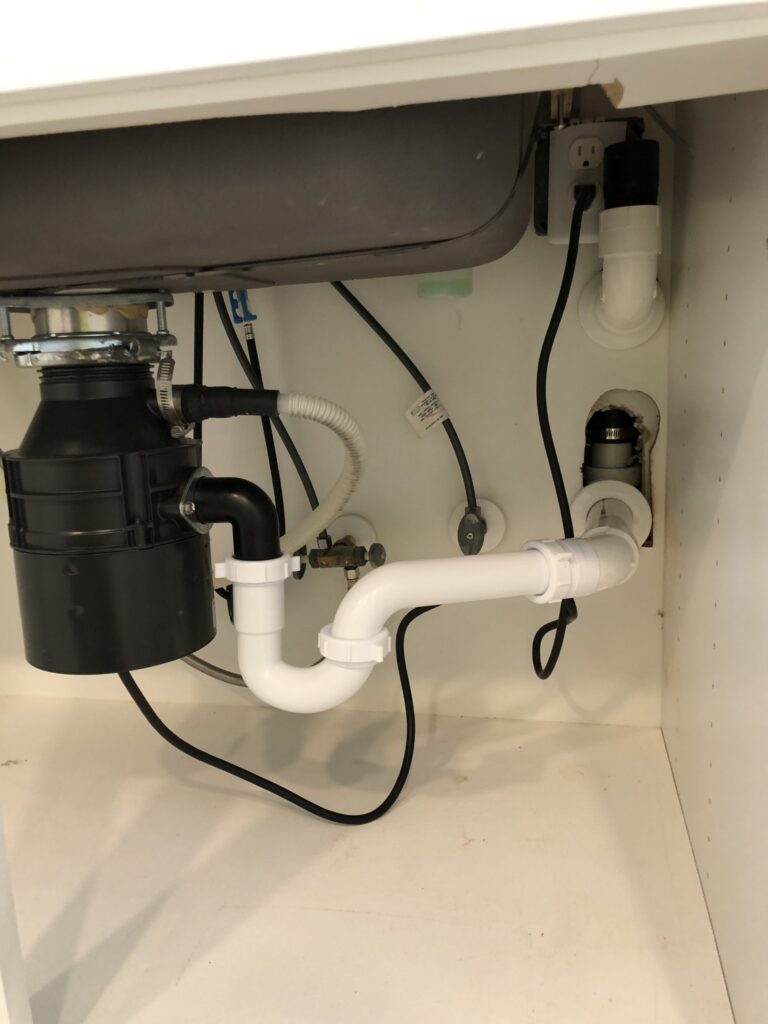
I ran the jetter from the cleanout under the kitchen sink to the main. It took forty minutes, most of it at the 8-to-15-foot section where the sleeve was thickest. What came back to the cleanout looked like a year of dish night. Then the camera went back in: clean white PVC, full diameter, a couple of old scratches from the previous cables, and nothing else. She watched the screen for both passes, which is the point of the camera as much as the diagnosis.
When I will not jet, and why the camera comes first
The reason I scope before I jet is that jetting is the wrong tool for some pipes, and you cannot know which from the sink. The Cast Iron Soil Pipe Institute[1] publishes service-life guidance for the cast iron under most pre-1990 Palm Coast homes, and the short version is that cast iron in this soil and this water thins from the inside over decades. A jetter at full pressure against a section of cast iron that is already scaled to the point of channeling at the bottom can open a hole where there was a thin spot. On old cast iron I jet at reduced pressure or I cable, depending on what the camera shows, and if the camera shows a line that is failing, the conversation changes to repair.
I also will not jet a line I cannot see, a line with a suspected collapse, or a line where the obstruction is clearly a hard object; a cable retrieves a toy or breaks a root ball where a jetter just pushes water against it. And I do not jet a septic line without knowing where the tank is, because jetting into a full tank is a different kind of problem. Her house was PVC on city sewer, which is the easiest case.
The third invoice, side by side with the first two
She asked what it cost against the two snakings. The jet visit, including the camera before and after, came to a little under twice what each snaking had cost. Two snakings plus a third would have equaled it, with a fourth on the calendar. Time on site was about the same as one snaking because the camera work is fast on a short line. The difference is that the snakings bought six months each and the jetting, on a kitchen line that gets a strainer and a grease jar now, should buy several years. I wrote up the habits that make that true in the post on how a Palm Coast customer went three years without a drain callback.
Cost is the wrong comparison anyway. The right one is what the pipe looks like afterward. Two snakings had left a sleeve. One jetting left a pipe.
What the folder did not include
Neither previous invoice mentioned a camera. That is not unusual and it is not dishonest; a cable through a kitchen line is a reasonable first response, and most companies do not carry a camera small enough for a two-inch branch. But it meant nobody had seen the sleeve, and so nobody had told her the cable would not fix it. The camera is the thing that turns a drain visit from a guess into a diagnosis, and it is why I wrote a separate post on what a sewer camera inspection costs in Palm Coast and when it pays for itself.
She also asked whether the bottle of drain cleaner under the sink had helped. It had not, and it had probably made the sleeve worse by softening the top layer into something stickier; I go into what those products actually do to pipes in the post on whether Drano is bad for pipes and what a bottle a month did to cast iron. On a grease sleeve, hot water and a strainer beat any chemical.
The questions that come up when I show the screen
Is jetting better than snaking? For soft build-up, grease, and roots in a pipe that can take the pressure, yes. For a hard object or an unseen pipe, no. The camera decides.
Can jetting damage old cast iron? At full pressure against thinned or channeled cast iron, it can. On pre-1990 Palm Coast lines I scope first and reduce pressure or cable instead.
How long does it last? On a kitchen line with a strainer and a grease habit, years. On a root line, a season to a year, then a maintenance jet; the oak story in the post on tree roots in a Palm Coast sewer line is the example.
Does snaking remove roots? A root-cutting head chews through them and leaves stubs. Jetting cuts them at the wall. Both regrow; jetting regrows slower.
How much more does jetting cost? Roughly one and a half to two times a snaking on the same line, including the camera. Against a third snaking, it is the cheaper number.
The InterNACHI sewer-scope inspection standards[2] that home inspectors work from treat a camera pass as the baseline for any recommendation on a line, and the Florida Building Code, Plumbing edition[3], is why a newer house like hers has a cleanout under the kitchen sink to run one through. Both of those, and the cast-iron version of this same decision, are in the full guide to clogged drains in Palm Coast homes, built from three houses on one street.
Why the third visit was the last
Not because the tool was fancier. Because the camera showed a sleeve, a sleeve needs stripping, and stripping is what a jetter does. The first two plumbers were not wrong to reach for a cable. They were working blind. She has not called since, and the folder has three invoices in it and, I hope, stays that way.
If you are on your second or third snaking of the same line, the hydro jetting vs snaking question is really a camera question. Our drain cleaning service in Palm Coast scopes before choosing the tool, and the $96 service call applies to whichever one the pipe needs.