

What Is Really Behind Clogged Drains in Palm Coast Homes, and When Does a Plunger Stop Being the Answer?
- Three houses on one street in one month covered nearly every drain problem a Palm Coast home gets: a grease sleeve in a newer kitchen line, roots in a 1979 cast-iron main, and hair and hard-water scale in a shower drain.
- Palm Coast’s housing stock splits at about 1990: cast iron under the slab before, PVC after. That line decides which tools are safe and which problems are likely.
- The camera goes in before the tool comes out. Half of what looks like a clog is a belly, a moved joint, or a transition that a cable cannot fix.
- A plunger is the answer for a single fixture that clogged once. It stops being the answer when two fixtures are involved, when it comes back, or when the toilet gurgles.
The situations described here are composites drawn from the types of jobs and decisions we encounter regularly. Names and specific figures are illustrative.
In one April I took three drain calls from the same street in Palm Coast’s Cypress Knoll section, three houses apart, within four weeks of each other. A 2005 build with a kitchen sink that would not drain. A 1979 ranch with a toilet that gurgled and a tub that held water. A 1998 two-story with a shower drain the homeowner had plunged a dozen times. If I had to explain clogged drains in Palm Coast homes to someone who had never had one, I would not start with a list of causes. I would start with that street, because between them those three houses had every cause on the list, and the camera found each one.
This guide follows the three houses in the order the calls came, then steps back to the two things that make Palm Coast drains different from the generic advice: the age split in the housing stock and the water. Every section points to a longer post written from the same kind of visit.
House one: the 2005 kitchen line that had been snaked twice
The first call was the newest house. The kitchen sink had been slow for a year and two companies had snaked it, most recently four months earlier. I ran a camera down the two-inch PVC branch before touching it and found what I find in most kitchen lines that have been cabled more than once: a sleeve of grease and soap scum an inch thick on every wall, with a cable-sized channel bored down the center. The channel was the previous plumber’s work, and the sleeve had been closing back over it since the day he left.
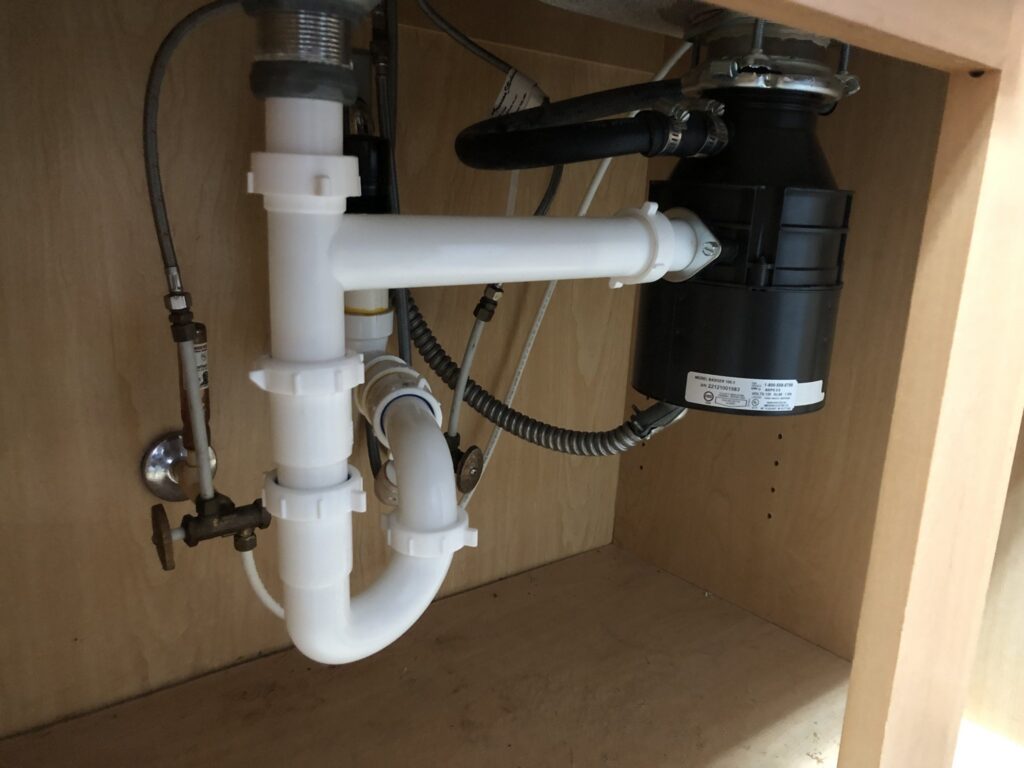
A cable punches through a soft blockage. A jetter strips the pipe wall. That distinction is the whole reason some lines get snaked every six months, and I wrote it up with the before-and-after footage in the post on hydro jetting versus snaking on a Palm Coast kitchen line, the third time around. We jetted, the camera showed white pipe, and the strainer and grease jar went under the sink. Kitchen lines are the one place where the homeowner’s habits decide the outcome more than the pipe does.
House two: the 1979 ranch with cast iron and a live oak
Three doors down, the oldest house on the street. The toilet gurgled when the tub drained, the tub was slow, and there was a smell over the front bed in the afternoons. That combination is a main-line problem, and the sound alone is enough to say so; the fixture-sequence test that separates a vent problem from a main-line problem is the post on why a toilet gurgles when the shower runs in a Palm Coast house. The house had no exterior cleanout, which is common for its year, so I pulled the hall toilet and ran the camera through the flange.

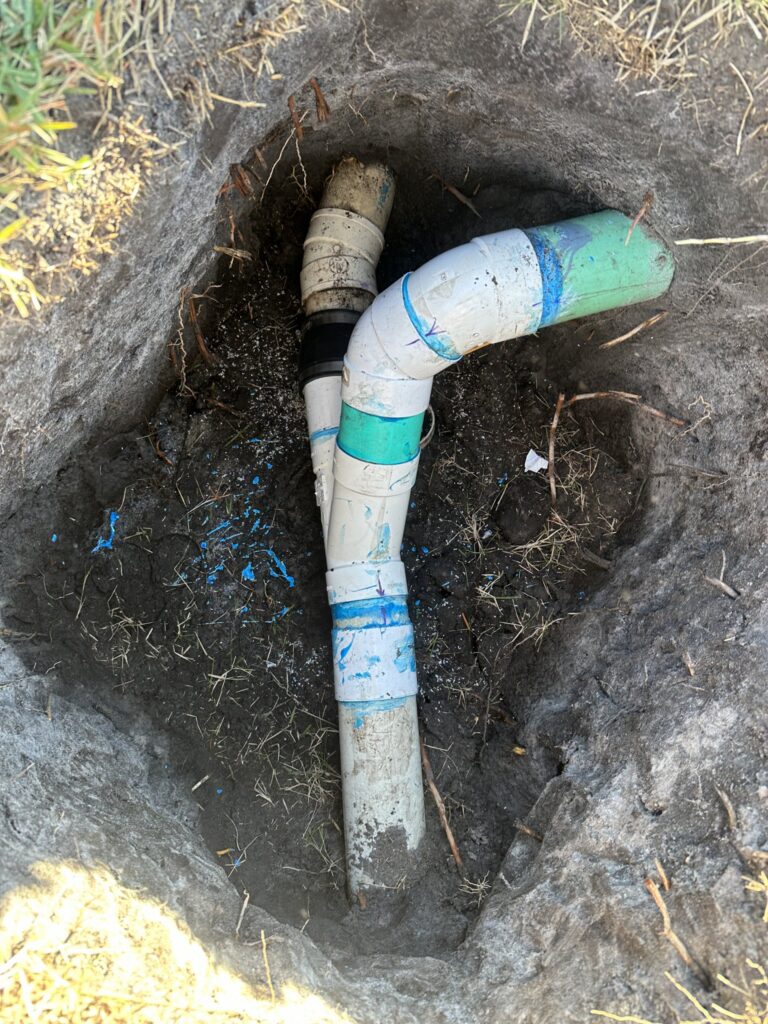
Under the slab: cast iron, scaled and channeled at the bottom the way the Cast Iron Soil Pipe Institute[1]‘s service-life guidance describes for pipe of that age in this water. Past the foundation: a transition to PVC with a rough lip, and at 38 feet a joint packed with fine roots from the oak in the front bed. The Flagler County Property Appraiser[2]‘s record put the house at 1979, which in Palm Coast means ITT-era construction; the Palm Coast Historical Society[3]‘s material on that period explains why thousands of homes here were built the same way in the same few years, and why they age the same way now.
Three decisions came out of that camera, and each is its own post. The roots were cut and the joint treated, with the choice between cut-and-treat, jet-and-line, and dig laid out in the post on tree roots at 42 feet under a Palm Coast driveway. The cast iron was cabled rather than jetted at full pressure, because thin cast iron and a jetter are a bad combination. And the house got a two-way cleanout in the front bed the following week, so that the next visit would not start with a toilet on the lawn; that install is the post on why a sewer cleanout installation turned a two-hour emergency into twenty minutes.
House three: the shower drain and the plunger
The last call was the simplest and the one the homeowner had fought longest. A second-floor shower drained slow, sped up after plunging, and slowed again within a week. She had a bottle of caustic drain cleaner under the sink and had used it twice. I pulled the drain cover and the strainer basket and found a mat of hair bonded together with the gray mineral scale that Palm Coast’s hard water leaves in every drain; UF/IFAS Extension[4]‘s home water quality series describes the calcium and magnesium load that produces it. A hand cable through the trap arm cleared it in ten minutes. The plunger had been pushing the mat back and forth. The cleaner had been softening the top of it into glue.
That is the house where a plunger was almost the right tool, and the reason it was not is the reason it never is for a recurring clog: it moves the blockage without removing it. And the drain cleaner is a separate conversation, one I had with a landlord whose bottle-a-month habit ended inside a wall, in the post on whether Drano is bad for pipes and what it did to 1980s cast iron.
The 1990 line: what year built tells you before the camera does
Palm Coast’s housing stock splits, roughly, at 1990. Before it, the drain lines under the slab are mostly cast iron with galvanized trap arms and PVC or clay from the foundation out, and the common problems are scale, channeling at the bottom of the pipe, corroded transitions, and roots at joints that have settled in the sand. After it, the lines are PVC throughout, and the common problems are grease sleeves, bellies where the sand has settled under a run, and whatever the household has flushed. The Florida Building Code, Plumbing edition[5], governs what gets installed now, and the InterNACHI sewer-scope inspection standards[6] that home inspectors use are built around exactly this age split.
The practical difference is in the tools. A jetter at full pressure is the right answer for a PVC grease sleeve and the wrong answer for a channeled cast-iron main. A cable with a cutting head is the right answer for a root mass and a poor one for a sleeve. Knowing the year built tells me which problems to expect; the camera tells me which one I have. That is why the camera goes in first on every call where the fixture is not obviously the problem, and why I wrote a post on what a sewer camera inspection costs in Palm Coast and when it is worth it; on this street, it was worth it on all three houses.
The water: why every drain here scales
Palm Coast’s city water comes from the Floridan Aquifer through the city’s treatment plants, and the City of Palm Coast Annual Water Quality Report[7] publishes a hardness figure that sits in the range the USGS classification[8] calls hard to very hard, about eleven grains per gallon when I test at a hose bib. In drain lines that shows up as the gray mineral scale in house three’s shower, as the bonding agent that turns hair and soap into a mat, and, in cast iron, as part of the crust that narrows the pipe from the inside over decades. A softener changes that for the whole house, which is a different conversation, but for drains the point is simpler: everything that goes down a Palm Coast drain has a mineral coating waiting to catch it.
When the plunger stops being the answer
Here is the rule I gave all three homeowners, and it is the rule for this whole guide. A plunger is the right tool when one fixture has clogged once and the cause is obvious: a wad of paper, a toy, a hairball at the top of the drain. It stops being the answer in four situations. When the same fixture clogs again within a month, because the blockage was moved, not removed. When two fixtures are involved, because a shared problem is downstream of both. When a toilet gurgles while another fixture drains, because that is air moving past an obstruction in the main or a vent that cannot breathe. And when water appears in a low fixture while a high one runs, because that is the main closing, and the full sequence of warnings before it closes is the post on the signs of a main sewer line clog a Flagler County family ignored until Thanksgiving.
In each of those cases the next tool is a camera, not a bottle. Caustic drain cleaner does not clear a main, does not remove a grease sleeve, and on the cast iron under a pre-1990 Palm Coast house it thins the pipe while it sits. The one thing it reliably does is make the line dangerous for whoever opens it next.
What kept the three houses off my schedule afterward
House one has a strainer, a grease jar, and a monthly enzyme dose, and the kitchen line has not slowed in the two years since. House two has a cleanout, a yearly root treatment through it, and a camera check on the cast iron every couple of years while the homeowner decides whether to line it. House three has hair catchers in both showers and no bottle under the sink. None of that is expensive. All of it is the difference between a line that stays clean and one that gets cleaned again, and I wrote the full routine up from the kitchen table of a customer who has gone three years without a callback, in the post on how to prevent clogged drains after a cleaning.
What a cleaning visit looks like when it is done in the right order
Since all three houses got the same sequence, here it is, because the order is what separates a cleaning that lasts from one that repeats. First, the fixtures: I run them one at a time and listen, which puts the problem in a branch, a vent, or the main before I open anything. Second, the year built, from the property record or the homeowner, which tells me whether I am expecting cast iron or PVC and therefore which tools are safe. Third, the access: an exterior cleanout if the house has one, a pulled toilet if it does not, and a note on the quote to add one if it does not. Fourth, the camera, recorded, with the locator on the lawn for anything that needs a flag.
Only then the tool. A hand cable for a trap arm. A cable with a cutting head for roots or a hard object. A jetter for a sleeve in PVC, or at reduced pressure on cast iron the camera has shown is sound. Then the camera again, so the homeowner sees the pipe wall and not just a drain that runs. And on the way out, the strainers, the grease jar, and the two-minute talk. The whole sequence on a house with a cleanout is under two hours. On a house without one it is longer, which is the best argument for the cleanout I know.
What that order prevents is the pattern I see most from other companies’ invoices: a cable run blind, a line that flows for a few months, and a callback that starts the same way. The camera is not an upsell in that sequence. It is the step that decides whether the tool was the right one.
The questions that came up on that street
Why do my drains keep clogging? Because the last cleaning moved the blockage instead of removing it, or because the pipe has a belly, a moved joint, or a rough transition that catches things. The camera tells which.
How do I unclog a drain myself? A single fixture: pull the strainer, clear what you can reach, plunge once, then a hand cable through the trap. If it comes back, stop and call. Never a caustic cleaner.
Slow drain versus clogged drain? Slow is a sleeve or scale narrowing the pipe. Clogged is something blocking it. Slow becomes clogged if nothing changes.
Kitchen versus bathroom versus shower? Kitchen is grease and food. Bathroom sink is soap scum and toothpaste on scale. Shower and tub is hair bonded with scale. The main is all of it plus roots and wipes.
Main line versus branch? A branch problem affects one fixture or one room. A main-line problem affects the lowest fixtures first and gets worse when other fixtures run.
What one street taught me about how to answer the question
Three houses, three eras, three causes, and one method: listen to the fixtures, read the year built, put the camera in, then choose the tool. None of the three needed the same tool. All three needed the camera to know that. If the guide has one sentence, it is that a clog is a symptom, the pipe has the cause, and the camera is how you see it.
If you are on your second plunge of the same drain, the question of clogged drains in Palm Coast homes has already answered itself: something is in the pipe that a plunger cannot reach. Our drain cleaning and clogged drain service in Palm Coast starts with the camera on every recurring call, and the $96 service call applies to the cable, the jet, or whatever the screen says the line needs.
Sources
- Cast Iron Soil Pipe Institute: service life and maintenance guidance
- Flagler County Property Appraiser
- Palm Coast Historical Society: ITT-era development
- UF/IFAS Extension (EDIS): tree roots and home water quality
- Florida Building Code, Plumbing (8th Edition, 2023), Florida Building Commission
- InterNACHI: Sewer Scope Inspection Standards of Practice
- City of Palm Coast Annual Water Quality Report (Consumer Confidence Report)
- USGS Water Science School: Hardness of Water