

What Does Water Heater Maintenance in Florida Look Like Before Hurricane Season Starts?
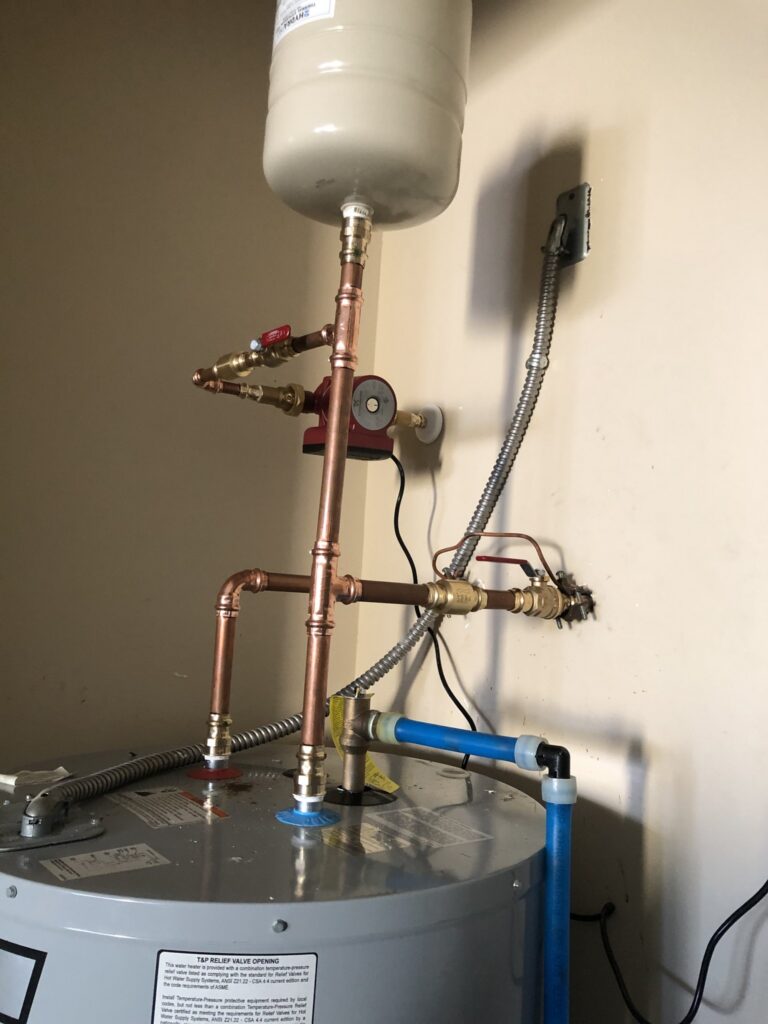
- Three years on Palm Coast city water put a bucket of sediment and a half-consumed anode into a tank we installed new. Neither was a surprise. Both were the reason for the visit.
- The parts of maintenance you can do yourself: the flush, the T&P test, and checking the expansion tank pressure. The part I would leave to a plumber: the anode.
- Hurricane season starts June 1. The shutdown sequence for an evacuation is four steps and takes five minutes.
- Maintenance does not make a tank last forever. It makes it last the twelve years the box promises instead of eight.
The situations described here are composites drawn from the types of jobs and decisions we encounter regularly. Names and specific figures are illustrative.
The last week of May, I went back to a house in Palm Coast’s B-section where we had installed a 50-gallon electric tank three years earlier. Nothing was wrong with it. The homeowner had put a reminder on his calendar the day we installed it, and he wanted to watch. That visit is the clearest picture I can give of what water heater maintenance in Florida actually involves, because it happened on a tank whose whole history I knew, on the water I test every week, at the time of year the National Hurricane Center[1]‘s season dates make everyone in Flagler County think about their house.
Here is the visit in the order we did it, what we found, and the parts he now does himself.
The flush, and what three years of city water left behind
We started with the breaker off, then closed the cold inlet, opened a hot tap in the kitchen to break the vacuum, and ran a garden hose from the drain valve to the driveway. The first gallon came out cloudy. The next two came out with a gray-brown grit that settled in the bottom of the bucket I caught it in, about a cup and a half by the time the water ran clear. That is three years of Palm Coast water, which the City of Palm Coast Annual Water Quality Report[2] and the USGS classification[3] put in the hard range at roughly eleven grains per gallon. The calcium and magnesium carbonate come out of solution when the water is heated, and they land on the bottom of the tank where the lower element has to heat through them.
A cup and a half is not a crisis. It is exactly the amount that becomes an inch of hard scale by year eight if nobody flushes, and an inch of scale is the beginning of the story I told in the post on how long water heaters last in Florida, where two identical tanks on one street died six years apart. His tank was on the long side of that comparison because of this bucket. He does the flush himself now, once a year, in the spring before the garage gets too hot to stand in.
The anode rod, which is the part I would not skip
With the tank partly drained, I put a socket on the anode hex on top and broke it loose. On a three-year-old tank on this water I expected about half of the magnesium gone, and that is what came out: a rod with the top third still full diameter and the bottom two-thirds pitted down to maybe half. Manufacturer manuals for Rheem[4], A.O. Smith[5] and Bradford White[6] all say to inspect the anode periodically, and on Palm Coast water the practical schedule is a look at year three and a replacement at year four or five. He had two years left on this one. I put it back and wrote the replacement year on the tank in marker.
This is the one maintenance item I tell people to leave to a plumber, for a plain reason: the hex is usually seized after a few years, the rod is as tall as the tank and needs ceiling clearance or a segmented replacement, and if the threads strip you have a bigger problem than the one you started with. It is also the single part that most decides whether a tank reaches its warranty length. A consumed anode on an eight-year tank is why the repair-or-replace conversation goes the way I described in the post on a water heater leaking from the bottom in a Palm Coast garage.
The expansion tank and the T&P valve
The thermal expansion tank we installed is a small blue tank on the cold line above the heater. It has an air bladder, and the bladder loses pressure slowly, the way a tire does. I put a tire gauge on the Schrader valve at the top with the water pressure off and read 38 psi. House pressure at the hose bib was 62 psi. IAPMO guidance[7] and the manufacturer’s instructions say the air charge should match the house static pressure, so I pumped it up to 60 with a bicycle pump. Two minutes. If the charge is low, the expansion tank stops doing its job, the pressure spikes on every heating cycle, and the T&P valve starts to weep. He can check this himself with a tire gauge, and now does.

Then the T&P valve test. With the breaker still off and a bucket under the discharge line, I lifted the lever for two seconds and let it snap back. A rush of water down the line, then a clean stop. That is a working valve. A valve that keeps dribbling after the test has debris on the seat or a worn spring and needs replacement, which is a fifteen-minute job. The Consumer Product Safety Commission[8]‘s guidance on water heaters treats the T&P as the primary safety device on the tank, and it is the one part that should be tested every year without exception. It is also the part the four-point inspector photographs, which I go into in the post on what a four-point inspection checks on a water heater in Flagler County.
The thermostat, the connections, and the pan
With the covers off, I checked the thermostat settings: 120 degrees on both, which is where the CDC’s scald guidance[9] and the efficiency both point, and where we had set them at install. I checked the junction box on top for loose conductors, because a loose 240-volt connection is the most common reason a tank trips its breaker, a story I told in the post on repairing or replacing a water heater that keeps tripping its breaker. Tight. And I looked in the pan and along the bottom seam with a flashlight. Dry and clean, which on a three-year tank is what you expect and on an eight-year tank is what you hope for.
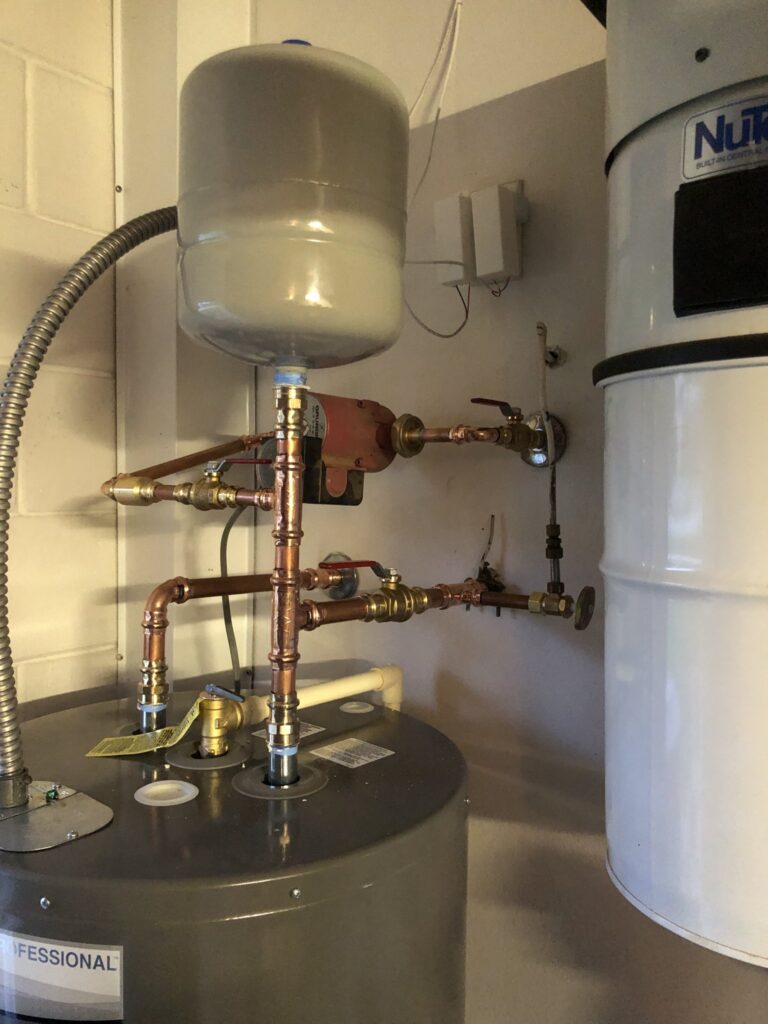
The whole visit, including the flush, was a little over an hour. It was a $96 service call. He asked whether it was worth the money on a tank that was fine, and I told him the honest thing: the visit itself did not change the tank. The anode I looked at and the expansion tank I recharged are what change the tank, and both of those would have gone unnoticed for years otherwise.
The hurricane question, which is why he scheduled it in May
Hurricane season runs June 1 through November 30 on the National Hurricane Center’s calendar, and in Flagler County the evacuation zones mean a lot of homeowners east of I-95 leave for a day or a week at least once a season. He asked what to do with the water heater before an evacuation. Here is the sequence, and it is the same one I text every seasonal customer each June.
- Turn off the water heater breaker at the panel. If the power comes back before the water does, an element in an empty or partly empty tank will burn out.
- Close the main water shut-off for the house, at the meter box or where the supply enters. A supply line that fails while you are gone is the most common storm-week water damage I see, and it has nothing to do with the storm.
- Leave the tank full. Do not drain it. A full tank is heavier, more stable, and ready to heat when you come back.
- When you return, open the main first, let the tank fill and purge air at a hot tap, then turn the breaker back on. Breaker last, always.
For homes in the Hammock and Flagler Beach where the garage can take on water, the raised platform I described in the post on what an itemized water heater quote in Palm Coast includes is the storm-prep item that matters most, and it is worth adding at the next replacement if the tank sits on the slab now.
What people ask about maintenance
How often should I flush a water heater in Florida? Once a year on city water, twice on a private well with iron or sediment. Spring, before the garage gets hot.
How do I know if the anode needs replacing? Pull it and look. Full diameter along most of its length means it is fine. Bare steel wire with a few pits of metal left means it should have been replaced a year ago. On Palm Coast water, plan on year four or five.
Do I need an expansion tank? If the house has a pressure-reducing valve or backflow preventer at the main, which most Palm Coast homes do, yes. It should be charged to the house static pressure and checked with a tire gauge once a year.
Should I turn off the water heater during a hurricane? Turn off the breaker and the main water before you evacuate, leave the tank full, and reverse the order when you return. If you are sheltering in place, leaving it on is fine unless the power goes out, in which case turn the breaker off until the water is confirmed running again.
How do I make it last longer? Flush, anode, expansion tank charge, T&P test, and a softener if the scale is bad enough to bother you elsewhere in the house; our whole-house filtration and softening service is where that conversation goes.
This visit is the last chapter of the full guide built from one week of Palm Coast water heater calls, the one that decides whether the first chapter ever gets written.
What I told him on the way out
A maintained tank on this water gets twelve years and sometimes fifteen. An unmaintained one gets eight and sometimes six. The difference is one hour a year and an anode rod at year five. He has the calendar reminder, the tire gauge, and the hose. I have a note to come back in two years for the anode. That is the whole program, and it is less than most people expect.
If your tank has never had that hour, water heater maintenance in Florida is the least expensive service call you will book this year, and our water heater installation and repair service in Palm Coast does the flush, anode check, expansion tank charge, and T&P test in one visit before the season starts.
Sources
- NOAA National Hurricane Center: hurricane season
- City of Palm Coast Annual Water Quality Report (Consumer Confidence Report)
- USGS Water Science School: Hardness of Water
- Rheem: water heater manuals and serial-number date codes
- A. O. Smith: water heater serial-number date codes
- Bradford White: water heater serial-number date codes
- IAPMO: thermal expansion guidance (Uniform Plumbing Code)
- U.S. Consumer Product Safety Commission: water heater safety
- CDC: scald prevention and water heater temperature