

Could Palm Coast’s $500 Million Water Upgrade Push You Toward a Whole House Repipe in Palm Coast, FL?
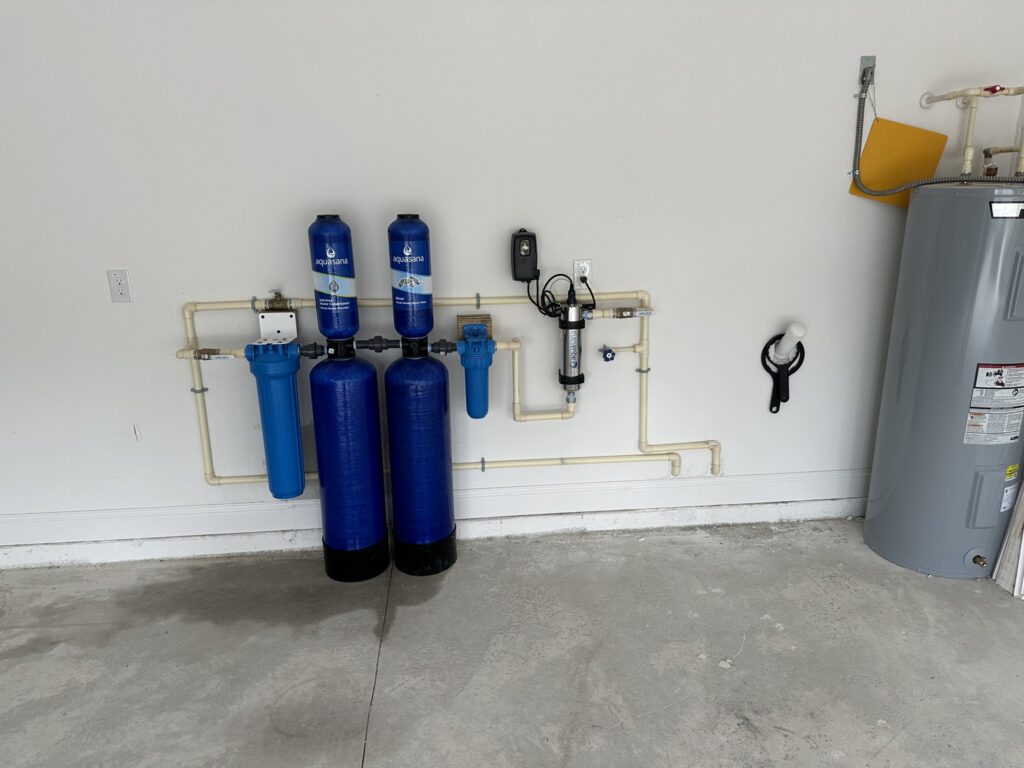
The situations described here are composites drawn from the types of jobs and decisions we encounter regularly. Names and specific figures are illustrative.
It began with a routine renewal letter. The homeowner had bought in the P-section in 2019 and had never thought much about what was inside her walls. When her carrier asked for a four-point inspection in early 2026, she assumed it was a formality. For many owners of older Florida homes, a whole house repipe in Palm Coast, FL begins exactly like this, with paperwork and not a leak.
What the inspector wrote down
A four-point inspection is a report many Florida insurers ask for on older homes, and it covers the roof, electrical, HVAC and plumbing. Carriers set their own age thresholds, but homes 20 years and older commonly get asked for one. The inspector is not just glancing at the plumbing. He is documenting pipe material, and polybutylene has become a recurring problem. Homes with polybutylene pipes are being declined or non-renewed more often, and many carriers will not write a policy until it is replaced.
Within two weeks of the inspection, the homeowner received a non-renewal notice. Her agent shopped the policy to six other carriers. In this illustration, three declined outright, two quoted far higher annual premiums than she had been paying, and one would write the policy only after a full repipe. That turned the decision into a question of timing: repipe on her own schedule, or pay more every year while she waited.
Choosing the repipe
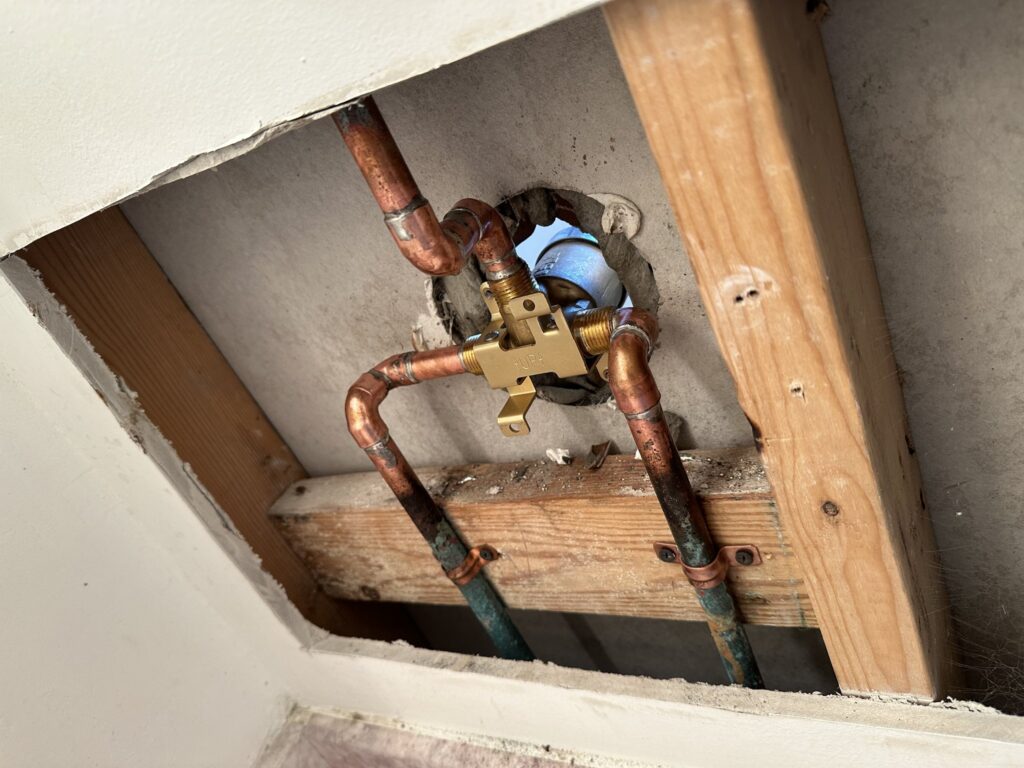
She chose to repipe. The house was re-plumbed with PEX over a few days, and the work was inspected and documented so the insurer had something to rely on. The total in this illustration was $11,000. Her new policy came in at a far more reasonable rate than the quotes she had been getting, and the repipe took the pipe-material question off the table for future renewals.
A homeowner in this position might reasonably say that if someone had warned her three years earlier, she would have scheduled it on her own timeline. A post that follows a similar case, how a polybutylene home got covered again after a repipe, walks through what insurers asked for once the work was finished. For the work itself, the page on whole house repiping explains what the process involves.
The city’s upgrade, and what reaches your tap
Her situation sits inside a bigger local story. Palm Coast has described a long-term water and wastewater improvement program of more than $500 million: expanding treatment capacity, developing new wells and alternative groundwater sources, and modernizing purification. The city’s 2025 Annual Water Quality Report describes continuous monitoring at all three water treatment plants and more than 100 testing sites. With the population now roughly 110,000, the system is being built out to serve it.
Homeowners often hear about a municipal upgrade and assume it is someone else’s project. The less obvious effect is on the water itself. When a city adds wells or changes treatment, the mineral content, chloramine levels and hardness of tap water can shift. That does not always make the water worse. It can make water behave differently in a house that was set up for the old chemistry.
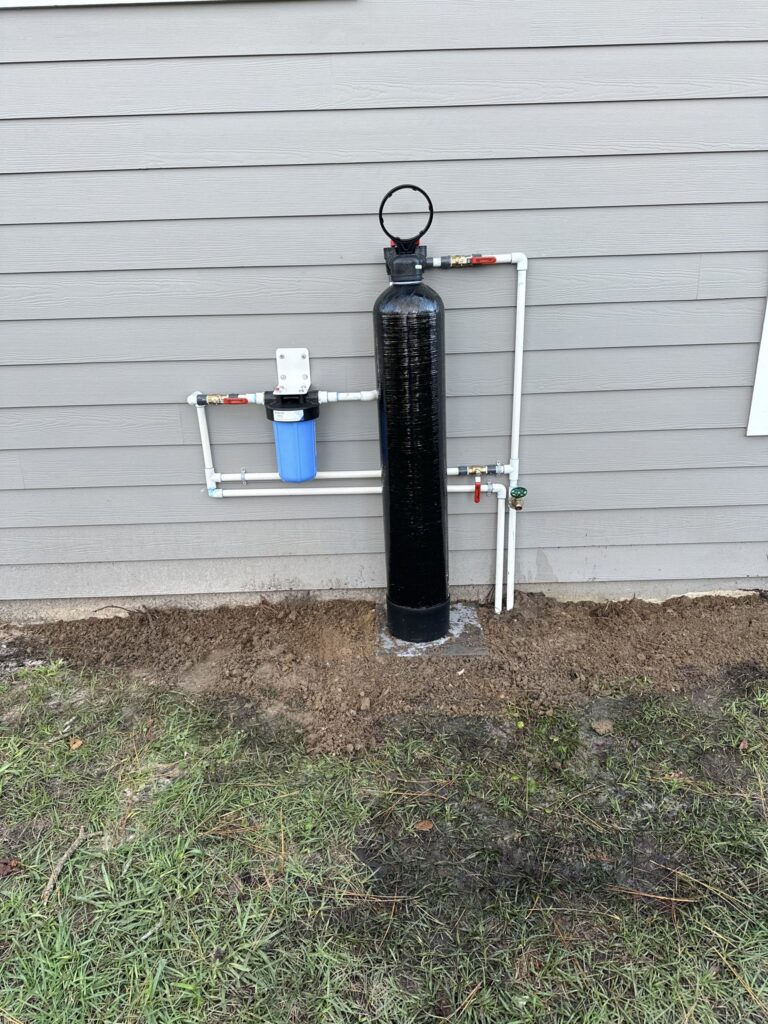
For a home with a whole-house filter, that can mean the setup needs a closer look. A filter that used to last four months might need earlier replacement, or its media might no longer be the best match. A post on how a year of pre-filters looked in one Palm Coast home shows what that tracking looks like, and a look at an eleven-grain hardness reading in a Palm Coast kitchen shows what a change can look like at the tap. If a repipe is already planned, it is a good moment to pair the new lines with a filter that matches current water, and the page on whole house filtration systems describes how those are sized. The city’s water quality data is public, and requesting the latest report gives you a baseline.
An older device worth checking
While she was gathering paperwork, her plumber pointed out one more item that rarely comes up. The Reduction of Lead in Drinking Water Act took effect in January 2014 and defines lead-free plumbing as a weighted average of no more than 0.25% lead on wetted surfaces. Backflow preventers and other brass components installed before then may not meet that standard. If a home’s device predates the change, it is worth finding out, especially ahead of an inspection.
In her case the device was fine. In other homes, replacing one is a small job compared with the larger decisions around it.
What the story leaves behind
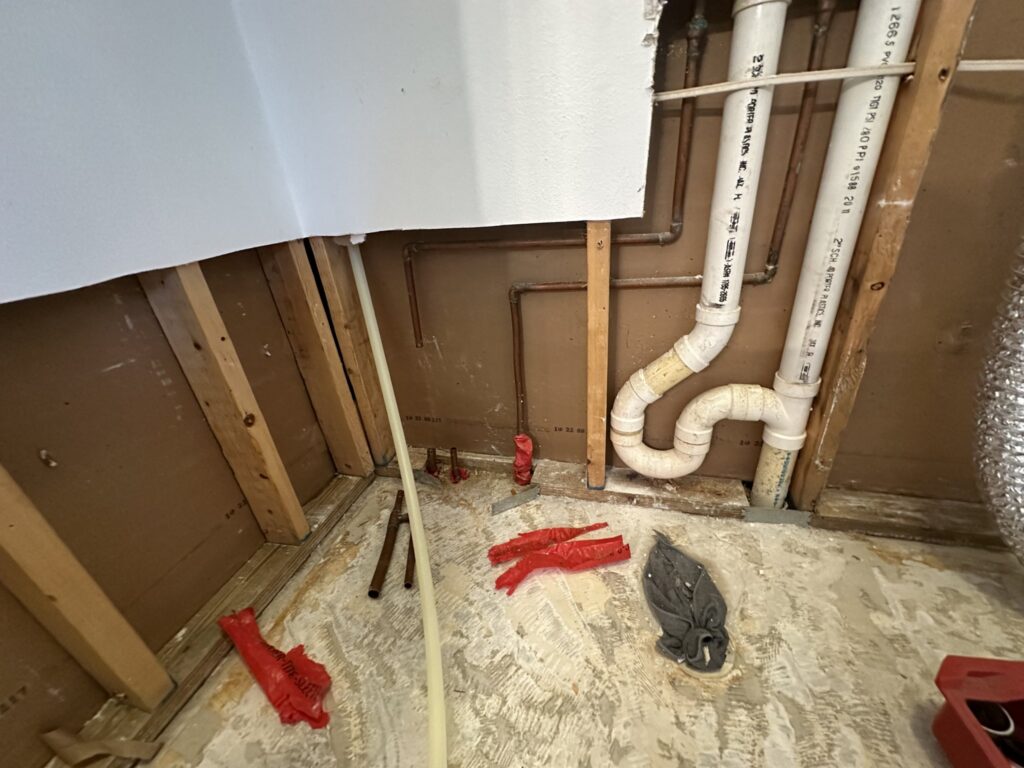
She also asked about a camera inspection before her next four-point. Looking back, the answer was yes. A camera inspection costs far less than finding out about a pipe problem in the middle of a coverage review.
The city’s upgrade and the pipes inside her walls are not directly connected, but they share a pattern: systems that were fine for years change, and a house has to be checked against the new conditions. For homeowners with a house that is 20 years old or more, the useful question is whether you would rather hear about a repipe from a renewal notice or on your own schedule. A whole house repipe in Palm Coast, FL is a major project, but it is much easier when it is planned.
If you’re looking for plumbing repair and inspection help in Palm Coast, you can reach out here.
Sources
- City of Palm Coast: 2025 Annual Water Quality Report
- City of Palm Coast: Utility Infrastructure and System Reliability
- U.S. EPA: Ground Water and Drinking Water, including lead-free plumbing requirements
- Florida Office of Insurance Regulation: Consumer Resources
- FlaglerLive: Flagler County Census 2025