

Would a Backwater Valve Have Stopped the Nor’easter Sewer Backup in Palm Coast, FL?
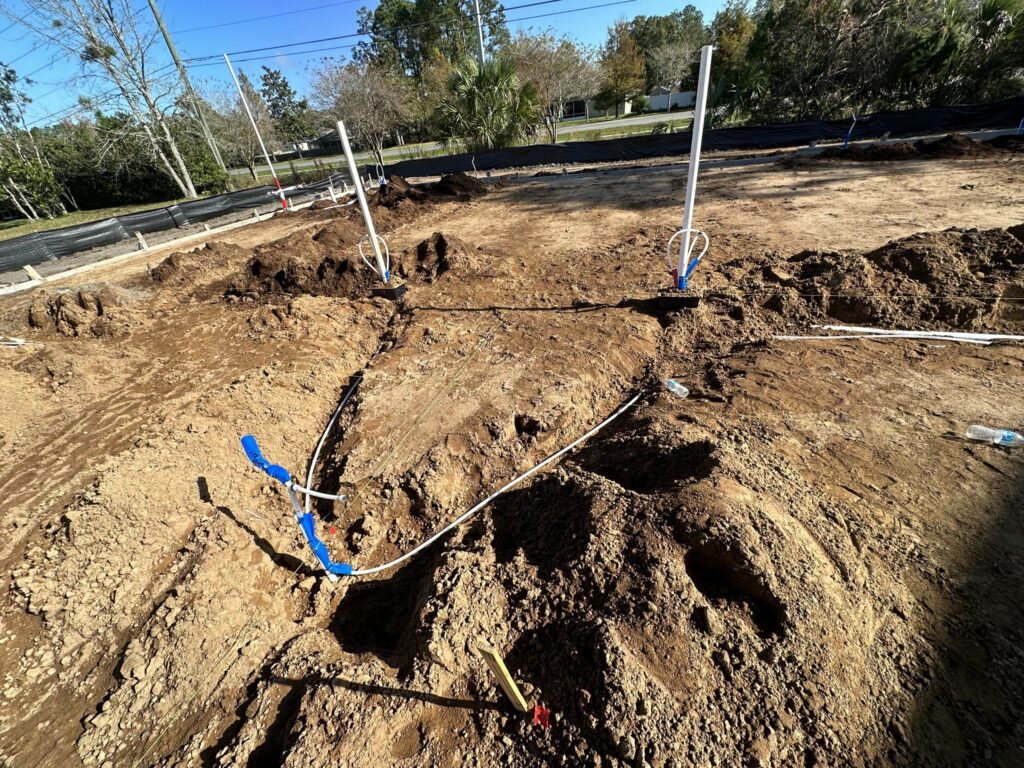
The situations described here are composites drawn from the types of jobs and decisions we encounter regularly. Names and specific figures are illustrative.
The call came in on the second morning of a nor’easter. Rain had been falling sideways for a day and a half, and the tide in the canal behind the house was up near the seawall cap. Sometime after midnight, the homeowners heard a gurgle from the guest bathroom. By the time they turned the light on, an inch of gray water sat in the shower pan, and it smelled like what it was. Nothing was clogged, and nobody had flushed. A sewer backup in Palm Coast, FL usually starts with something the house did. This one started with something the street did.
The house is a single-story slab home in Palm Harbor, built in the early 1980s when much of Palm Coast was still being laid out on paper. It sits low, like a lot of the original canal lots. The guest shower is the lowest drain opening in the house, a few inches above the slab, and that turns out to matter more than anything else in this story.
The first guess was a clog, and the camera said no
The homeowners called for a drain cleaning, and a cable went through the cleanout the next morning without hitting anything. The shower drained while the cable was in the line, which made it look like the cable had done something. It hadn’t. The tide had turned and the rain had eased.
When we came out two days later, the first thing we did was put a camera down the line from the outdoor cleanout. The pipe was clean PVC from the house to the property line, with a little sand in the belly near the tap. No roots, no grease shelf, no offset joint. That’s a very different picture from the clogs we usually find, like the root mass described in a Flagler County main line that backed up during a Thanksgiving week. A clog gives you warnings for weeks. A surcharge gives you none, because the problem isn’t in your pipe.
Public sanitary sewers are built to carry wastewater, not rain. But rain and groundwater find their way in anyway, through manhole lids and cracked joints. The EPA lists stormwater and groundwater overloading the system, along with power failures, among the common causes of sanitary sewer overflows, and notes that these can back up into homes. During that storm, the National Weather Service in Jacksonville was calling for two to three inches of rain on ground that was already saturated, along with tides two to three feet above normal. When the line in the street fills past a certain point, the water looks for the next lowest place to go. In this house, that was the guest shower.
Why October is when this shows up in Palm Coast
Most people around here think of flooding in terms of hurricanes. The calls we get about drains backing up without a clog cluster in the fall instead. NOAA describes king tides as exceptionally high tides tied to the pull of the moon and sun, and in Florida they run through the fall. Florida Atlantic University’s 2026 outlook for the southeast coast put the year’s highest predicted tides near the October 27 full moon. Add a stalled nor’easter, and the canals, the swales, and the ground under the street are all full at the same time. That’s what happened in October 2025, when Flagler County was told to expect coastal flooding and inundation of low-lying roads. This month, neighboring St. Johns County was again staging for king tides and heavy rain in early October.
Older Palm Coast homes on low lots were built at elevations that made sense at the time. If your lowest drain sits below the rim of the manhole up the street, the water in that manhole has a path into your house.
Measuring the shower against the street
The test is simple, and it’s the same one the model plumbing codes use for new construction. You compare the flood level rim of the lowest fixture in the house (here, the top of the shower drain) to the lid of the next manhole upstream in the public sewer. If the fixture is lower than that lid, sewage can rise into it when the sewer surcharges, and the codes call for a backwater valve on new work in that situation.
We set up a laser level in the driveway and shot both points. The guest shower drain came in about seven inches below the manhole lid two houses up the street. The kitchen sink and the main bathroom fixtures were a few inches above it. That explained why only the guest shower took water. It also told the homeowners that the next storm, or the one after it, could put more than an inch in that pan.
Here is how the readings lined up:
| Point measured | Height relative to upstream manhole lid | What it means |
|---|---|---|
| Guest shower drain | About 7 inches below | First fixture to take water in a surcharge |
| Main bath tub rim | About 4 inches above | Safe in this storm, close in a worse one |
| Kitchen sink rim | Well above | Not at risk |
| Outdoor cleanout cap | About 2 inches below | Could overflow in the yard before the house |
That last row matters. A cleanout cap set below the street manhole can act as a relief point, spilling water in the yard instead of inside, but this one had a threaded cap screwed down tight. Some homes have no exterior cleanout at all, which is a separate problem we’ve written about in a Palm Coast house that had no cleanout until the second emergency.
The options on the table
There were four realistic choices, and the cheapest one was doing nothing. The odds of a repeat in any given year depend on how often the public line surcharges, which nobody can predict with precision.
| Option | How it works | The catch |
|---|---|---|
| Do nothing | Clean up after each event | Sewage in the house is a health problem, not just a mess |
| Test plug in the shower drain | Expandable plug set by hand before a storm | Only works if someone is home and remembers |
| Flap-style backwater valve | Opens for outflow, closes when flow reverses | Automatic, but the seal is not as tight as a gate |
| Combination gate and flap valve | Automatic flap plus a manual gate for big events | Costs more and the gate still needs a person |
Those tradeoffs come straight from FEMA’s guidance on backflow valves, which describes the gate type as giving a strong seal but needing to be closed by hand, and the flap type as automatic but less tight. The same fact sheet, written decades ago, put an installed flap valve at a few hundred dollars. That number is long gone. Excavation, a code-listed valve body, an access box, and a permit all cost more now, and in Palm Coast the price depends a lot on how deep the building drain runs and what’s in the way.
What they chose and what it cost them in habits
The homeowners went with a full-port flap-style backwater valve in the building drain, set outside the house in an access box flush with the grade. The excavation was shallow because the drain only ran about twenty inches deep at that point. We pulled a permit, set the valve level with the arrow pointed toward the street, and added a new two-way cleanout just downstream so the line could still be cabled without opening the valve body. The yard was back together the same afternoon.
The part that took longer was the conversation about what the valve does when it closes. A single-story house on a slab doesn’t have an upper floor that can bypass the valve. When the flap shuts during a surcharge, nothing in the house can drain out. If someone starts the washing machine during a storm surge, that water has nowhere to go but the lowest opening, which is the same guest shower. The valve protects you from the street. It doesn’t protect you from yourself.
So the homeowners now have a storm-night routine. When a nor’easter lines up with a king tide, they hold off on laundry and the dishwasher until the canal drops. Those habits cost nothing, but they have to be remembered.
What homeowners usually ask at this point
Most people ask whether the city should be paying for this. The honest answer is that the public main and the service from your house are maintained by different people, and a surcharge during an extreme storm isn’t always a failure anyone can be blamed for. If you think the public side has a defect, the City of Palm Coast Utility Department is the place to report it. The valve on your side is still the only thing that keeps water out of your shower.
The next question is usually whether every house needs one. No. If your lowest drain sits well above the manhole up the street, a backwater valve adds a part that needs cleaning and gives you very little back. We’ve measured plenty of homes in Palm Coast’s higher sections where the answer was to skip it.
People also ask how often the valve needs attention. Once a year we open the access box, check that the flap swings freely, and clear any grease or debris from the seat. A flap held open by a wad of wipes does nothing. That’s part of the routine maintenance we cover through our plumbing repair and service calls in Palm Coast.
And finally, people ask whether insurance covers this. That depends on the policy. Many homeowners policies treat sewer and drain backup separately from flood and from sudden pipe leaks, so it’s worth asking your agent what yours says before the next storm instead of after.
Where spending more stopped making sense
The homeowners asked about raising the guest shower. That would have meant cutting the slab, building up the floor, and redoing the tile, all to gain seven inches that a valve could already block. They also asked about adding a second valve on the main bath branch, which sat a few inches above the manhole lid. We talked them out of it. A second valve would have doubled the maintenance for a fixture that hadn’t taken water, and it would have created a situation where the bathrooms could drain but the kitchen couldn’t during a surcharge. One valve on the building drain covered the house.
Ten months later, the canal came up again during an August storm. The homeowners heard the guest shower gurgle once and watched it. Nothing came up. When we did the annual check this month, the flap had a little sand on the seat and nothing else.
What to take from it
A sewer backup that comes during a storm, with no clog warning beforehand and a clean camera inspection afterward, is usually telling you about elevation, not about your pipes. Cabling the line after one of those nights can make it look fixed when the only thing that changed was the tide. If your home sits on one of Palm Coast’s low canal lots and your lowest drain is near the slab, a laser level and the street manhole will tell you more than any drain cleaning will.
For homes that measure below the manhole, a backwater valve is a real answer to a sewer backup in Palm Coast, FL, as long as the people living there understand that it closes the house off in both directions while the street drains. For homes that measure above it, the money is better spent on the ordinary things, like a working cleanout and a drain line that’s been camera-checked.
If you want someone to measure your lowest drain against the street or look at a line that backed up during a storm, you can find our drain cleaning and sewer line service in Palm Coast here.
Sources
- Sanitary Sewer Overflows (SSOs), U.S. Environmental Protection Agency
- Protecting Your Property From Flooding: Install Sewer Backflow Valves, FEMA fact sheet (hosted by Putnam County, FL)
- What is a King Tide?, NOAA National Ocean Service
- For Flagler County’s I-95 Corridor, Long Duration Nor’Easter Brings High Winds, Potential Flooding and Erosion, FlaglerLive (October 9, 2025)
- St. Johns County Fire Rescue prepares for flooding, king tides as rain continues, News4JAX (October 7, 2026)
- King Tide Season Is Here. What They Reveal About Florida’s Flooding Future, Florida Atlantic University (2026)
- Utility Department, City of Palm Coast